


Fireplace Reflector Plate
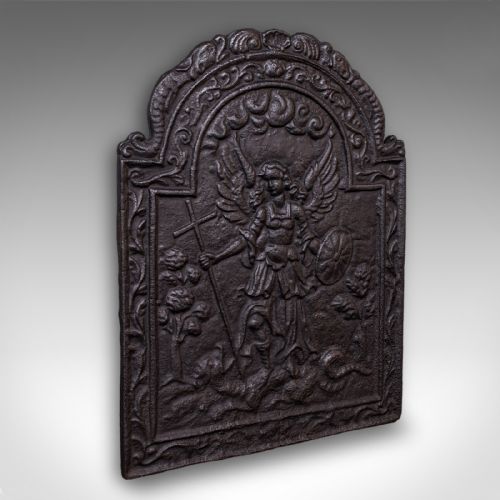
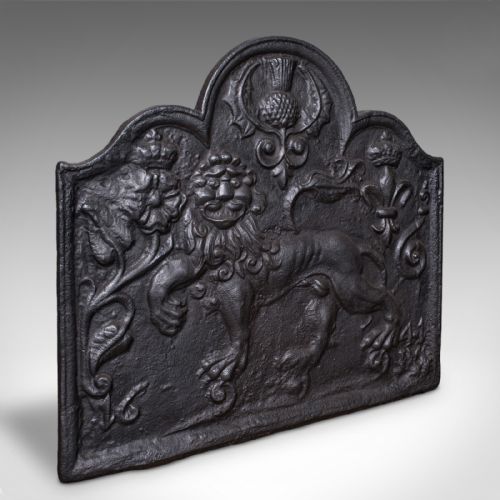
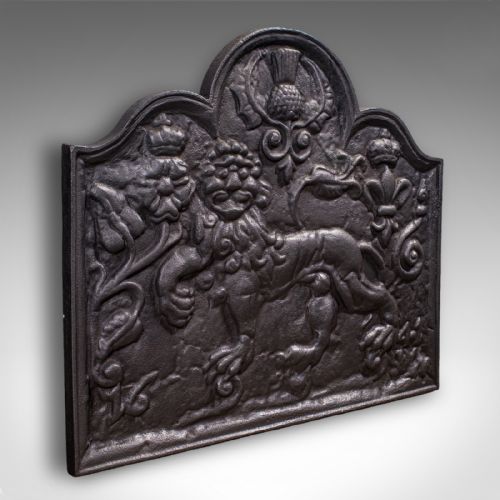
These heavy iron firebacks serve as a fireplace reflector plate, throwing radiant heat back into the room while protecting the masonry.
Fireplace Reflector Plate
A fireplace reflector plate, often listed as a fire back, stands against the rear brickwork of a hearth. These English pieces arrive primarily from the Victorian period, alongside Georgian examples.
The selection ranges from simple decorative panels to heavily cast pieces featuring heraldic, Neoclassical revival, and Carolean revival motifs, as well as traditional tree of life designs.
How they were made
Every piece in the evidence is fashioned from cast iron, utilising sand casting or similar foundational moulding techniques appropriate for heavy metalwork. This heavy material allows the plates to absorb intense heat and radiate it outward long after the fire dies down.
Surface decoration is achieved through relief casting, creating raised designs that catch the flicker of the flames. These include ecclesiastical themes, classical revival patterns, and heraldic emblems embedded directly into the iron matrix.
What varies in quality
Quality rests in the crispness of the relief casting and the depth of the ironwork. Plates with sharply defined tree of life patterns or detailed heraldic motifs show superior control during the foundry process.
Weight and thickness also distinguish the examples, with heavier plates offering a more substantial physical presence on the hearth. The ambition of the revival style, whether Neoclassical or Carolean, dictates the artistic merit of the surface.
The Fireplace Reflector Plate Glossary
- Fire back
- A heavy iron plate placed at the back of a fireplace to protect the wall and reflect heat into the room. These panels are also known as fireplace reflector plates.
- Relief
- A sculptural technique where the figures or patterns stand out from the flat background. This method creates dramatic shadow play when illuminated by hearth flames.
- Neoclassical revival
- A style drawing inspiration from classical antiquity, featuring symmetrical urns, swags, and architectural motifs. This aesthetic appears frequently on Victorian ironwork.
- Carolean revival
- A design movement reflecting the ornate, carved wood and metal styles of the late seventeenth century. Pieces bearing this label often incorporate rich scrollwork and royalist symbols.
Fireplace Reflector Plate: Frequently Asked Questions
How do I install a fireplace reflector plate?
The plate simply stands upright against the rear brick wall of your hearth, supported by its own heavy base or leaning at a slight angle.
Ensure the hearth floor is level and clear of debris so the iron rests securely before lighting any fires.
Can I use these plates in a working fireplace?
These cast iron pieces are designed specifically to withstand high temperatures behind an active coal or wood fire. They actively protect the masonry while pushing warmth forward into the living space.
Allow the iron to warm gradually with the fire to prevent thermal shock.
How do I tell Victorian pieces from Georgian ones?
Georgian plates generally date around eighteen hundred and tend toward heavy, utilitarian decorative forms. Victorian examples span the nineteenth century and often embrace specific revival styles like Gothic or Neoclassical.
Stylistic detailing and casting crispness usually offer the best clues to the specific manufacturing era.