


Iron Fireplace Reflector
An iron fireplace reflector sits at the back of the hearth to catch and throw heat into the room.
Iron Fireplace Reflector
An iron fireplace reflector serves the dual purpose of protecting the masonry behind a hearth and projecting warmth forward into a room. When searching for an iron fireplace reflector, a buyer encounters heavy plate iron and cast iron items designed to absorb and radiate thermal energy.
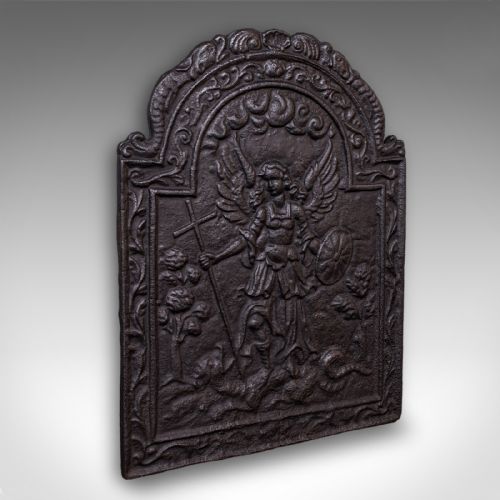
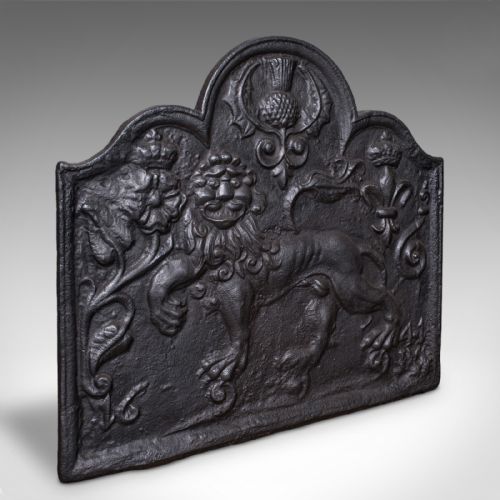
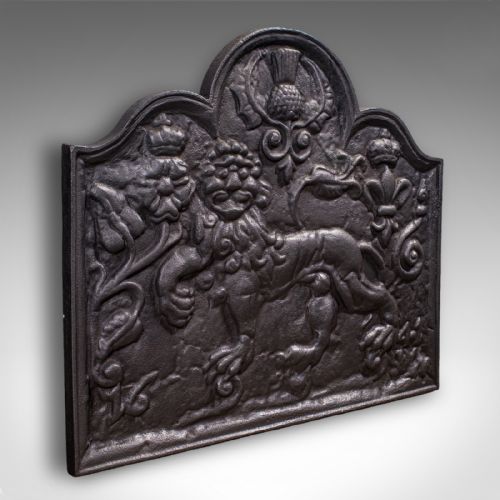
Most examples found here date from the Victorian and Georgian periods, originating primarily from English workshops. These heavy metal plates often double as firebacks, featuring relief decoration that ranges from heraldic motifs to floral patterns.
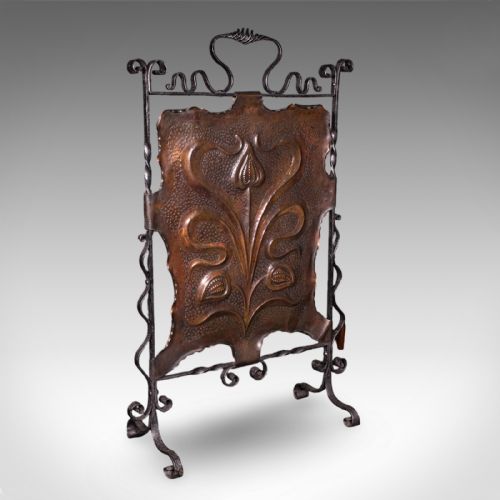
The assortment includes varying forms such as church refectory backs and copper-accented fire screens adapted for hearth use. Buyers are most likely to meet solid cast iron pieces displaying styles from Neoclassical Revival to Late Victorian manufacture.
What varies in quality
The standard of an iron fireplace reflector rests upon the depth and crispness of its cast relief work rather than mere size. Finer examples display sharp, well-defined motifs such as Gothic tracery or classical figures, whereas lesser pieces show worn or shallow casting.
Metal thickness and weight dictate durability and heat retention, with heavier plates representing more substantial domestic investment. The refinement of the revival style - whether Carolean, Neoclassical, or Art Nouveau - also distinguishes standard utilitarian guards from decorative works.
The inventory spans Victorian and Georgian periods, featuring cast iron, copper, and wrought iron in styles ranging from Gothic to Art Nouveau.
The Iron Fireplace Reflector Glossary
- Fireback
- A heavy metal plate placed at the rear of an open fireplace to protect the wall and reflect heat forward into the room.
- Cast iron
- An iron-carbon alloy poured into a mould to create solid, highly detailed heavy plates.
- Wrought iron
- Tough, malleable iron beaten and worked by hand into durable hearth furniture.
- Relief
- Sculptural projection from a flat background surface, commonly seen in the cast pictorial scenes of Victorian firebacks.
- Refectory
- A style descriptor often applied to heavy, architectural pieces originating from large communal dining halls.
Iron Fireplace Reflector: Frequently Asked Questions
How do I install an iron fireplace reflector?
Place the heavy iron plate upright against the rear brickwork of the hearth, ensuring it stands stable on the floor.
Most pieces rely on their substantial weight to remain securely in position without requiring permanent wall fixings.
How do I clean soot from cast iron?
Brush away loose ash and soot with a soft dry bristle brush, avoiding harsh chemical abrasive cleaners.
Light applications of natural oil help maintain the dark patina on Victorian and Georgian iron surfaces.
Did these pieces actually reflect heat?
Heavy iron absorbs thermal energy from the flames throughout the evening and radiates that warmth outward.
This continuous projection of heat warms the room long after the timber fire burns down to embers.