



Heavy Cast Iron Fireback
A heavy cast iron fireback stands behind the hearth, radiating warmth and protecting the masonry from the blaze.
Heavy Cast Iron Fireback
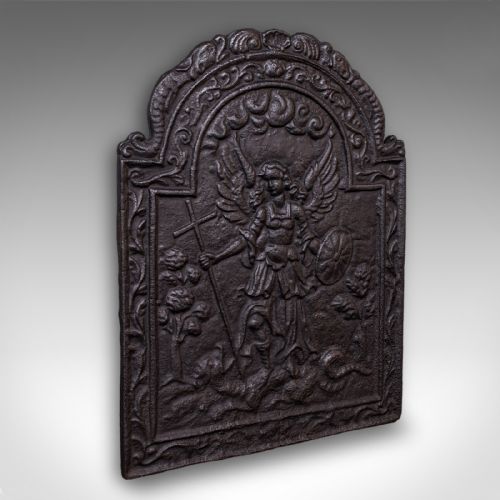
A heavy cast iron fireback is a sturdy iron plate designed to sit at the rear of an open hearth. When you search for a heavy cast iron fireback, you encounter robust domestic ironwork spanning several centuries. The versions most commonly met on this page date from the Victorian era and the nineteenth century, though earlier examples from the seventeenth century and the year seventeen hundred also appear.
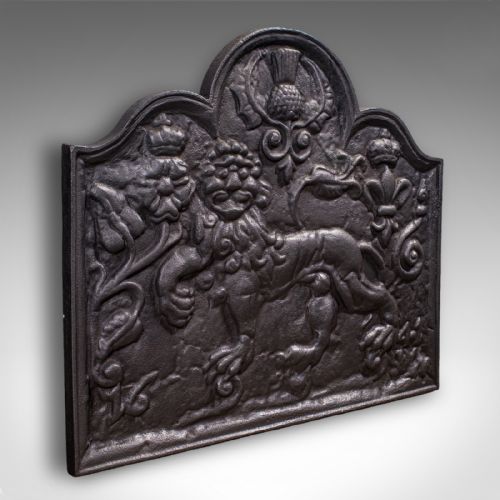
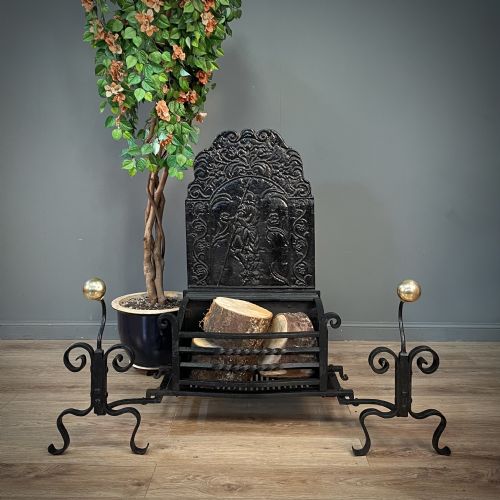
These pieces frequently serve as fireplace reflectors, casting heat back into the room rather than letting it escape up the chimney. Alongside plain utilitarian plates, the selection includes decorative designs featuring relief work, heraldic motifs, and the Tree of Life pattern. Some listings present complete fireplace setups that combine the fireback with fire baskets, andirons, grates, and fenders.
Originating primarily as English domestic and church hardware, these objects combine practical hearth protection with striking decorative presence. The forms range from simple rectangular plates to elaborate arched firebacks influenced by Baroque, Neoclassical, Carolean, and Tudor revivals. Collectors and homeowners select them to anchor traditional open hearths and to provide an authentic period backdrop for burning logs.
Distinctions in quality
Quality in these iron plates rests on the clarity of the cast relief and the thickness of the metal. Finer examples display sharp, well-defined moulding in the decorative scenes, whereas simpler pieces rely on plain surfaces or heavier, less detailed casting.
The presence of integrated ensembles, such as matching grates and andirons, elevates the significance of a piece. The historical depth also matters, with seventeenth-century plates carrying greater scarcity than nineteenth-century revival pieces.
Materials documented in the inventory include cast iron, wrought iron, and brass, appearing across firebacks, grates, and baskets.
The Heavy Cast Iron Fireback Glossary
- Fireback
- A heavy iron plate placed at the back of a fireplace. It protects the brickwork and reflects heat into the room.
- Fire Basket
- An open metal basket designed to hold coal or wood inside a fireplace. It often pairs with a matching fireback.
- Andirons
- A pair of horizontal metal supports placed in a hearth to hold logs. They frequently accompany large firebacks and grates.
- Relief
- Raised sculptural detail on the surface of the cast iron plate. It defines pictorial subjects such as heraldry and figures.
- Carolean Revival
- A nineteenth-century decorative style inspired by seventeenth-century English design. It brings ornate scrollwork and rich detailing to ironwork.
Heavy Cast Iron Fireback: Frequently Asked Questions
How do I install a heavy fireback?
Position the iron plate upright against the rear brick wall of your fireplace opening, ensuring it is stable and rests securely on the hearth floor.
Larger and heavier pieces require no fixing, as their substantial weight keeps them safely in place behind the fire basket or logs.
Can I use these firebacks with a working fire?
These robust iron plates were built specifically for active hearths to withstand intense heat and protect the surrounding masonry.
Ensure the metal is brought up to temperature gradually to prevent thermal shock in older or more fragile pieces.
What is the purpose of a fireplace reflector?
A fireplace reflector absorbs thermal energy from the burning fuel and projects that heat outward into the living space.
Heavy iron plates perform this function efficiently while simultaneously shielding the rear fireplace wall from direct flame damage.
How do I date an antique fireback?
Dating relies on stylistic clues such as revival motifs, maker stamps, and the specific casting techniques visible on the reverse and front.
Seventeenth-century examples display different moulding characteristics compared to nineteenth-century Victorian revival pieces.