
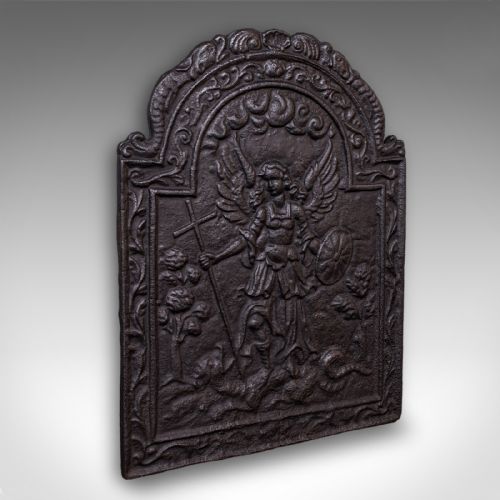
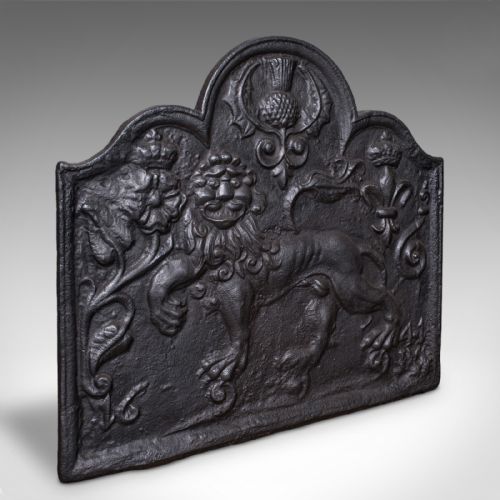
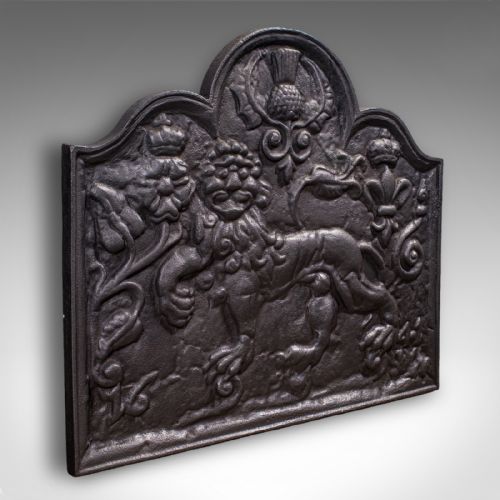


Cast Iron Hearth Plate
These heavy cast iron hearth plate examples bring warmth and historical character to a chimney breast, radiating heat back into the room.
Cast Iron Hearth Plate
A cast iron hearth plate, often called a fireback or fireplace reflector, stands against the rear wall of a fireplace to protect the masonry and project heat forward into the room. When you search for a cast iron hearth plate, you will encounter substantial metal slabs designed to endure intense heat over centuries.
The pieces appearing on this page span several distinct periods, reaching from the seventeenth century through the Georgian era and into the Victorian period. Victorian examples dominate the selection, frequently incorporating historic revival styles such as the Carolean Revival, Neoclassical Revival, and Victorian Gothic.
Forms vary from simple rectangular panels to arch top designs and church refectory pieces. Common decorative motifs include heraldry, the Tree of Life, armour and eagles, and depictions of horse and rider.
What varies in quality
Quality in a cast iron hearth plate rests upon the crispness of the relief casting and the depth of the modelled scene. Stronger pieces display sharp borders and well-defined figures rather than shallow, blurred impressions from worn moulds.
Thickness and weight also divide the range, with heavier plates offering greater durability against thermal shock. The artistic ambition of the design, whether a simple church refectory panel or a complex French Baroque composition, determines the standing of the piece.
Some nineteenth-century ironfounders clearly enjoyed a dramatic scene, casting everything from armed eagles to spirited horses and riders directly into the hearth.
The Cast Iron Hearth Plate Glossary
- Cast iron
- An iron-carbon alloy poured into moulds while molten. It provides the heavy, heat-resistant body necessary for fireplace protection.
- Fireback
- A heavy iron plate placed at the back of a fireplace. It serves the same function as a hearth plate by reflecting heat and protecting the brickwork.
- Relief
- Sculptural projection from a flat background. This technique defines the pictorial scenes and heraldic motifs cast into the iron.
- Carolean Revival
- A nineteenth-century stylistic movement reviving seventeenth-century design elements. Plates in this style feature ornate scrolling and classical motifs reminiscent of the Restoration period.
- Arch top
- A plate design featuring a curved upper section. This shape directs heat forward and fits neatly beneath traditional fireplace lintels.
Cast Iron Hearth Plate: Frequently Asked Questions
What is a cast iron hearth plate?
A cast iron hearth plate is a heavy iron slab positioned at the back of a fireplace. Its primary purpose is to absorb heat from the fire and radiate it back into the room while protecting the rear masonry.
These plates often feature decorative reliefs, ranging from simple geometric borders to complex historical scenes, heraldry, and tree of life motifs.
How do I install a fireback?
Firebacks stand upright against the rear wall of the fireplace opening. Many are heavy enough to remain stable on their own, supported by the angle of the hearth and the ash bed.
Special feet or brackets are sometimes used to elevate the plate slightly and improve stability against the masonry wall.
How do I date a cast iron plate?
Dating relies on stylistic clues, manufacturing techniques, and recorded motifs. Victorian revival pieces often incorporate eclectic Victorian interpretations of earlier Baroque or Carolean styles.
Earlier examples from the seventeenth or eighteenth century display simpler casting textures and characteristic regional foundry marks or specific figural subjects like horse and rider.
Do these plates fit modern fireplaces?
Compatibility depends entirely on the dimensions and weight of the specific plate relative to the fireplace opening. Because they are heavy and rigid, careful measurement of the firebox width and height is essential before placement.
Standard Victorian and revival plates suit many traditional open hearths, but shallower grates may require smaller or specifically proportioned panels.
How do I maintain cast iron?
Cast iron requires minimal upkeep beyond occasional cleaning of soot and ash with a soft brush. Applying a light coat of grate polish or black lead helps maintain the dark finish and prevents surface oxidation.
Avoiding moisture accumulation keeps the iron stable during the months when the fireplace is not in regular use.