


Antique Fireplace Reflector
These antique fireplace reflector pieces project warmth and shield rooms, spanning Victorian and Georgian eras in cast iron, copper, and wrought iron.
Antique Fireplace Reflector
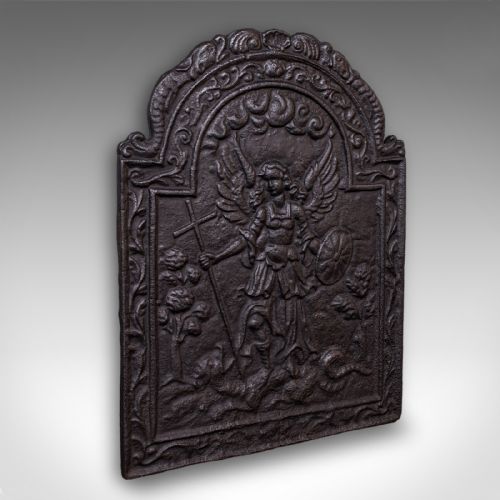
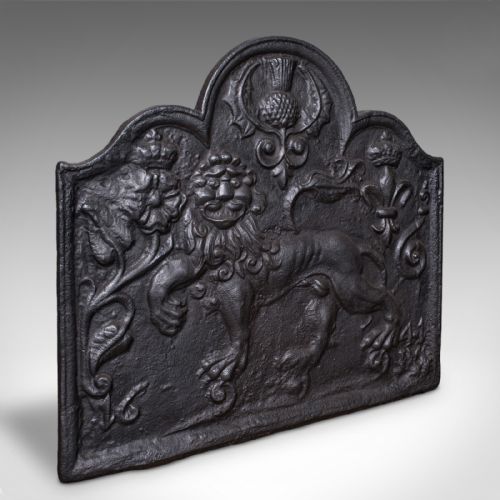
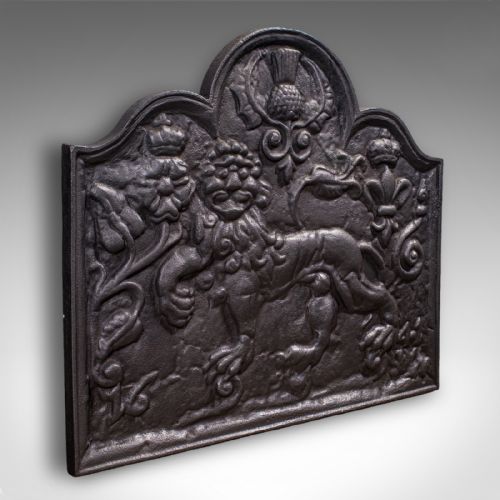
An antique fireplace reflector primarily takes the form of heavy cast iron fire backs and metal fire screens designed to manage hearth heat and protect masonry. Buyers browsing this selection encounter numerous English and French examples dating from the Georgian period through the late Victorian era.
Victorian pieces dominate the available selection, frequently displaying styles such as Neoclassical Revival, Carolean Revival, and Art Nouveau alongside traditional heraldic and tree of life motifs. Georgian examples appear less frequently but offer substantial weight and early decorative relief work.
Materials and Construction Methods
Cast iron and wrought iron form the basis of the heavy fire backs, shaped through foundational foundry techniques to withstand intense hearth temperatures. Moulds captured deep relief patterns depicting coats of arms, floral arrangements, and architectural revival scenes.
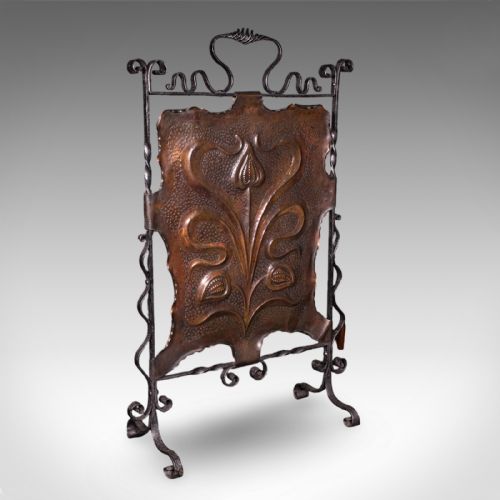
Copper and textile combinations appear in standing fire screens, utilising beaten metal panels and embroidered panels mounted on mahogany or wooden frames. These materials reflect ambient room light and radiated heat while introducing softer textures to the hearth setting.
Antique Fireplace Reflector Retail Price Guide 2026
Typical asking prices for fireplace reflector among the pieces listed under this phrase on Sellingantiques today, from the lower quarter to the upper quarter. They describe what is for sale here now, not the wider market.
Listings span Georgian and Victorian periods, incorporating cast iron, copper, wrought iron, mahogany, and textile materials in various screen and fire back forms.
Distinctions in Quality and Craftsmanship
Quality in cast iron fire backs rests upon the crispness of the relief casting and the depth of the iron plate. Superior pieces display sharply defined motifs and substantial metal thickness that indicate careful pattern making.
Standing screens derive their quality from the integrity of the frame construction and the skill of the metal beating or textile needlework. Finer examples balance structural stability with refined decorative detail across both iron and copper components.
The Antique Fireplace Reflector Glossary
- Fire back
- A heavy metal plate placed against the rear wall of an open fireplace to protect the masonry and radiate heat back into the room. They are typically cast in iron and decorated with relief designs.
- Fire screen
- A movable barrier placed in front of an active fireplace to reduce radiant heat or conceal an unlit grate during warmer months. These often utilise copper panels or embroidered textile inserts.
- Cast iron
- An iron-carbon alloy poured into moulds to create solid objects with complex surface decoration. It forms the primary material for heavy fire backs.
- Pole screen
- A type of fire screen featuring an adjustable vertical panel mounted on a central wooden pole with a tripod base. The panel can be slid up or down to block heat at various heights.
Antique Fireplace Reflector: Frequently Asked Questions
What is an antique fireplace reflector?
An antique fireplace reflector is a heavy metal fire back or a decorative screen designed to protect the chimney wall and project heat into a room.
Most surviving examples date from the Georgian and Victorian periods, constructed from cast iron, wrought iron, or copper.
How do you use a fire back?
A fire back stands vertically against the rear brickwork inside an open fireplace hearth.
It absorbs heat from the burning logs and slowly releases it outward while shielding the back wall from direct flame damage.
How do fire screens differ from fire backs?
Fire backs are heavy iron plates that remain fixed at the rear of the hearth behind the fire.
Fire screens are freestanding movable pieces placed in front of the fireplace opening using materials like copper, textile panels, and wood frames.