
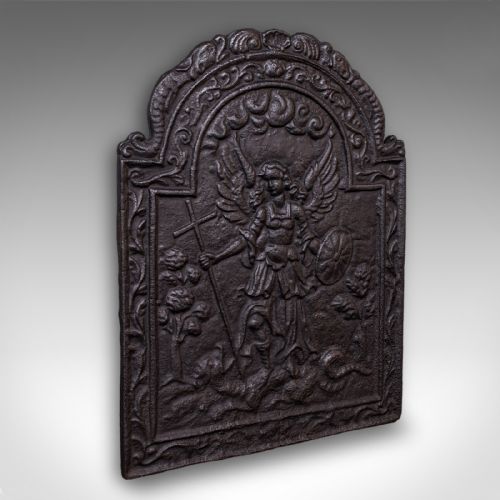
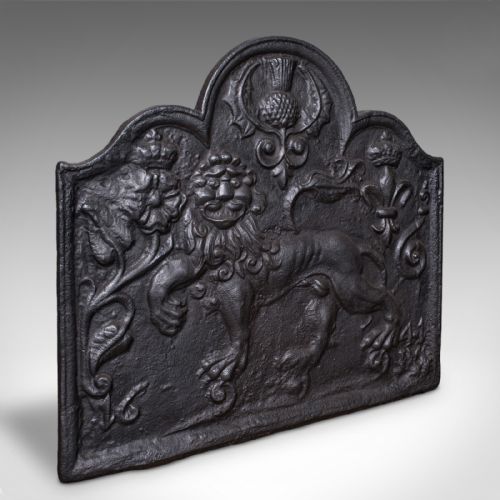
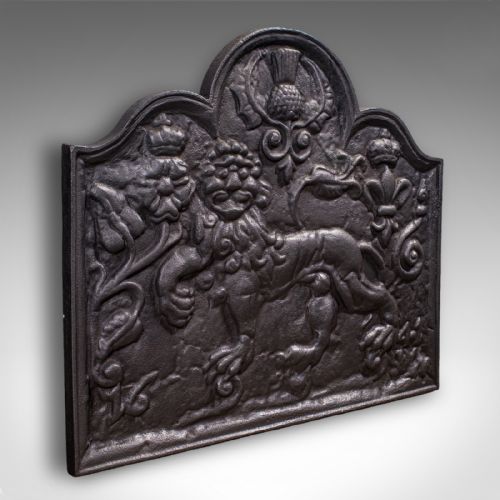


English Cast Iron Fireback
These heavy plates protect the masonry and throw the heat back into the room with style.
English Cast Iron Fireback
When you search for an english cast iron fireback, you are looking at substantial iron plates designed to stand at the back of an open hearth. They absorb the heat of the fire and radiate it steadily into the room long after the flames die down.
The pieces on this page span the Georgian and Victorian periods, taking forms such as firebacks, fireplace reflectors, fire grates, and andirons. You will frequently encounter Victorian examples alongside occasional Georgian pieces.
Stylistic variation is wide, ranging from plain utility plates to decorative designs in the Neoclassical Revival, Carolean Revival, Victorian Heraldic, and Victorian & Gothic idioms. Many pieces incorporate relief work, tree of life motifs, or church refectory designs.
Materials and casting methods
These items are predominantly formed from cast iron, utilising the metal's ability to hold and slowly release intense heat. Some associated fireplace accessories incorporate wrought iron for structural support.
Makers poured molten iron into open sand or loam moulds pressed with wooden or carved patterns. This process created the raised relief surfaces and heavy plates found across the inventory.
Tree of life motifs let you bring a sturdy orchard right into the hearth without ever worrying about watering the iron branches.
Distinctions in quality and execution
The standard of an english cast iron fireback rests upon the crispness of the moulded relief and the weight of the metal plate. Thicker castings provide greater thermal mass and durability against intense heat.
Design complexity also separates standard utility plates from ambitious revival pieces. Well-executed heraldic details, Neoclassical motifs, and deep relief castings show superior workshop skill.
The English Cast Iron Fireback Glossary
- Cast iron
- A hard, brittle alloy of iron and carbon poured into moulds while molten. It forms the heavy plate of every fireback.
- Fireplace reflector
- An alternative term for a fireback describing its function of throwing heat forward into the room. These plates protect the rear brickwork from thermal shock.
- Relief
- Raised ornamentation standing out from the flat background plane of the iron plate. This technique creates the pictorial scenes and heraldic crests.
- Neoclassical revival
- A stylistic movement drawing inspiration from classical Greek and Roman art. Pieces in this idiom feature symmetrical motifs and formal ornamentation.
- Carolean revival
- A style reviving the rich ornamentation of the mid-seventeenth century restoration era. It appears on English firebacks through scrolls and heraldic framing.
English Cast Iron Fireback: Frequently Asked Questions
What is an english cast iron fireback used for?
These heavy iron plates sit against the rear wall of an open fireplace to protect the brickwork from intense heat. They also absorb warmth during a fire and project it forward into the room.
Beyond practical heating, they serve as decorative focal points within the hearth. Their relief designs add texture and historical character to the chimney breast.
How do I install a fireback?
A fireback typically stands upright against the back wall of the fireplace hearth. Many pieces rely on their own substantial weight and slight backward lean for stability.
Some installations use dedicated feet or a supporting grate to keep the plate elevated. Ensure the hearth surface is level and capable of supporting heavy iron before placement.
How do I tell Victorian firebacks from Georgian ones?
Georgian firebacks date from the eighteenth or very early nineteenth century and often display simpler, heavier utility forms. They tend to have straightforward proportions and restrained surface ornament.
Victorian examples frequently showcase revival styles such as Gothic, Neoclassical, or Carolean, alongside pictorial motifs like the tree of life. They date from the nineteenth century up to nineteen hundred.
Can I use these firebacks in a working fireplace?
These plates are designed to withstand high temperatures and open flames in active hearths. Cast iron handles the thermal cycle of wood fires effectively when seasoned and properly installed.
Inspect the plate for stability and ensure it rests securely against the masonry before lighting a fire. Avoid rapid, extreme temperature shocks to protect the iron.