

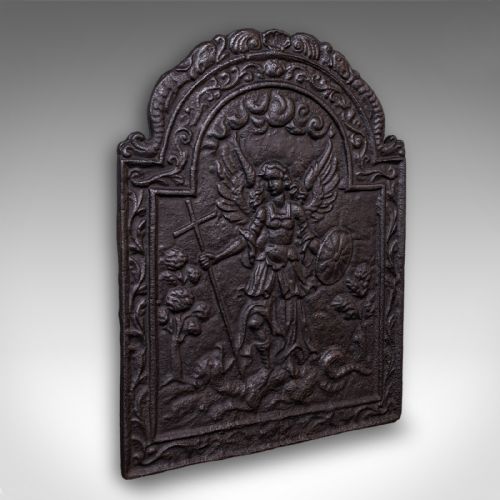


Heavy Iron Fireplace Plate
These heavy iron fireplace plate pieces bring historic warmth and substance to a hearth, shaped from enduring metal to radiate heat.
Heavy Iron Fireplace Plate
When you search for a heavy iron fireplace plate, you encounter sturdy cast iron firebacks designed to sit at the back of a hearth. These architectural accessories protect the masonry while reflecting heat back into the room.
The pieces on this page span several distinct periods, including the seventeenth century, Georgian era, and Victorian times. You will frequently find Victorian examples alongside earlier seventeenth century and 1700 forms.
Makers shaped these plates with diverse stylistic influences such as Baroque, Neoclassical Revival, and Gothic motifs. Common thematic designs range from tree of life patterns to classical horse and rider scenes.
How they were made
Craftsmen utilised robust cast iron to pour molten metal into moulds, creating thick plates capable of withstanding intense hearth temperatures. This singular material provides the structural mass essential for both heat retention and decorative relief work.
Foundries employed intricate carving techniques for the moulds to produce raised surface details. These relief sculptures include heraldry, classical figures, and arboreal subjects cast directly into the heavy iron.
Heavy Iron Fireplace Plate Retail Price Guide 2026
Typical asking prices for heavy iron fireplace plate among the pieces listed under this phrase on Sellingantiques today, from the lower quarter to the upper quarter. They describe what is for sale here now, not the wider market.
A cast iron horse and rider gallop across one seventeenth-century plate, enduring silently through centuries of hearth smoke.
What varies in quality
The depth and clarity of the cast relief define the visual merit of each piece. Crisp detailing on figures, foliage, and heraldic motifs distinguishes superior artistic execution from simpler utilitarian castings.
Proportion and thickness dictate the physical integrity and presence of the plate within a fireplace setting. Heavier castings with well-balanced dimensions demonstrate superior foundry work from their respective periods.
The Heavy Iron Fireplace Plate Glossary
- Cast iron
- A hard, relatively brittle alloy of iron and carbon that can be readily cast in a mould. It forms the essential heavy material of every fireback.
- Fireback
- A heavy iron plate placed at the back of an open fireplace. It radiates heat into the room and protects the wall behind the fire.
- Neoclassical Revival
- An architectural and decorative style drawing inspiration from classical antiquity. This style appears frequently on Victorian ironwork.
- Baroque
- A flamboyant artistic style marked by ornate detail and dramatic movement. Pieces from this tradition display exuberant surface relief.
Heavy Iron Fireplace Plate: Frequently Asked Questions
What is a heavy iron fireplace plate used for?
These plates serve a dual purpose in an open hearth. They absorb and reflect radiant heat back into the living space while shielding the brickwork from extreme temperatures.
Historically, they also acted as decorative focal points for the room, displaying coats of arms or pictorial scenes.
How do I date a heavy iron fireplace plate?
Dating relies on stylistic clues such as lettering fonts, decorative motifs, and the specific relief style used. Seventeenth-century pieces often feature simpler or deeply rustic castings, whereas Victorian examples draw on historical revivals.
Examining the manufacturing texture and edge finish further helps determine whether a piece originates from the 1700s or the later nineteenth century.
Are these plates suitable for modern fireplaces?
These robust iron plates fit securely into many traditional open hearths or large fireplace openings. Their substantial weight requires stable placement against the rear wall.
Buyers should measure both the hearth depth and width carefully to ensure proper clearance before installation.
How do I care for a cast iron fireback?
Maintenance involves brushing away soot and ash gently with a soft dry brush after use. Avoid harsh chemical cleaners that can strip the dark iron finish.
Applying a light coat of grate polish or specialised stove blacking periodically helps maintain the deep colour of the metal.