


Victorian Cast Iron Fireback
These heavy iron shields project hearth warmth forward while protecting brickwork, offering genuine nineteenth-century utility for active chimneys.
Victorian Cast Iron Fireback
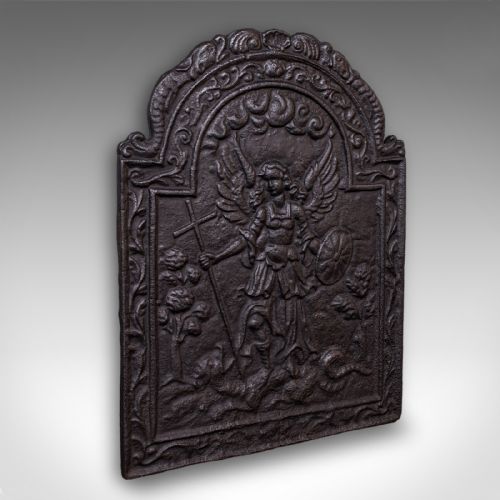
A victorian cast iron fireback sits vertically against the rear wall of an open hearth, functioning as both a decorative panel and a functional reflector for coal or wood fires. The pieces found here span the nineteenth century, including specific dates such as 1880 alongside broader early and late periods.
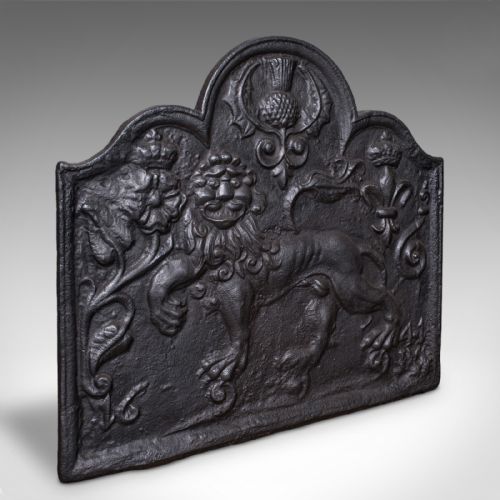
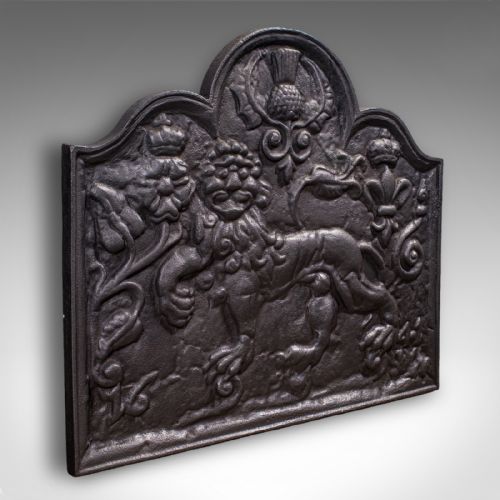
Most examples function as fireplace reflectors, while others integrate directly with grates, fire baskets, and fenders. Stylistic influences stretch from seventeenth-century and Carolean revivals to Neoclassical and Gothic designs, featuring heraldic motifs and tree of life patterns.
Materials and construction
Foundry work relies heavily on cast iron poured into sand or open moulds to achieve thick, durable plates capable of withstanding intense hearth temperatures over decades. Wrought iron and brass appear in auxiliary components such as fenders, grates, and frames.
Surface ornamentation is achieved through direct relief casting, producing crisp heraldic crests, botanical motifs, and architectural revival details straight from the molten pour.
The documented pieces span domestic fireplace reflectors, church refectory panels, and complete register grate assemblies with integrated fenders.
Assessing quality and depth
Depth of relief casting separates simpler utility plates from ambitious decorative commissions, where figures and heraldry emerge with sharp undercutting and clear definition. Thickness and weight also vary significantly between standard domestic reflectors and substantial church refectory pieces.
The integrity of the iron surface, free from deep structural cracking through the plate, dictates longevity under active heat, while the fidelity of revival styles like Neoclassical or Carolean determines artistic merit.
The Victorian Cast Iron Fireback Glossary
- Fireback
- A heavy metal plate placed at the back of an open fireplace. It radiates heat back into the room and protects the masonry wall behind the fire.
- Reflector
- An alternate term for a fireback designed to bounce thermal energy forward. These pieces often feature angled sides or highly polished relief work.
- Register Grate
- A metal fireplace insert featuring an adjustable flap or register to control the draught. They frequently incorporate integrated grates and decorative surrounds.
- Carolean Revival
- A nineteenth-century design style mimicking late seventeenth-century English aesthetics. It draws heavily on Restoration-era motifs, scrollwork, and robust proportions.
- Neoclassical
- A revival style inspired by classical antiquity. It introduces symmetrical urns, swags, and architectural columns into nineteenth-century hearth ironwork.
Victorian Cast Iron Fireback: Frequently Asked Questions
How do I install a fireback?
These heavy iron plates simply stand upright against the rear brick wall of the hearth, often supported by small feet or tilted slightly backward for stability.
Ensure the hearth floor is level and clean before placing the iron directly behind your fire basket or burning logs.
Do they actually heat the room?
Iron absorbs thermal energy while the fire burns and continues to radiate warmth outward long after the flames have died down.
Thicker cast plates hold this warmth considerably longer than thin decorative sheets.
How do I tell early from late pieces?
Earlier nineteenth-century examples often lean toward specific revival movements like Carolean or early Gothic, showing hand-finished relief details.
Late pieces frequently adopt standardised neoclassical patterns or heavy industrial casting techniques designed for standard register grates.