


Black Cast Iron Fireplace
A black cast iron fireplace anchors a room with the heavy weight and dark metalwork of past centuries.

Black Cast Iron Fireplace
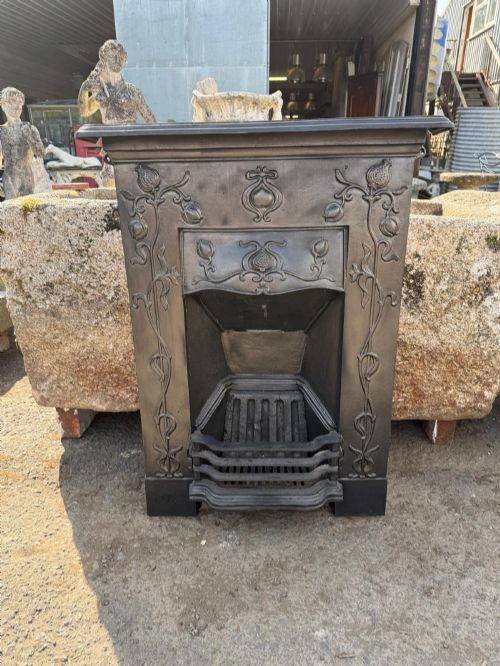
A black cast iron fireplace search uncovers substantial hearth furniture spanning the Georgian, Regency, and Victorian periods, alongside later twentieth-century interpretations. Buyers encounter complete combination fireplaces, open fire grates, and decorative fire backs designed to project heat and protect masonry.
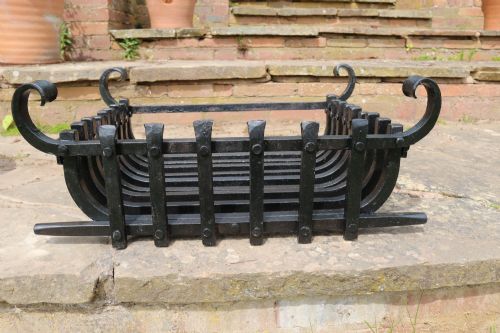
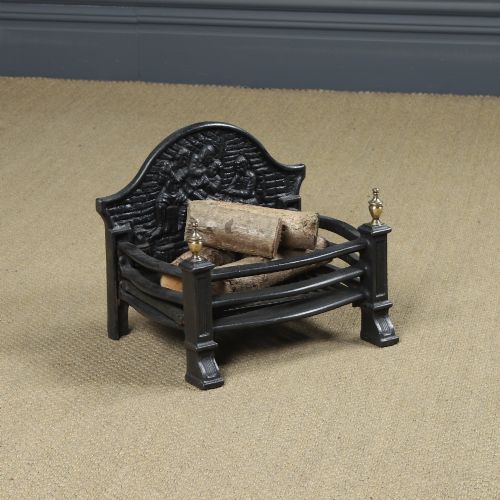
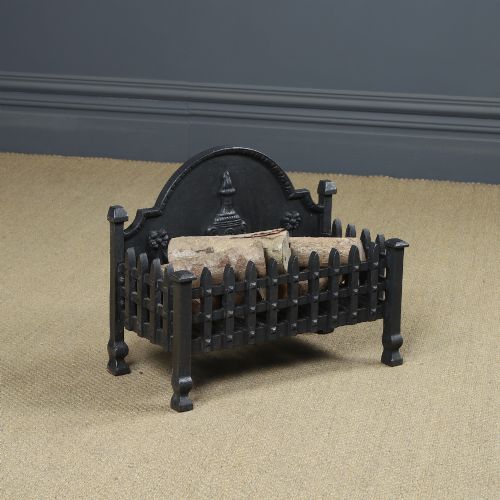
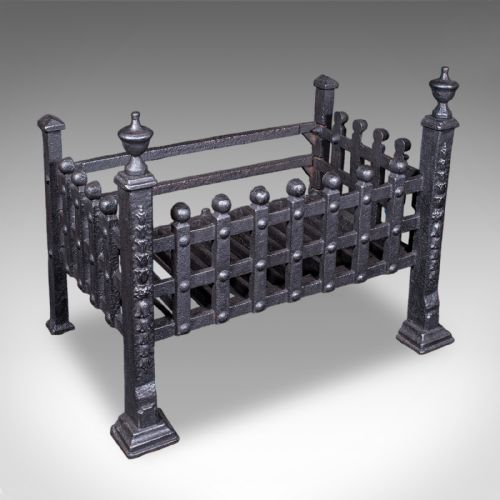
The selection on this page leans heavily toward Victorian examples, featuring fire baskets, andirons, and heavy iron fire backs alongside earlier eighteenth-century styles. Forms range from simple hob grates to large inglenook assemblies and complete fireplace sets with matching hearth furniture.
How they were made
Makers utilised molten cast iron poured into sand moulds to create heavy panels, fire backs, and grates with crisp relief decoration. Wrought iron was frequently incorporated alongside cast elements for bars, baskets, and structural hearth components.
Additional materials such as brass, firebrick, and timber appear as supporting elements on fenders, andirons, and surrounds. Surfaces were often left as dark cast iron or treated to achieve the characteristic black finish seen on period grates.
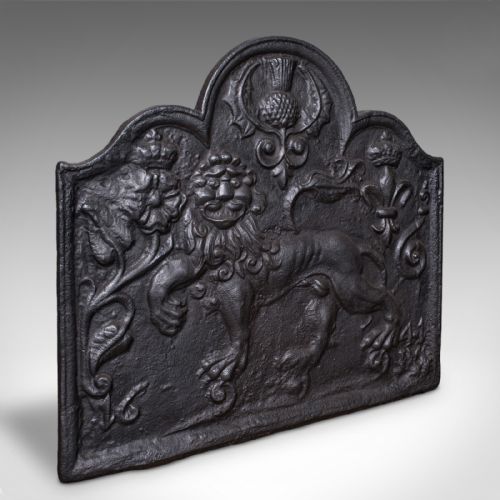
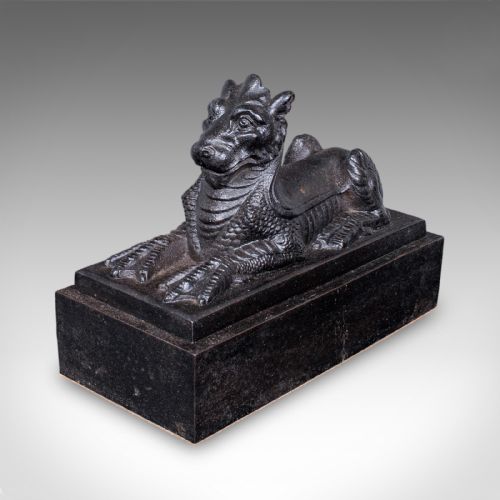
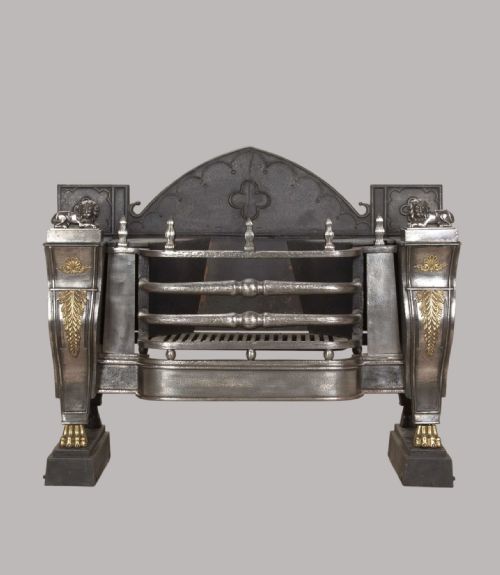
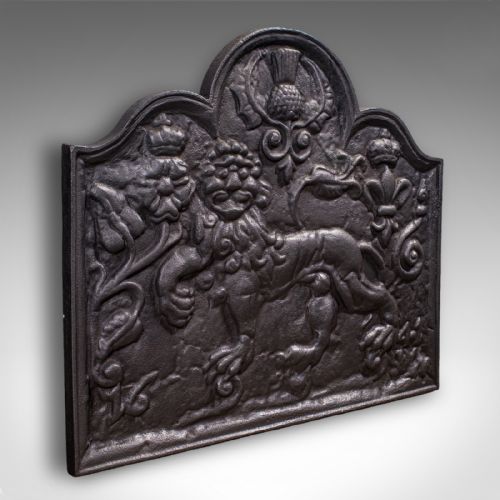
Cast iron lions stand guard on hearths, keeping watch over centuries of ash and embers.
What varies in quality
Depth and crispness of relief casting separate standard utilitarian grates from superior examples bearing classical or neoclassical ornamentation. Heavier gauge iron and substantial plate thickness indicate pieces built to withstand centuries of intense heat without warping.
The integration of complementary materials, such as finely turned brass details or intricate wrought iron scrollwork, marks out the higher tiers of nineteenth-century hearth equipment.
Coalbrookdale
The Black Cast Iron Fireplace Glossary
- Cast iron
- An iron-carbon alloy poured into moulds to create rigid, heavy components with detailed surface relief. It forms the primary structural body of most period grates and fire backs.
- Fire back
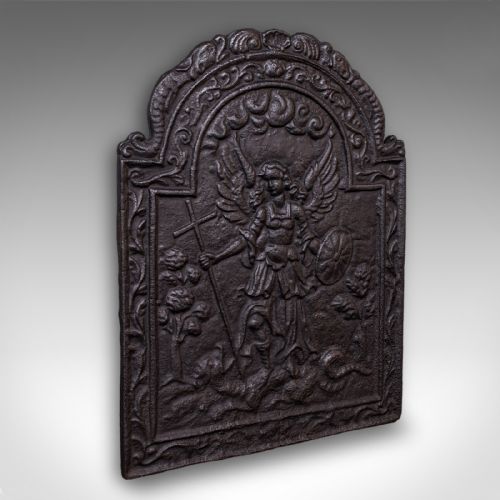
- A heavy iron plate placed against the rear wall of a fireplace to reflect heat back into the room and protect the brickwork. Many feature pictorial or heraldic relief designs.
- Andirons
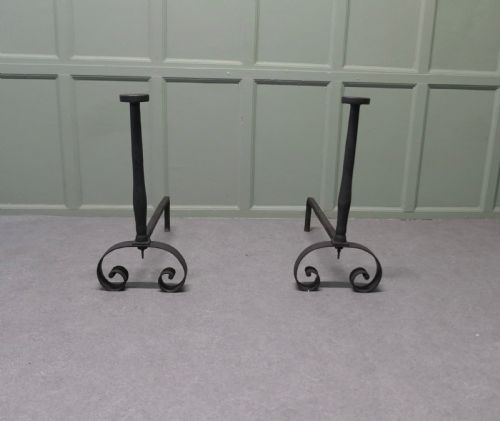
- Supporting metal fire dogs placed on either side of a hearth to hold logs above the floor of the fireplace. They frequently appear paired with matching fire baskets.
- Hob grate
- An early fireplace design featuring raised side plates flanking a central grate where kettles could be heated. These units became popular during the Georgian and Regency periods.
- Register grate
- A fireplace grate equipped with a movable metal plate or flap to control the draught escaping up the chimney. They are commonly found in nineteenth-century domestic settings.
Black Cast Iron Fireplace: Frequently Asked Questions
How do I choose the right size fireplace?
Measure the opening of your hearth precisely, accounting for depth as well as height and width. Period grates and fire baskets must allow adequate clearance for airflow and safety within the chimney recess.
Consider the scale of the room alongside the physical weight of the ironwork. Larger inglenook pieces require substantial clearance and robust hearth construction.
Can these antique grates still burn wood?
Many cast iron grates and fire baskets remain structurally capable of holding solid fuel when installed by a professional. Thermal shock can affect older iron, so fires should be built gradually to prevent cracking.
Consult a specialist chimney sweep or installer before lighting any historic hearth. Modern safety regulations and flue liners often dictate how antique ironwork must be fitted.
How do I clean black cast iron?
Remove loose soot and ash using a soft brush or dry cloth, avoiding abrasive pads that scratch the metal surface. Light applications of appropriate grate polish help maintain the dark finish.
Keep moisture away from untreated iron to prevent surface oxidation. Regular dusting preserves the historic patina without stripping the metal.
What is the difference between a fire back and a fire basket?
A fire back is a flat or shaped plate positioned upright against the back wall of the hearth to reflect heat. It remains stationary behind the fire.
A fire basket is a self-contained metal container that holds the burning wood or coal above the hearth floor. Baskets often sit forward of the fire back or combine with andirons.