


Period Cast Iron Grate
Period cast iron grates are hearth fixtures of iron and brass that bring structural authenticity and period warmth to a fireplace.
Period Cast Iron Grate
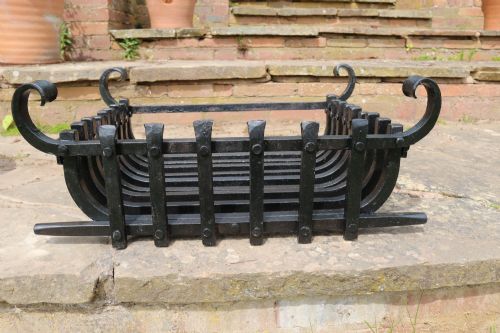
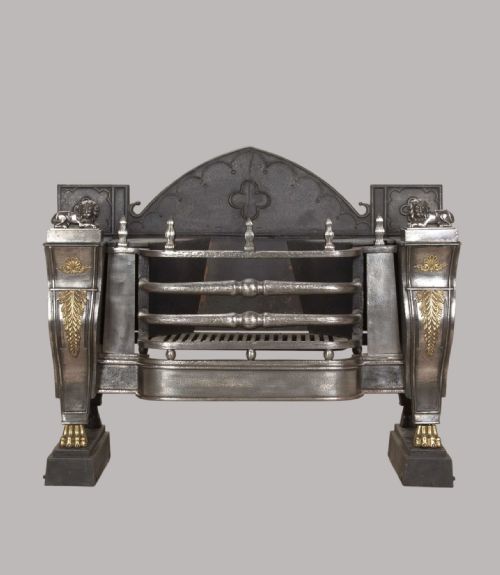
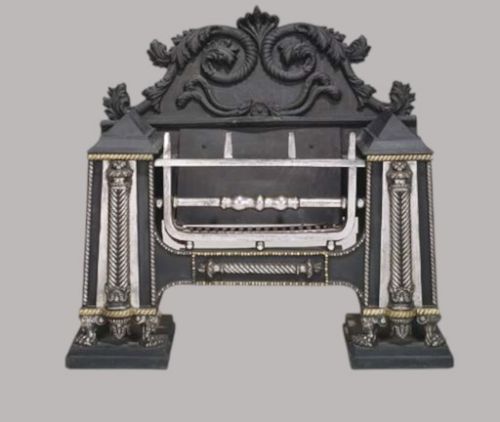
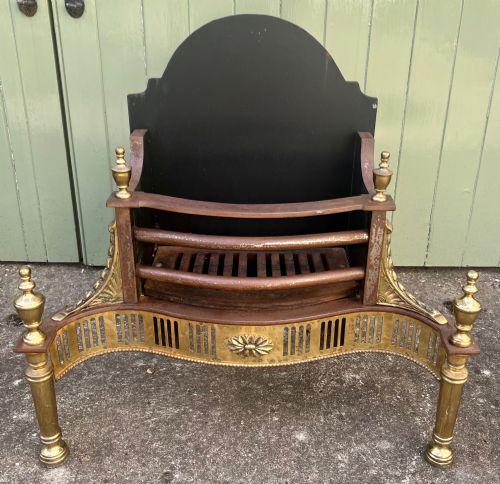
When you search for period cast iron grate, you encounter fire baskets, combination fireplaces, and register grates originating from Georgian, Regency, and Victorian eras. These items served to contain coal or wood fuel within domestic hearths while projecting heat efficiently into rooms through metal louvres and backs.
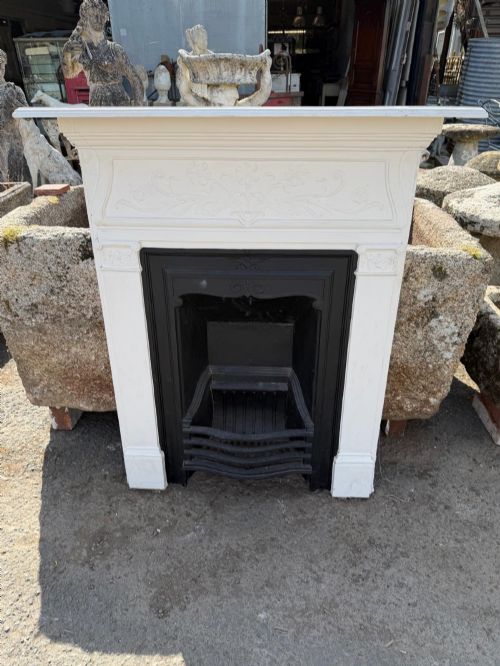
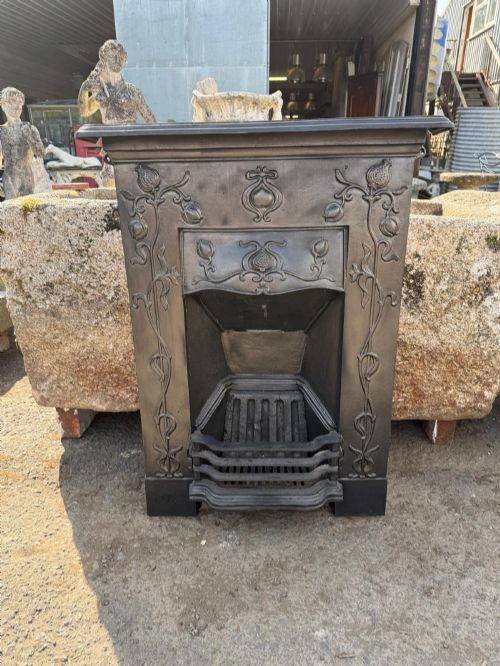
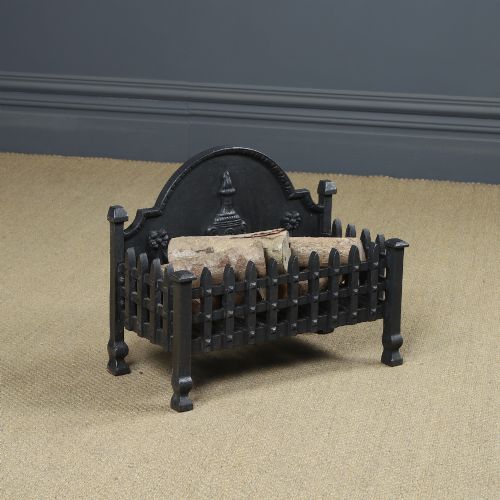
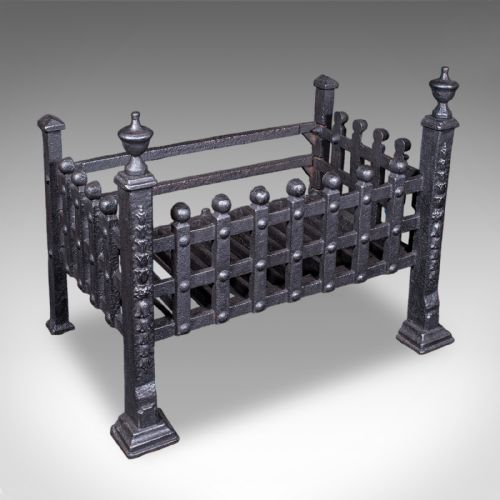
The most frequent examples on this page are Victorian combination fireplaces and freestanding or hob fire baskets combining cast iron with wrought iron, brass, and firebrick. Their forms range from simple register grates designed to fit standard chimney openings to elaborate fire baskets flanked by andirons.
Origins span English workshops of the eighteenth and nineteenth centuries, with revival styles referencing neoclassical, Adam, and Arts and Crafts aesthetics. Buyers select these grates to restore functional authenticity to period chimney openings or to establish a focal point within a room.
How they were made
Foundries produced these grates primarily through sand casting for structural backs and fire backs, pouring molten iron into moulds to achieve decorative relief panels. Wrought iron elements were hammered and shaped by hand for structural bars, fire baskets, and fenders, offering greater tensile strength than cast metal.
Brass components, including finials, rails, and decorative appliques, were cast separately and polished or combined with iron frames in neoclassical and Regency designs. Firebrick linings were integrated into the internal firebox to reflect heat and protect the surrounding metal from intense combustion temperatures.
Mulling andirons included in hearth sets remind us that Victorians liked their winter ale warmed directly by the fire.
What varies in quality
The distinction between standard utility grates and finer examples lies in the crispness of the casting detail and the integration of mixed metals such as brass and wrought iron. Superior pieces display deeply struck neoclassical ornament, balanced proportions, and robust gauge iron that resists thermal warping.
Craftsmanship in assembly defines the better items, where decorative brass work is securely pinned to heavy iron frames rather than crudely affixed. The presence of original firebacks, matching andirons, and integrated register mechanisms also elevates the calibre of a grate.
Coalbrookdale
The Period Cast Iron Grate Glossary
- Hob grate
- A type of fireplace featuring raised iron platforms on either side of the grate where kettles could be heated. These are characteristic of Georgian and Regency interiors.
- Register grate
- A fireplace insert featuring a built-in flap or register plate above the grate to regulate the draught up the chimney. They became common in the nineteenth century.
- Fire back
- A heavy cast iron plate placed at the back of a fireplace to protect the masonry and reflect heat back into the room. They frequently display classical or heraldic reliefs.
- Andirons
- Horizontal bars supported on legs, also known as fire dogs, used to support logs in an open hearth. They often accompany fire baskets.
- Combination fireplace
- A single-piece cast iron fireplace surround and grate manufactured as a cohesive unit. This form gained popularity during the Victorian period.
Period Cast Iron Grate: Frequently Asked Questions
Will a period grate fit my modern chimney?
Many period grates are designed for standard chimney openings, but dimensions vary significantly across Georgian and Victorian examples. Professional measurement of your opening depth and width is essential before installation.
Firebrick inserts and register plates can sometimes be adjusted, but original cast iron frames cannot be altered without damaging the material integrity.
Can I burn real wood in these grates?
Most of these grates were constructed to burn coal or wood, though the inclusion of a firebrick lining determines suitability for intense log fires. Grates with heavy cast iron fire backs handle wood combustion effectively.
Lighter fire baskets are better suited for coal or gas conversion unless reinforced with appropriate firebrick protection.
How do I clean and maintain cast iron?
Routine maintenance involves brushing away ash and applying a traditional grate polish or black lead to maintain the dark finish and prevent surface oxidation. Avoid using water or harsh chemical cleaners which can cause rust.
Brass components require a separate appropriate metal polish applied carefully to avoid staining the surrounding iron.
How do I date a cast iron grate?
Dating relies on stylistic indicators, such as neoclassical urn motifs in Georgian pieces or geometric strapwork in Arts and Crafts designs. The transition from heavy hob grates to combination fireplaces helps sequence nineteenth century production.
Maker marks, registration numbers, and construction techniques like the use of wrought iron versus cast iron provide further chronological clues.