
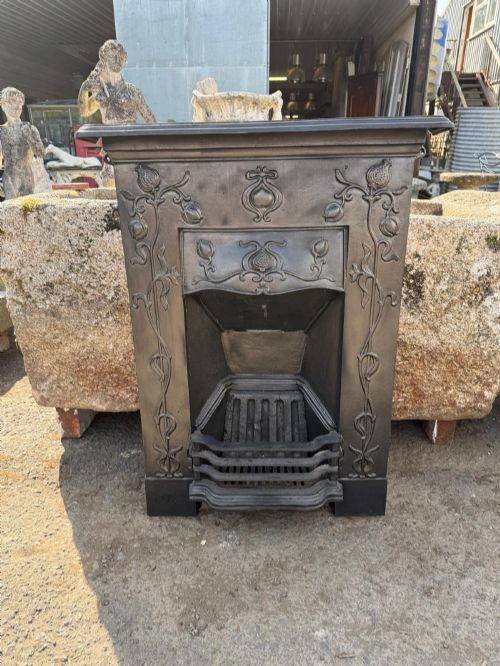


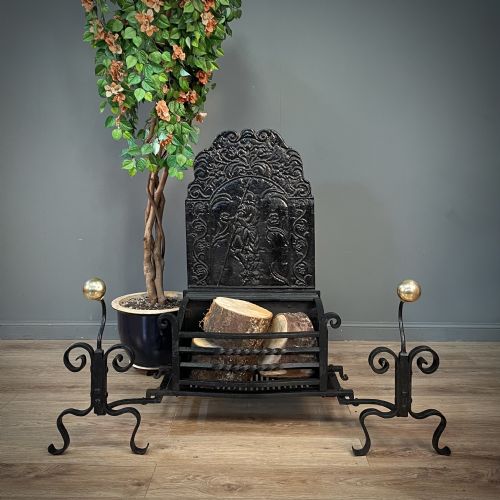
Black Iron Fireplace Insert
These black iron fireplace insert examples bring solid period hearth furniture into a room, offering practical warmth and strong architectural presence.
Black Iron Fireplace Insert
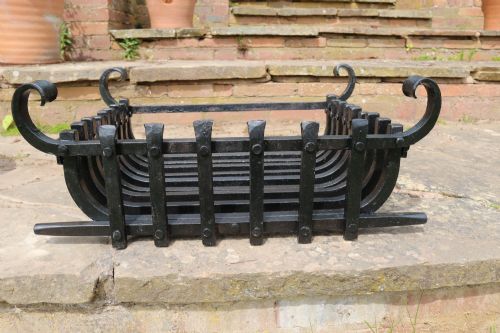
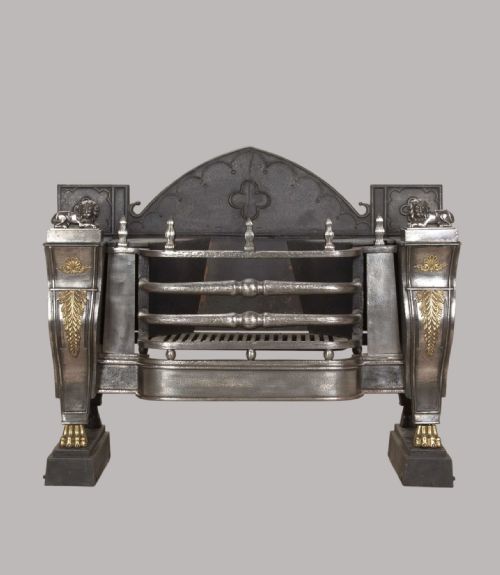
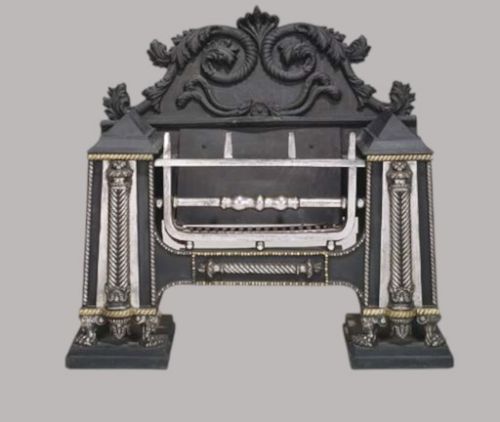
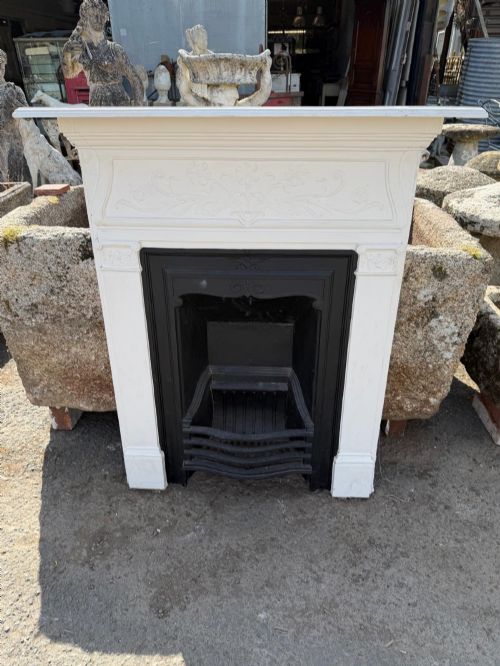
A black iron fireplace insert provides a robust functional focal point for a room, taking the form of grates, baskets, register grates, or combination fireplaces designed to sit within a chimney opening. When searching for a black iron fireplace insert, buyers encounter various historical configurations ranging from simple grates to elaborate combination units.
The pieces listed here span the Georgian, Regency, Victorian, Edwardian, and 1930 periods, showing how domestic heating evolved through different eras. Forms include free-standing fire baskets, hob grates, and combination fireplaces that integrate hearth furniture with a surrounding cast frame.
Makers and designers from these eras utilised traditional metalworking methods to produce pieces that combined utility with classical, Adam style, or Arts and Crafts aesthetic principles. Most examples rely on heavy metal construction designed to contain solid fuel safely while projecting heat effectively.
How they were made
Makers relied principally upon cast iron and wrought iron, often combining the two metals to achieve both structural rigidity and decorative detail in fire baskets and grates. Some assemblies incorporate brass elements for contrast alongside timber components or firebrick linings designed to withstand high temperatures.
Foundries cast large components in moulds while smiths worked wrought iron by hand for bars, handles, and structural supports. This dual technique allowed for intricate surface ornament on register grates and combination fireplaces alongside robust load-bearing frames.
Hob grates doubled as domestic kitchens, quietly boiling morning kettles beside the coal.
What varies in quality
Quality shows in the crispness of the casting and the finesse of the wrought iron work, distinguishing standard utilitarian foundry output from superior classical designs. Heavier castings with well-defined decorative motifs and integrated components like hob plates or decorative backs demonstrate greater craftsmanship.
The integrity of the metal structure and the survival of original components such as fire baskets, grates, and associated hardware dictate the standing of a piece. Finer examples maintain balanced proportions, whether built on a grand scale or constructed in smaller dimensions for compact rooms.
Coalbrookdale
The Black Iron Fireplace Insert Glossary
- Hob grate
- A type of fireplace grate featuring flat iron shelves at either side of the fire, traditionally used for keeping kettles warm. These units became popular during the Georgian and Regency periods.
- Register grate
- A fireplace insert featuring an adjustable metal plate or flap within the chimney throat to control the draught. This mechanism improved heating efficiency in nineteenth-century rooms.
- Fire basket
- An open metal basket designed to hold coal or wood logs within a hearth. They often stand on legs or incorporate integrated andirons.
- Combination fireplace
- A complete self-contained fireplace unit where the grate and surrounding mantel or frame are cast as a single piece. Victorian homes utilised these extensively for standardised installation.
- Andirons
- Horizontal metal bars supported on vertical legs, used in pairs to hold logs above the hearth floor. They frequently accompany fire baskets in period fireplace sets.
Black Iron Fireplace Insert: Frequently Asked Questions
What is a hob grate?
A hob grate is a traditional fireplace insert featuring flat metal shelves flanking the central fire basket. These side shelves allowed households to heat water and food.
Georgian and Regency makers produced these grates in cast and wrought iron, often incorporating classical design motifs into the front plates.
How do register grates work?
Register grates feature a built-in metal flap or damper connected to a control rod. Closing this flap partially restricted airflow up the chimney when the fire was not burning.
This nineteenth-century innovation helped retain heat in the room and prevented downdraughts from entering the living space.
Are these inserts suitable for burning wood?
Many period fire baskets and grates were originally designed for coal rather than large logs. Using appropriately sized fuel protects the historic ironwork from excessive thermal stress.
Some installations utilise firebrick linings to absorb and radiate heat while protecting the outer metal frame from direct flames.
How do I identify a Victorian combination fireplace?
A Victorian combination fireplace is cast as a single unified unit comprising both the grate and the surrounding decorative iron frame. This design streamlined manufacturing and installation during the nineteenth century.
These pieces typically display period ornamentation reflecting prevailing aesthetic movements such as the Arts and Crafts style.
What distinguishes an Arts and Crafts fire basket?
Arts and Crafts fire baskets emphasise honest construction, hand-worked wrought iron surfaces, and simpler structural lines rather than elaborate classical ornament. Makers in this tradition valued visible craftsmanship.
These pieces often date from the late nineteenth or early twentieth century and complement rustic or revival interiors.