
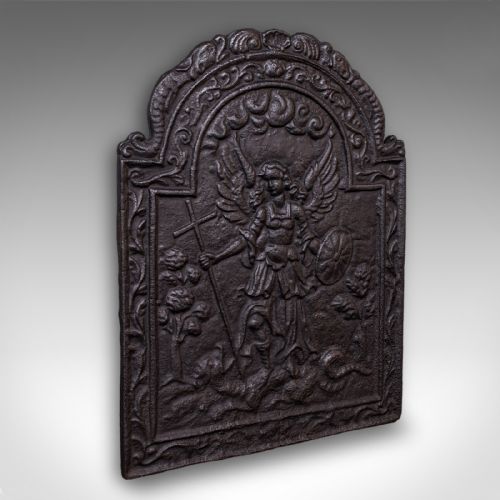
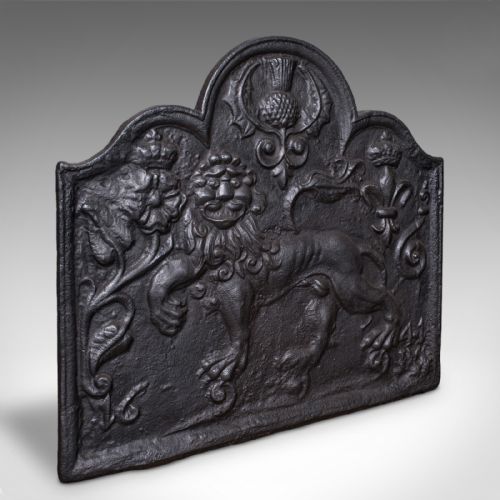
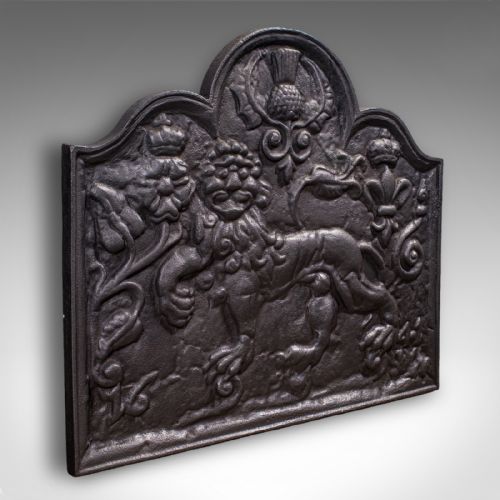


Black Iron Hearth Plate
These heavy black iron hearth plate examples are substantial fireplace reflectors designed to throw heat back into the room while protecting the masonry.
Black Iron Hearth Plate
A black iron hearth plate sits at the back of an open hearth to absorb and radiate warmth while guarding the brickwork from intense flame. When you search for a black iron hearth plate, you encounter heavy cast pieces intended for coal or wood fires.
The examples available here span the Georgian, Victorian, and nineteenth-century periods. These heavy panels take forms such as arch tops, church refectories, and panels bearing distinct decorative motifs.
Moulders cast these iron plates in English and French workshops, producing items that function as both practical fireplace reflectors and decorative architectural salvage. Styles on this page range from plain utility panels to elaborate revival designs.
Materials and casting methods
Foundries used durable cast iron to pour these heavy plates, utilising sand moulds pressed from carved wooden patterns or existing metal plaques. This casting process allowed workshops to achieve thick, resilient panels capable of withstanding extreme hearth temperatures.
Surface ornamentation relied on low relief moulding directly into the iron, creating crisp lines for heraldic, floral, and architectural motifs. Makers finished the metal with dark protective coatings to resist rust and suit the interior of a traditional chimney breast.
Listings feature cast iron firebacks spanning the Georgian, Victorian, and nineteenth-century periods, incorporating Neoclassical, Gothic, and French Baroque revival styles.
Distinguishing quality in cast iron
The depth and clarity of the relief casting separate standard utility plates from finer decorative examples. Sharper details in heraldry, armour, or botanical elements indicate superior pattern-making and careful foundry work.
Thickness and weight determine the structural integrity of the plate, with heavier panels offering greater longevity against thermal shock. The sophistication of the historical revival style, whether Neoclassical, Carolean, or French Baroque, also elevates the visual weight of the piece.
The Black Iron Hearth Plate Glossary
- Fireback
- A heavy metal plate placed at the back of a fireplace to reflect heat into the room and protect the wall. These plates often feature moulded historical or heraldic scenes.
- Reflector
- An alternate term for a fireback describing its primary practical function of throwing warmth forward. These panels concentrate heat from open hearths.
- Relief
- Sculptural projection from a flat background surface. Cast iron firebacks utilise low and high relief to create pictorial scenes.
- Refectory
- A term borrowed from dining halls, occasionally used to describe large rectangular panels with ecclesiastical or monastic proportions. These pieces suit grand chimney openings.
- Carolean Revival
- A decorative style looking back to the reign of Charles II, featuring rich baroque ornamentation. Firebacks in this manner display robust scrolls and classical motifs.
Black Iron Hearth Plate: Frequently Asked Questions
What is a black iron hearth plate used for?
These plates stand against the rear wall of an open fireplace to absorb heat and project it forward into the room.
They also shield the brickwork behind the fire from intense heat, preventing structural damage to the chimney breast.
How do I install a heavy fireback?
A heavy iron plate simply rests vertically against the back brick of the fireplace, often tilted slightly backward for stability.
Because of their considerable weight, larger pieces require a strong, level hearth base to support them safely without tipping.
Are these plates suitable for modern gas fires?
Many of these cast iron panels function effectively behind modern gas log burners or traditional open wood fires.
Buyers should measure the height and depth of their fireplace opening carefully to ensure the plate fits the available space.
How do I date a Victorian iron fireback?
Dating relies on the recorded period styles, foundry marks, and the specific motifs cast into the iron surface.
Nineteenth-century examples frequently incorporate revival styles such as Neoclassical, Gothic, or Carolean elements that reflect Victorian tastes.