
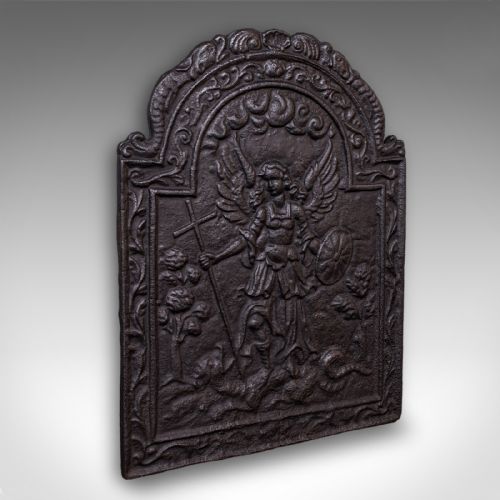
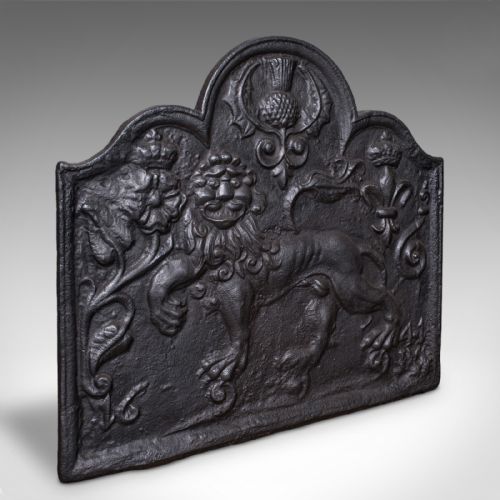
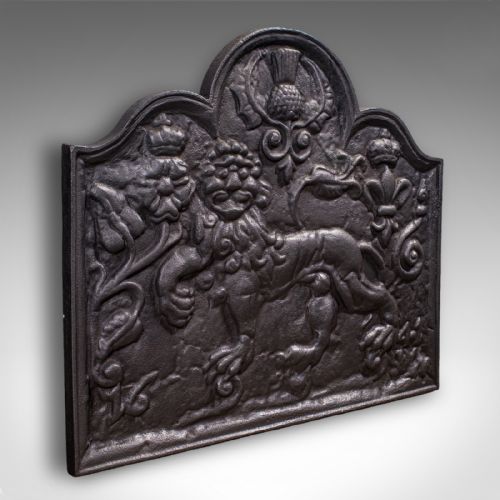


Cast Iron Fireplace Reflector
These cast iron fireplace reflector pieces project warmth out into the room and protect the rear masonry of the hearth.
Cast Iron Fireplace Reflector
A cast iron fireplace reflector acts as a heavy rear hearth plate designed to absorb and radiate heat outward while shielding the chimney wall. When you search for a cast iron fireplace reflector, you encounter robust English pieces primarily originating from the Victorian period alongside earlier Georgian examples.
Most examples originate from English workshops and present substantial iron construction built to withstand centuries of solid fuel burning. Collectors often select these heavy plates to anchor a traditional hearth installation or to restore the functional integrity of a period fireplace.
Materials and construction methods
These pieces rely entirely upon durable cast iron poured into open sand moulds or impressed wooden patterns to achieve deep relief ornamentation. The metal cools into thick, heavy plates designed to absorb intensive thermal energy without warping.
English founders utilised traditional casting techniques that left distinct textural signatures across the surface, from smooth plain borders to intricate heraldic and botanical motifs. The resulting iron plates combine structural heft with decorative artistry suited for sustained exposure to open flames.
Some Victorian ironmasters snuck family crests onto fire backs so nobody could mistake whose hearth was throwing the best heat.
Distinctions in quality and execution
Quality in a cast iron fireplace reflector rests upon the crispness of the relief casting and the uniformity of the iron plate. Superior examples display sharp, well-defined details in Neoclassical or Carolean Revival motifs rather than softened edges from worn moulds.
Weight and structural integrity also separate standard production from exceptional examples, with heavier plates offering superior thermal retention and durability. The depth of the casting and the balance of the proportions determine how successfully the piece commands the hearth space.
The Cast Iron Fireplace Reflector Glossary
- Fire back
- A heavy iron plate placed at the back of an open hearth to reflect heat into the room and protect the brickwork. It serves both a practical thermal function and a decorative purpose.
- Cast iron
- An iron-carbon alloy poured into moulds to create heavy, rigid objects. This material withstands high temperatures and holds intricate surface relief.
- Carolean Revival
- A Victorian design style emulating the rich decorative arts of the mid-seventeenth century reign of Charles II. It often incorporates ornate scrolls and robust classical elements.
- Neoclassical Revival
- A style drawing upon the classical art and architecture of ancient Greece and Rome. Pieces in this style feature symmetrical geometry and formal ornamentation.
- Heraldic
- Pertaining to coats of arms and familial crests often cast into early iron hearth plates. These designs denote lineage and historical pageantry.
Cast Iron Fireplace Reflector: Frequently Asked Questions
How do I install a cast iron fireplace reflector?
A cast iron fireplace reflector simply stands upright against the rear brickwork of an open hearth. Its substantial weight keeps it stable without requiring permanent fixings.
Position the plate centrally behind the grate to ensure maximum heat projection into the room and optimal protection for the masonry wall.
Can I use these in a modern fireplace?
These heavy iron plates function effectively in traditional open hearths burning solid fuel. They absorb the heat of the fire and radiate warmth outward long after the flames subside.
Ensure your fireplace opening accommodates the specific dimensions and considerable weight of the iron plate before placement.
How do I tell Victorian from Georgian pieces?
Georgian examples often display simpler, heavier utility forms or distinct early casting characteristics typical around eighteen hundred. Victorian pieces frequently exhibit specific revival styles such as Neoclassical, Carolean, or Heraldic motifs.
Examination of the relief depth and edge finishing helps identify the manufacturing period and stylistic influences.