


Antique Hearth Backplate
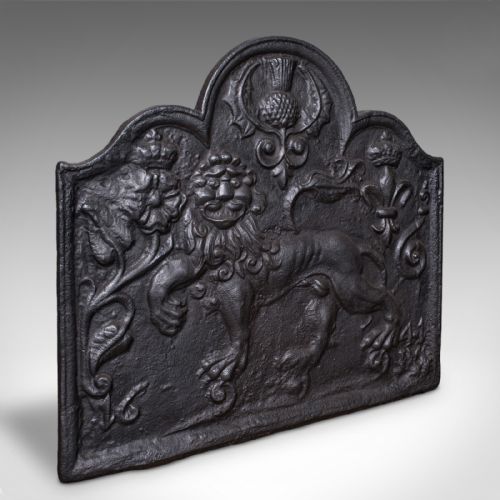
These antique hearth backplates protect rear masonry while throwing residual heat back into the room, grounding an inglenook with substance.
Antique Hearth Backplate
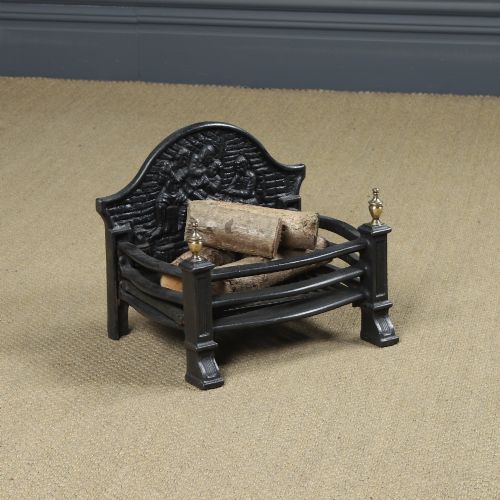
An antique hearth backplate anchors a traditional fireplace setup, serving both a functional and decorative role behind the flames. When buyers search for an antique hearth backplate, they encounter robust metal slabs and grates designed to endure intense heat.
The selections available here span several centuries and styles, featuring pieces from the seventeenth century through to the Victorian era and the nineteen-twenties. Common forms include heavy relief-cast panels, complete fire baskets, and integrated fireplace sets with andirons.
Makers drew upon diverse aesthetic movements, producing items in Gothic Revival, Carolean Revival, Baroque, and Arts and Crafts styles. Most examples lean towards Victorian and nineteenth-century production, frequently executed in durable cast iron.
How they were made
Artisans relied primarily on cast iron, pouring molten metal into sand or open-face moulds to achieve deep pictorial relief and crisp textural details. Wrought iron and brass appeared alongside the main ironwork for structural elements and decorative accents.
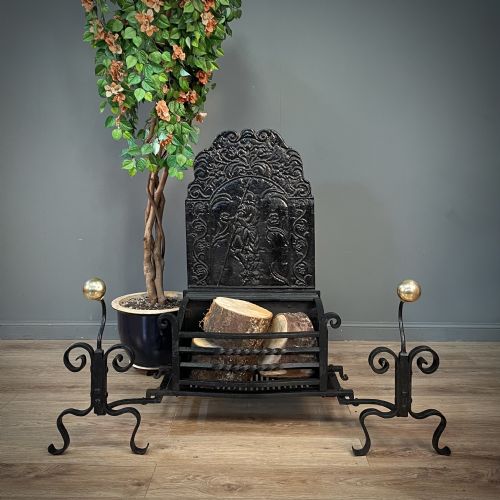
Some configurations incorporated firebrick to withstand the direct thermal load of an active coal or wood fire. Metalworkers combined casting and forging techniques, particularly in complex fire baskets and grates that demanded both rigid frames and ornate backplates.
Styles span from the seventeenth century through Victorian Gothic Revival and Arts and Crafts movements.
What varies in quality
The depth and crispness of the cast relief determine the visual merit of a backplate, distinguishing sharp armorial or foliate designs from worn, indistinct impressions. Heavier castings generally indicate a more substantial investment of metal and superior durability under high temperatures.
Integration of secondary materials, such as well-wrought ironwork on associated fire baskets or decorative brass fittings, separates standard utility pieces from exceptional decorative hearth furnishings.
The Antique Hearth Backplate Glossary
- Fireback
- A heavy metal plate placed against the rear wall of a fireplace to protect the brickwork and reflect heat forward into the room. These often feature raised pictorial motifs or heraldic designs cast directly into the iron.
- Fire basket
- An open metal grate designed to hold logs or coal, frequently paired with a dedicated backplate or manufactured as a single integrated unit. They sit within the hearth to elevate the fuel and improve airflow.
- Andirons
- A pair of horizontal metal supports with vertical pillars placed in a hearth to raise logs above the floor for better burning. They often appear alongside larger fire baskets and backplates in inglenook settings.
- Carolean Revival
- A decorative style echoing the ornate furnishings of the reign of King Charles II, characterised by rich baroque scrolls and vigorous relief carving. In ironwork, this translates into exuberant, swirling motifs.
- Gothic Revival
- An architectural and decorative movement drawing inspiration from medieval forms, featuring pointed arches, tracery, and quatrefoils. This style appears frequently on nineteenth-century grates and backplates.
Antique Hearth Backplate: Frequently Asked Questions
What is an antique hearth backplate used for?
These heavy plates sit at the back of an open fireplace to absorb and radiate heat back into the living space. They also shield the rear masonry wall from the direct intensity of burning wood or coal.
Beyond practical thermal protection, they served as a primary decorative focal point within the hearth. Elaborate relief scenes and period styles transformed a utilitarian necessity into a display of household substance.
How do I identify a Victorian fireback?
Victorian pieces often display characteristic nineteenth-century revivals, ranging from strict Gothic Revival tracery to ornate decorative relief. Look for the distinct weight and manufacturing uniformity typical of late-nineteenth-century iron foundries.
Earlier examples from the seventeenth century or the Carolean era tend to show a more rustic, hand-poured irregularity in the casting. The stylistic vocabulary gives the clearest indication of the era in which the iron was poured.
Can I use these with a modern fireplace?
Many of these pieces are built to fit standard open hearths, though dimensions and weights vary considerably between individual grates and backplates. Inglenook sets require substantial depth and clearance to accommodate their complete frames and andirons safely.
Buyers should measure the hearth opening carefully against the listed dimensions of the ironwork. Professional installation ensures the heavy cast components rest securely against the masonry.
What materials are common in these pieces?
Cast iron is the dominant material, prized for its ability to hold and slowly release heat without warping. Wrought iron often appears in structural frames, fire baskets, and associated hardware requiring forged strength.
Secondary elements may include brass details and firebrick linings designed to handle direct thermal shock. Each metal was chosen for its specific tolerance of high hearth temperatures.
What is an inglenook fire basket?
An inglenook fire basket is a substantial, wide grate designed to sit within a large, traditional recessed fireplace. These setups often combine the basket, a heavy backplate, and andirons into a unified hearth arrangement.
They were built to handle large quantities of fuel for warming expansive rooms. Their generous proportions suit deep chimney recesses rather than shallow modern hearths.