


Victorian Iron Fireback
These Victorian iron fireback pieces protect the rear wall of a hearth while throwing warmth back into the room.
Victorian Iron Fireback
A victorian iron fireback sits at the back of an open hearth, serving both a decorative and a practical purpose in the chimney. The pieces on this page appear primarily in cast iron, often functioning as fireplace reflectors alongside grates and hearth furniture.
Most examples date from the nineteenth century, spanning periods from early Victorian to late Victorian designs. They frequently incorporate styles such as Neoclassical Revival, Carolean Revival, and Victorian Heraldic motifs.
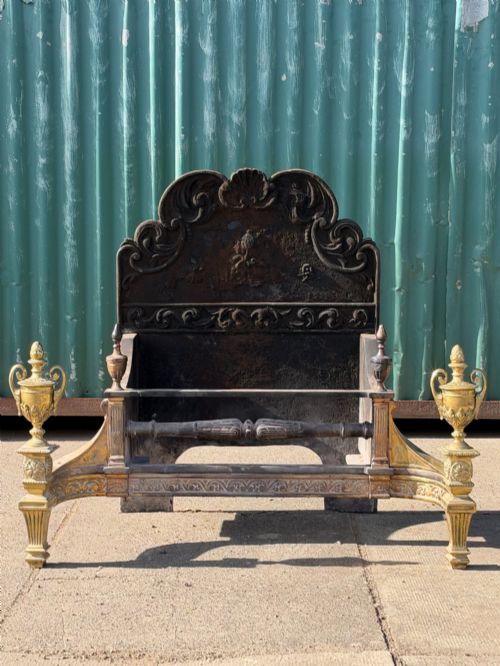
Forms range from standalone relief panels to integrated assemblies that include fire baskets, andirons, or fenders. These heavy iron plates anchor the visual weight of a period fireplace surround.
Materials and construction
Cast iron serves as the primary material for these heavy hearth panels, allowing workshops to pour molten metal into detailed relief moulds. Wrought iron and brass appear in associated grates, fenders, and fire baskets.
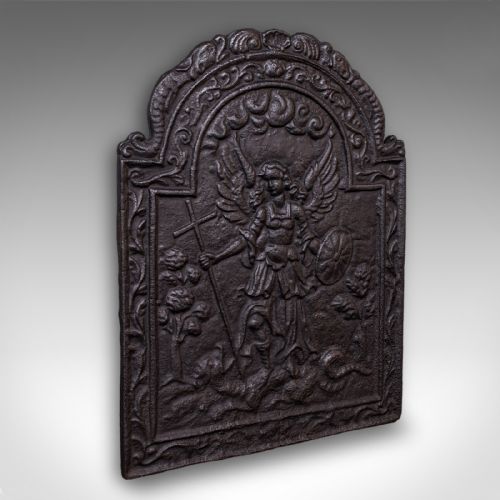
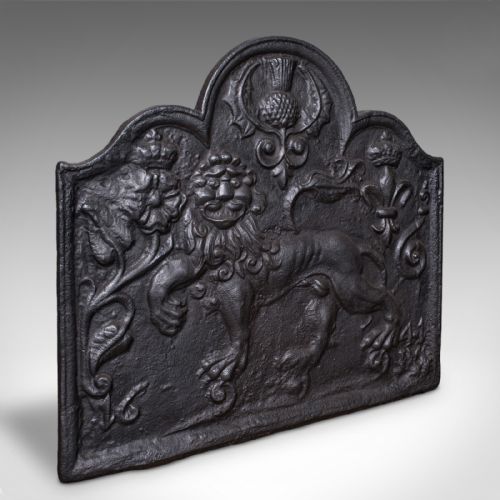
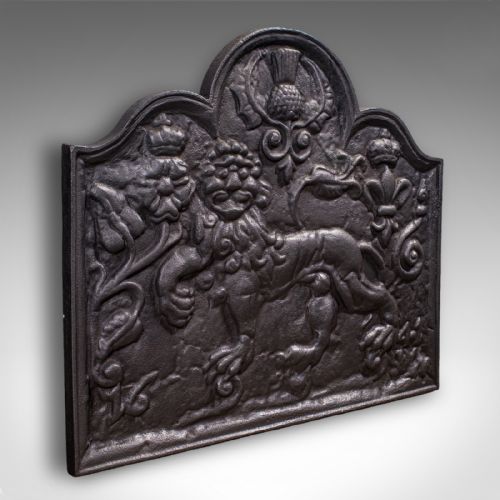
Moulds captured intricate surface details, producing deep relief scenes including heraldic designs, church refectory patterns, and the traditional tree of life motif.
Several examples depict the classic tree of life motif, inviting a touch of ancient folklore directly onto the hearth wall.
Assessing quality and presence
Quality rests in the crispness of the cast relief work and the thickness of the iron plate. Finer pieces display deep, well-defined moulding that retains its sharpness across figurative or heraldic scenes.
The integrity of the metal piece also dictates its standing, distinguishing heavy, solid plates from lighter utility castings. Proportion relative to the hearth and the complexity of revival styling further separate standard pieces from exceptional ones.
The Victorian Iron Fireback Glossary
- Fireback
- A heavy metal plate placed against the back wall of a fireplace to radiate heat and protect the masonry. It forms the central visual anchor of a period hearth.
- Register grate
- A framed fireplace insert featuring a built-in damper mechanism to control the draught. These units combine the fireback and grate into a single fitted metal assembly.
- Andirons
- Horizontal support bars raised on decorative feet, used to hold logs within an open hearth. They frequently accompany fire baskets and firebacks.
- Relief
- Sculptural projection from a flat background surface. Victorian iron firebacks utilise this technique to display figurative scenes and heraldic crests.
- Carolean Revival
- A nineteenth-century design style emulating late seventeenth-century ornamentation. Pieces in this taste incorporate vigorous scrolling and classical motifs.
Victorian Iron Fireback: Frequently Asked Questions
What is a Victorian iron fireback used for?
These heavy plates sit against the back brickwork of an open fireplace to absorb and radiate heat back into the room. They also protect the rear wall of the hearth from intense coal or wood fires.
Beyond utility, they act as decorative focal points within the fireplace surround. Their patterned surfaces catch the flickering light of the hearth.
How do I measure for a fireback?
Measure the height and width of your fireplace opening, leaving adequate clearance around the edges of the plate. Ensure the hearth can support the substantial weight of cast iron.
Check the depth of your fire basket or grate to confirm the plate sits securely against the back wall. Proper placement ensures the design remains visible behind the burning fuel.
Can I use these firebacks with a modern fire?
Cast iron firebacks function effectively with both traditional wood-burning hearths and gas fire installations. Their primary material withstands high temperatures without losing structural integrity.
Position the heavy plate firmly against the rear masonry before lighting any fire. The metal will distribute heat evenly across the back of the chimney.
How do I identify a Carolean Revival fireback?
Carolean Revival pieces display decorative motifs inspired by seventeenth-century English design. Look for exuberant scrolls, classical architectural elements, and bold relief work.
These nineteenth-century interpretations blend earlier stylistic enthusiasm with Victorian casting techniques. They offer the visual weight of an antique with the standardised sizing of the later period.