


Cast Iron Fire Back
Cast iron fire back plates protect the chimney breast from intense heat while radiating warmth back into the room.
Cast Iron Fire Back
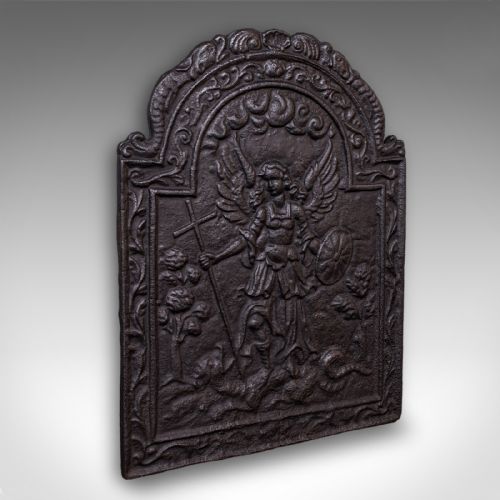
A cast iron fire back sits at the rear of an open hearth to absorb and reflect thermal energy into the living space. These heavy iron plates protect the masonry of the chimney breast from the direct degradation of constant burning coal or wood.
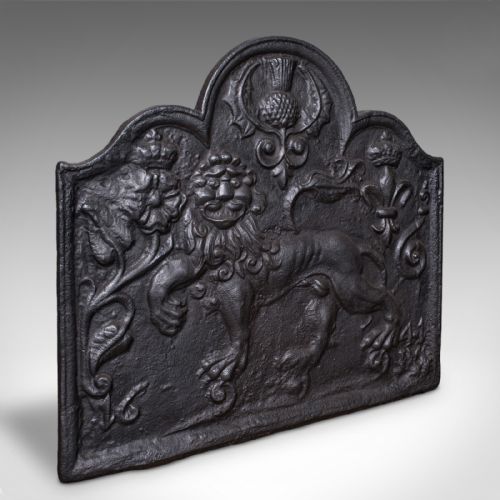
Most examples encountered here originate from the Victorian period, though earlier Georgian and later 1920 pieces appear alongside French and English variants. Common formats range from simple utility reflectors to decorative panels featuring heraldic coats of arms, royal crests, and classical motifs.
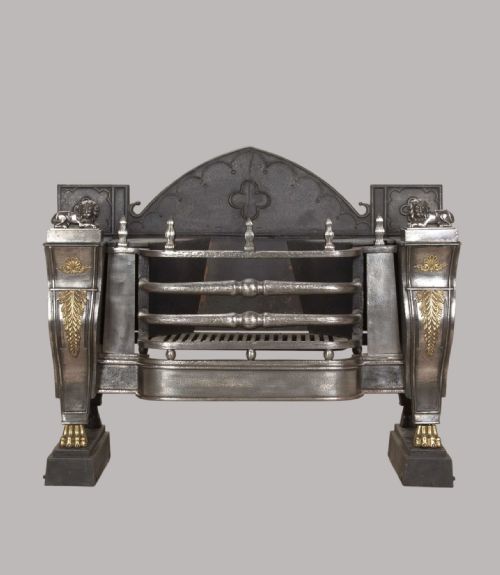
Many listings pair the fire back with matching grates, fenders, and andirons to form a complete hearth arrangement. The stylistic influences span Neoclassical, Tudor, Carolean, and Gothic revivals, reflecting the nineteenth-century appetite for historicist interior design.
How they were made
Foundries produced these heavy plates by pouring molten iron into sand moulds pressed from carved wooden patterns or existing metal originals. This casting process allowed makers to achieve sharp relief details, from intricate armorial bearings to simple arch tops.
While cast iron forms the primary body of these fire plates, secondary components often incorporate wrought iron and brass. Grates, fire baskets, and structural supports utilise these mixed metals to handle the physical weight and thermal stress of daily fires.
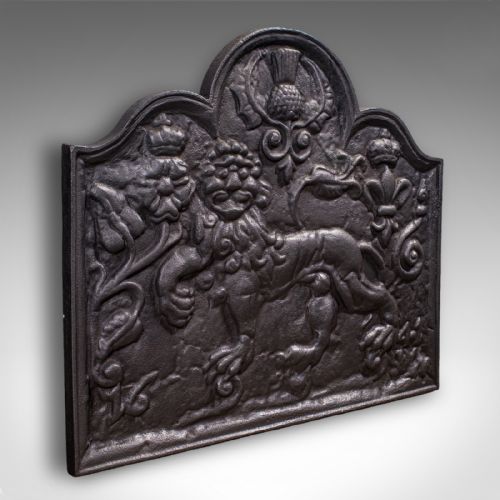
A passing leopard guards one medieval-style plate, keeping a watchful eye over the hearth coals.
What varies in quality
The definition and depth of the cast relief separate standard utility plates from superior decorative examples. Crisp detailing in heraldic crests, figures, and scrollwork indicates a careful moulding process and a skilled pattern maker.
Substance and scale dictate the architectural presence of the piece, with heavier, thicker plates offering greater thermal retention and structural fortitude. The integrity of the cast iron surface, free from deep structural pitting or excessive thermal distortion, defines the longevity of the hearth accessory.
The Cast Iron Fire Back Glossary
- Fire back
- A heavy iron plate placed at the back of a fireplace to protect the wall and reflect heat into the room. These panels often display decorative reliefs or heraldic designs.
- Andirons
- Horizontal metal bars supported by vertical legs, placed in a hearth to hold logs above the floor of the fireplace. They frequently accompany fire backs and grates in period settings.
- Fire grate
- A metal basket or framework designed to hold fuel safely within the hearth. Many examples are integrated directly with a matching fire back and fender.
- Relief
- A sculptural technique where the figures or patterns project from the flat background plane. Cast iron fire backs rely on this method to render crests and scenes clearly.
- Heraldic
- Pertaining to coats of arms, crests, and lineage symbols. Numerous Victorian fire backs incorporate these royal or noble motifs for decorative effect.
Cast Iron Fire Back: Frequently Asked Questions
How do I install a fire back?
A fire back simply stands upright against the rear brickwork of an open fireplace, often supported by the base grate or hearth floor. Its own considerable weight keeps it stable during use.
Ensure the hearth surface is level and capable of supporting heavy cast iron before placing the plate into position behind your fire basket.
How do I clean a cast iron fire back?
Remove loose ash and soot with a soft brush rather than harsh chemical cleaners or water. Preserving the natural dark surface maintains the historic character of the iron.
Light applications of suitable stove black or natural oils can help protect the metal from moisture when the fireplace is not in active seasonal use.
How do I date an older fire back?
Stylistic clues such as Gothic, Tudor, or Neoclassical revival motifs point toward nineteenth-century manufacturing, even when pieces bear earlier commemorative dates. Examine the crispness of the casting and the texture of the iron.
Earlier eighteenth-century and seventeenth-century plates typically feature simpler sand castings with distinct armorial or royal insignia from their specific era of production.