
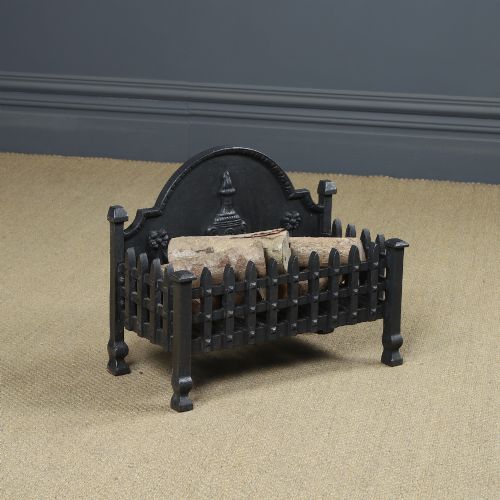
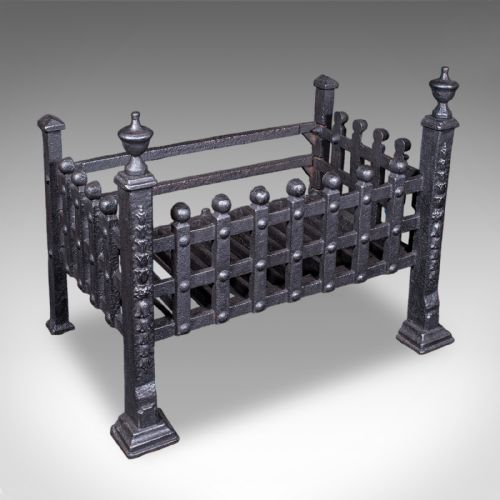


Heavy Iron Hearth Grate
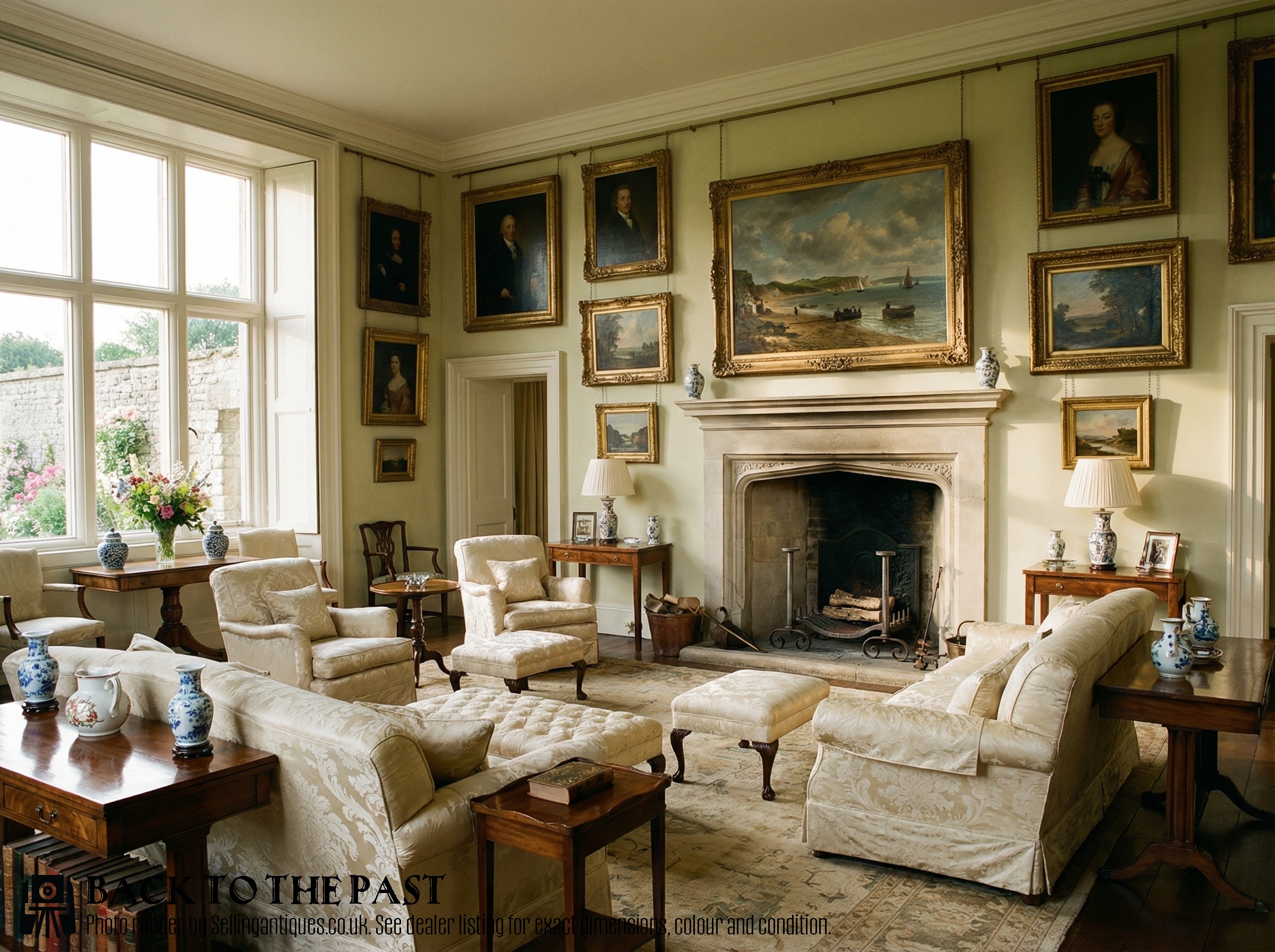
A heavy iron hearth grate anchors the room, built to hold logs safely and radiate solid warmth from the open hearth.
Heavy Iron Hearth Grate
A heavy iron hearth grate serves as the functional centrepiece of an open fireplace, designed to hold logs and coal above the hearth floor. When you search for a heavy iron hearth grate, you encounter robust fire baskets, log baskets, and complete hearth sets paired with matching andirons.
The selections span Victorian, Edwardian, and earlier revival aesthetics, reaching back through nineteenth-century production and into twentieth-century interpretations of medieval and classical forms. Many examples integrate a heavy fire back or fender, creating a substantial ensemble built for deep inglenook fireplaces.
Most pieces combine utilitarian strength with period ornamentation, ranging from simple cast iron baskets to elaborate Gothic Revival and Neoclassical designs. Buyers find both compact grates suited for smaller chambers and massive assemblies engineered to heat large reception rooms.
How they were made
Makers utilised durable cast iron for firebacks and grate bodies because the material withstands intense, sustained heat without warping. Wrought iron provided the tensile strength needed for forged fire baskets, scrollwork, and structural bars.
Many heavy grates incorporate components of brass for decorative mounts, alongside firebrick linings designed to protect the surrounding ironwork and reflect heat outward into the room. Artisans cast individual elements in sand moulds before assembling the components with rivets or threaded fasteners.
Heavy Iron Hearth Grate Retail Price Guide 2026
Typical asking prices for heavy iron hearth grate among the pieces listed under this phrase on Sellingantiques today, from the lower quarter to the upper quarter. They describe what is for sale here now, not the wider market.
Listings feature cast iron, wrought iron, and brass across Victorian, Arts and Crafts, and Neoclassical revival styles.
What varies in quality
The distinction between standard utility grates and superior examples lies in the thickness of the metal casting and the crispness of the decorative detailing. Heavier gauge iron and deeply carved or moulded surface ornament indicate a higher grade of production.
Completeness dictates overall merit, as surviving sets that retain their original andirons, firebacks, and fenders hold greater historical integrity than isolated baskets. The harmony of design between the basket and its supporting fire dogs separates bespoke artisanal commissions from mass-produced foundry items.
The Heavy Iron Hearth Grate Glossary
- Fire grate
- A metal framework designed to hold burning fuel safely within a fireplace while allowing ash to fall through to the hearth below. These range from simple drop-in baskets to elaborate structures bolted to firebacks.
- Andirons
- A pair of horizontal metal supports raised on legs, placed in a hearth to hold logs above the floor for better airflow. They frequently accompany heavy iron hearth grates.
- Fire back
- A heavy cast iron plate placed against the rear wall of a fireplace to protect the masonry and reflect heat forward. In many configurations, the grate sits directly against or fixes to this plate.
- Inglenook
- A large, recessed fireplace alcove designed to accommodate seating within the hearth space itself. Grates intended for these spaces are typically of exceptional size and weight.
- Gothic Revival
- An architectural and decorative style popular during the nineteenth century that imitates medieval forms, evident in pointed arches and quatrefoil motifs on ironwork.
Heavy Iron Hearth Grate: Frequently Asked Questions
Can I burn real wood in these grates?
These pieces were built specifically for burning solid fuels like wood and coal in open hearths. The heavy iron construction handles high temperatures safely.
Ensure your chimney is inspected and swept before lighting any fire in a period grate.
How do I clean heavy iron?
Remove ash and debris regularly with a soft brush to prevent moisture retention and subsequent rusting. Apply a traditional grate polish or black lead sparingly to maintain the dark finish.
Avoid using harsh chemical solvents that strip the historical patina from the iron.
Will these fit a modern fireplace?
Many period grates are exceptionally deep and heavy, designed for generous nineteenth-century chimney breasts. Measure your hearth depth, width, and opening height carefully before selecting a piece.
Inglenook sets require substantially more space than standard domestic hearths.
How do I identify a Victorian piece?
Victorian grates often display characteristic revival motifs, including Neoclassical urns or Gothic tracery cast directly into the iron. The weight and method of assembly, using threaded bolts and heavy lugs, typically point to this industrial era.
Proportions tend to be robust and functional, reflecting the period's focus on domestic heating efficiency.