



Black Iron Fire Dogs
Black iron fire dogs are sturdy hearth supports holding logs above the hearth floor, offering utility and character to a fireplace.
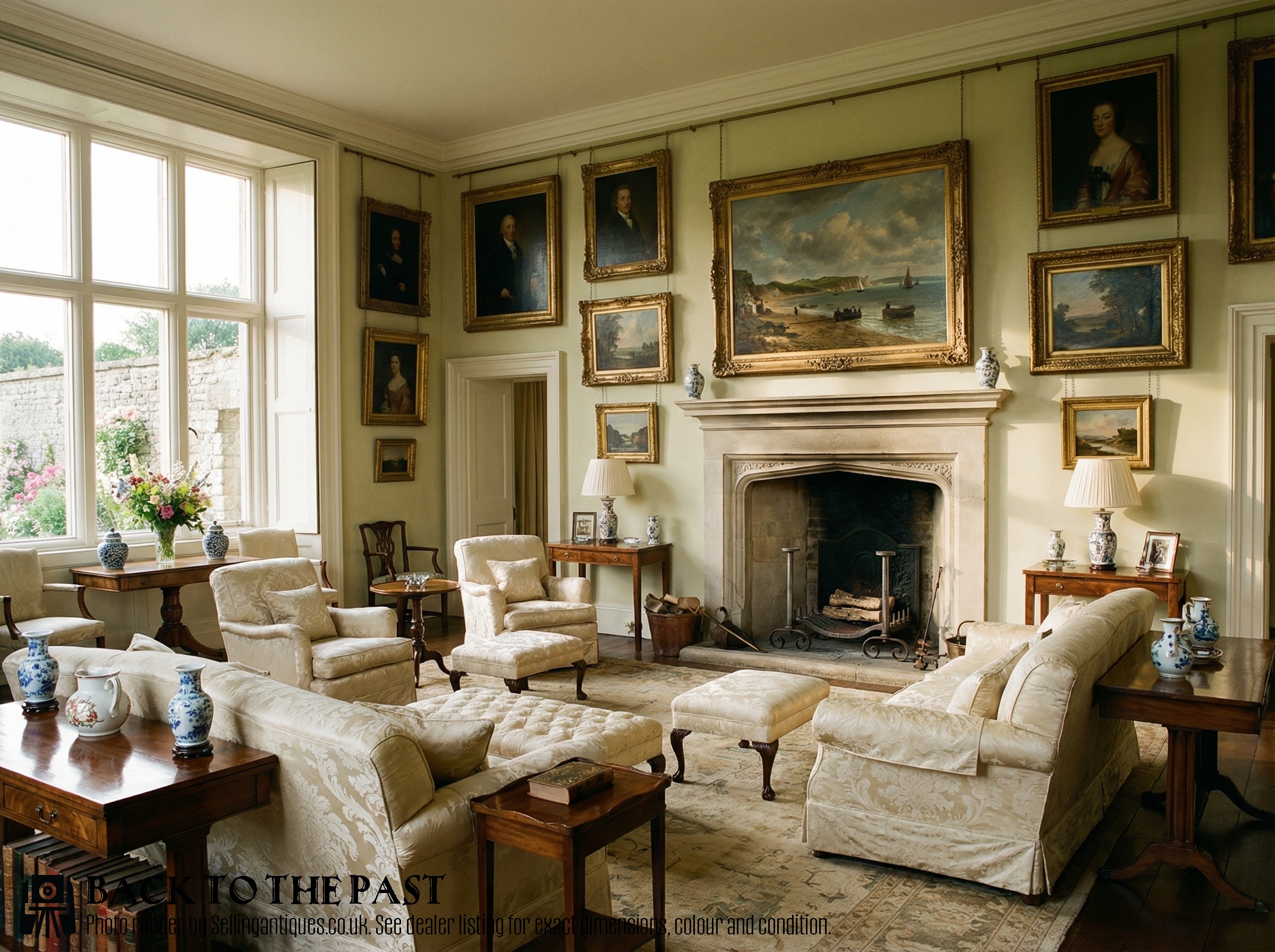
Black Iron Fire Dogs
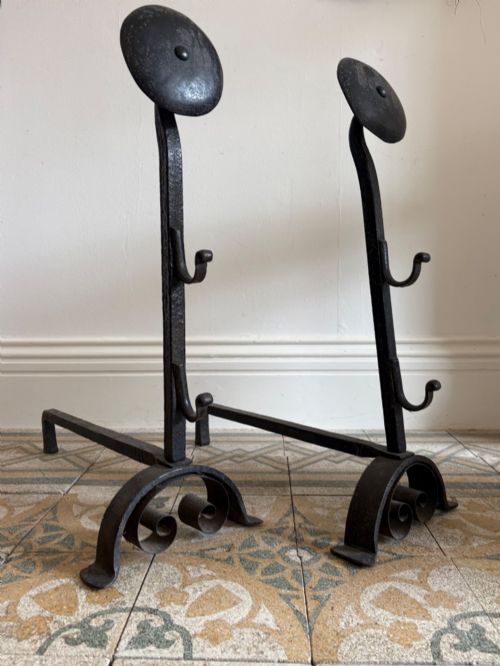
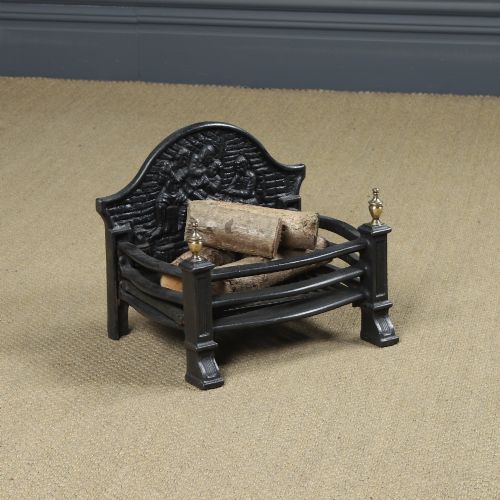
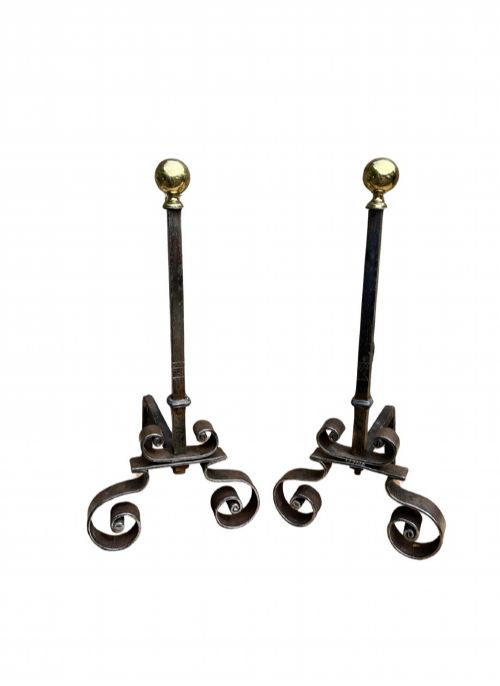
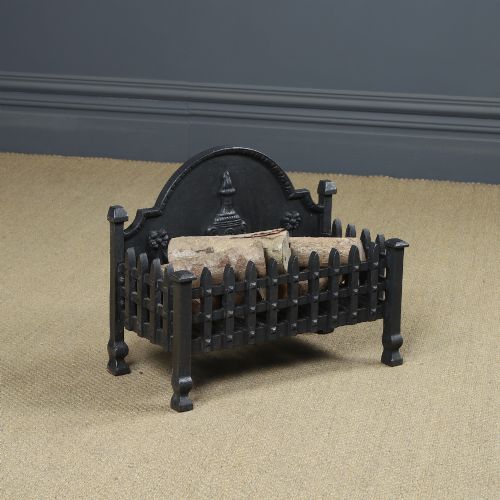
When searching for black iron fire dogs, buyers encounter sturdy hearth supports designed to hold logs above the hearth floor. These functional fireplace accessories appear frequently in paired formats alongside fire grates, baskets and fenders.
The pieces on this page span several centuries, including Victorian, Edwardian and nineteenth-century examples alongside items from nineteen hundred and nineteen twenty. English and French origins predominate among these functional hearth furnishings.
Stylistic variations range from simple utilitarian forms to decorative pieces displaying Gothic Revival, Arts and Crafts, Neoclassical Revival and French Provincial aesthetics. Buyers frequently select pairs that coordinate with existing hearth furniture such as fire backs and tool rests.
Materials and construction methods
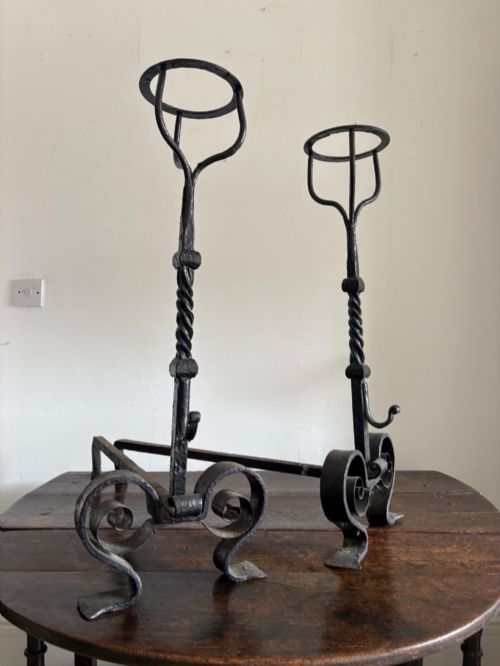
Makers utilised cast iron and wrought iron as the primary structural materials for these hearth supports, frequently incorporating forged iron elements. Secondary materials such as brass, copper and firebrick appear in related fireplace sets and grates.
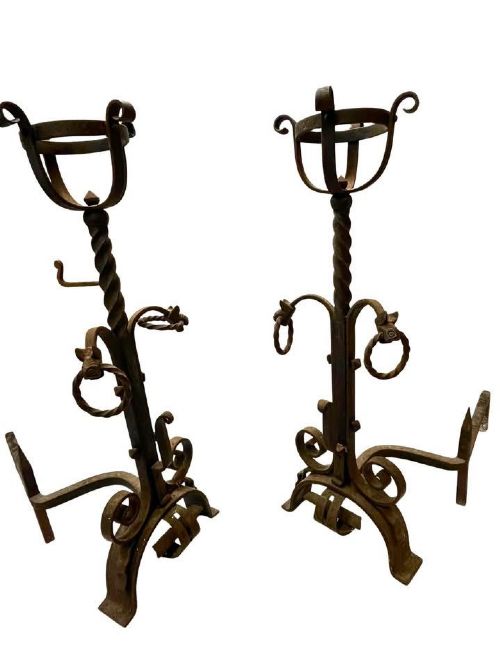
Construction techniques combine casting for intricate motifs with hand-forging for structural shafts and legs. Heavy cast iron components provide the necessary mass to support substantial logs within open hearths and fire baskets.
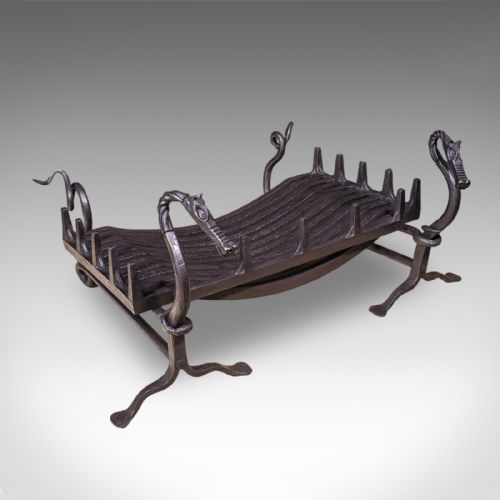
A dragon motif stares fiercely from one Edwardian fireplace set, guarding the hearth against stray sparks.
Judging quality in hearth ironwork
Quality in these pieces depends upon the weight of the metal and the integrity of the construction. Heavier castings and robust hand-forging indicate superior durability for regular hearth use.
The refinement of decorative details, such as dragon motifs or distinct period styling like Gothic Revival and Arts and Crafts, separates standard utility items from finer examples. Proportion and scale also influence the visual impact of the pieces within an inglenook or open hearth.
The Black Iron Fire Dogs Glossary
- Andiron
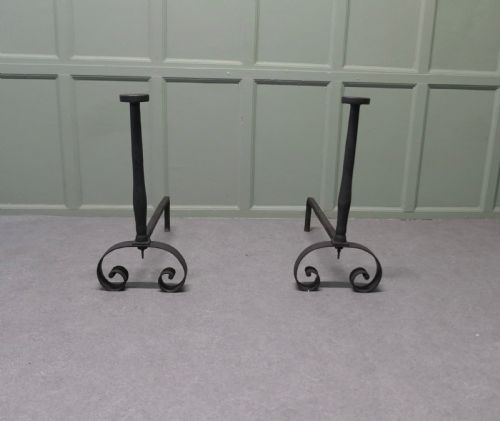
- A horizontal support raised on legs, used in pairs to hold burning logs in an open fireplace. They often feature decorative fronts facing into the room.
- Fire grate
- A basket or frame made of iron to hold fuel above the hearth floor, allowing air to circulate beneath the fire for better combustion.
- Fire basket
- An open container constructed from iron, frequently combined with andirons or fire dogs to hold coal or wood.
- Wrought iron
- Iron that has been heated and shaped with tools by a smith, distinguished by its fibrous structure and durability.
- Cast iron
- Iron poured in a molten state into a mould to form solid shapes and decorative fireplace components.
Black Iron Fire Dogs: Frequently Asked Questions
What is the difference between fire dogs and andirons?
The terms are generally interchangeable for the horizontal supports used to hold logs in an open fireplace. Both refer to paired metal furnishings placed on the hearth.
Historical listings use both names to describe identical functional items designed to elevate firewood for better air circulation.
How do I choose the right size for my fireplace?
Measure the depth and width of your hearth opening to ensure the supports fit comfortably without crowding the space. Large inglenook fireplaces accommodate monumental pairs, whereas smaller grates require compact proportions.
Consider the scale of the fire basket or logs you intend to burn alongside the iron supports.
Are these pieces suitable for burning real wood?
Traditional iron and steel supports are built to withstand high temperatures and hold heavy logs during use. Many examples served practical fireplace roles for generations before entering collections.
Inspect the weight and solid construction of the metal to ensure it remains robust enough for active hearth deployment.
How can I identify the period of an iron fireplace accessory?
Stylistic indicators such as Gothic Revival tracery, Arts and Crafts simplicity or Neoclassical symmetry point toward specific design eras. Manufacturing marks, surface textures from hand-forging and overall weight also offer clues to age.
Comparing construction methods helps distinguish nineteenth-century production from twentieth-century revivals.