


Brass Fireplace Andirons
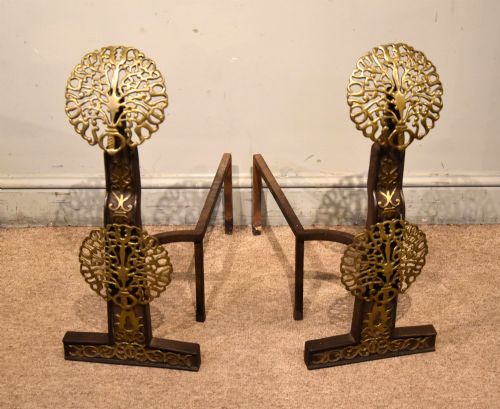
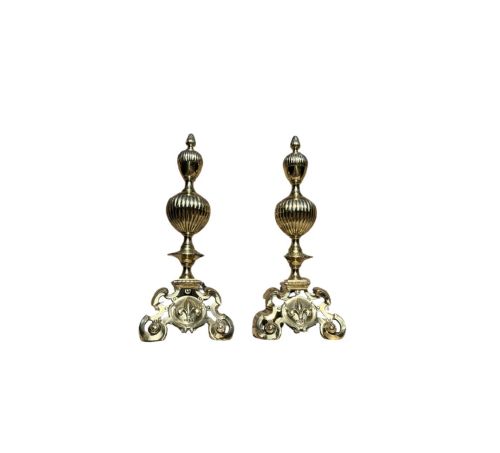
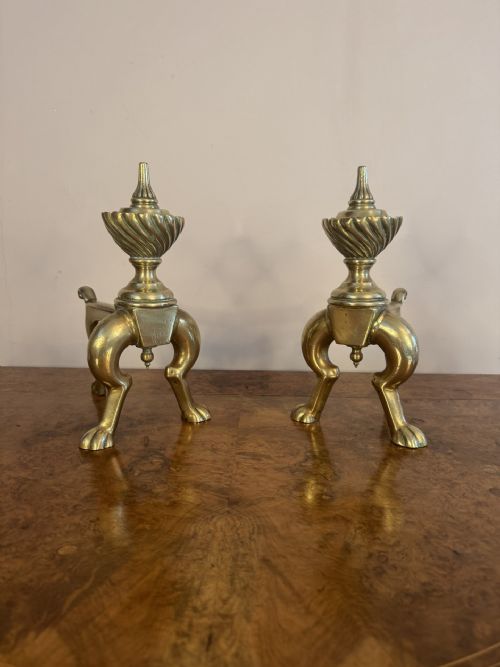
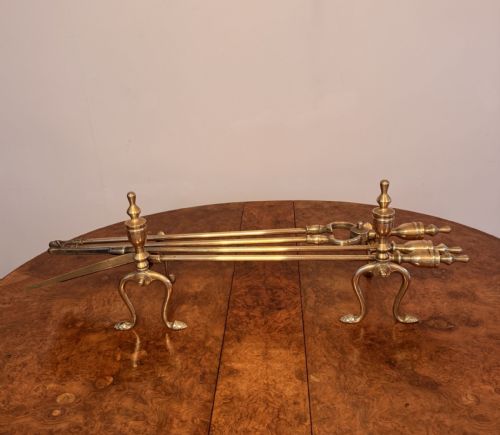
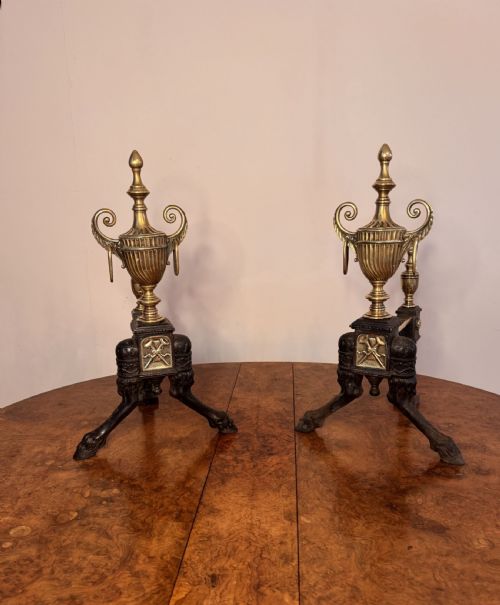
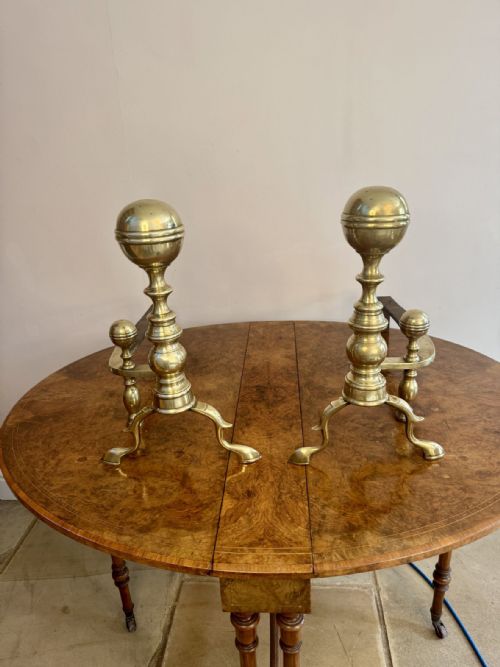
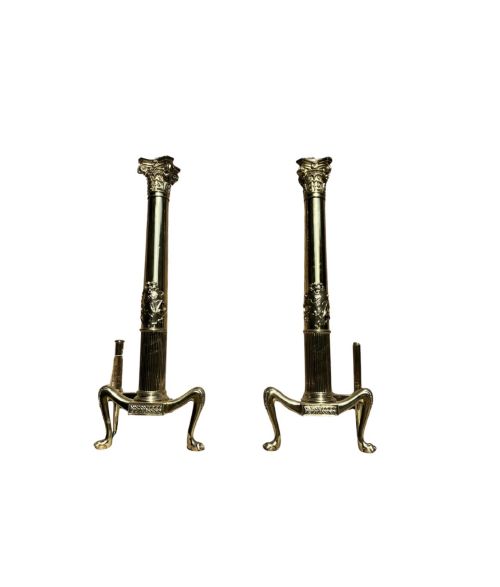
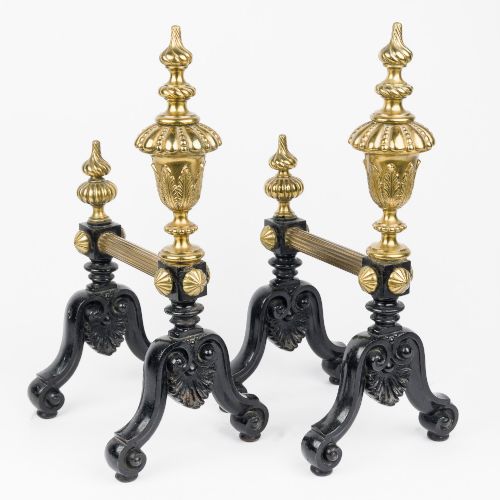
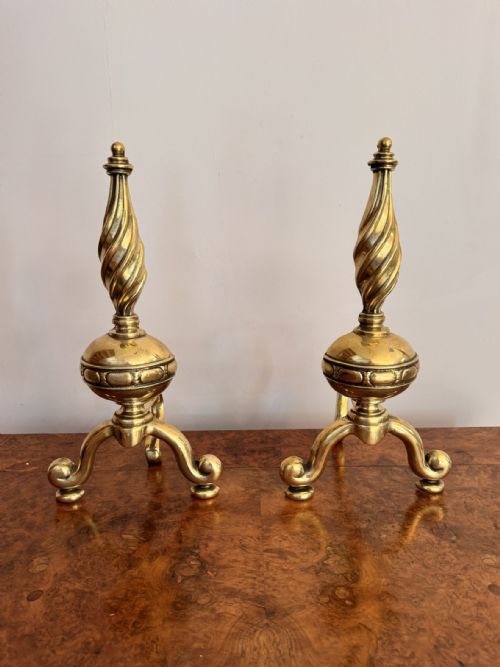
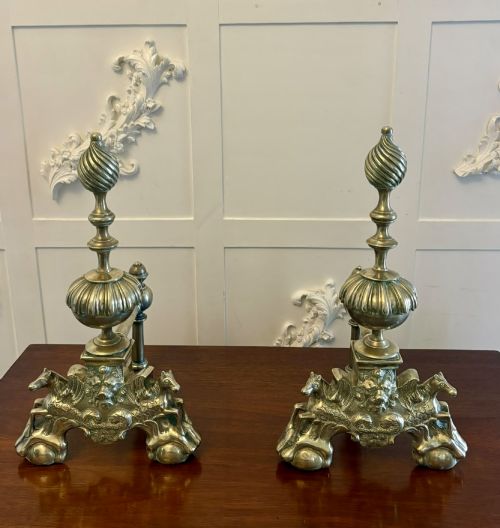
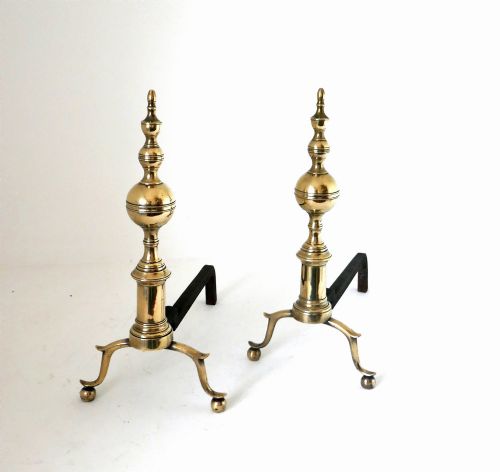
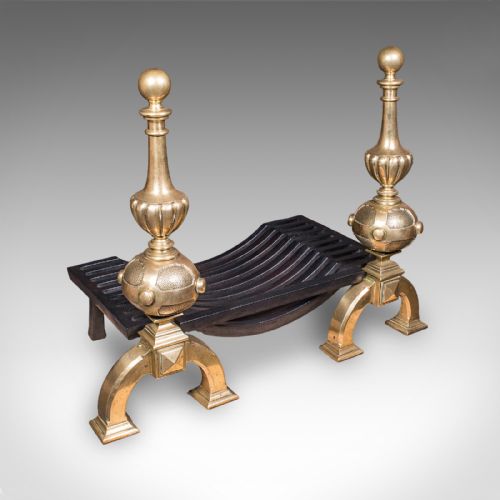
These brass fireplace andirons are hearth furniture designed to hold logs above the hearth floor, combining structural iron with polished brass fronts.
Brass Fireplace Andirons
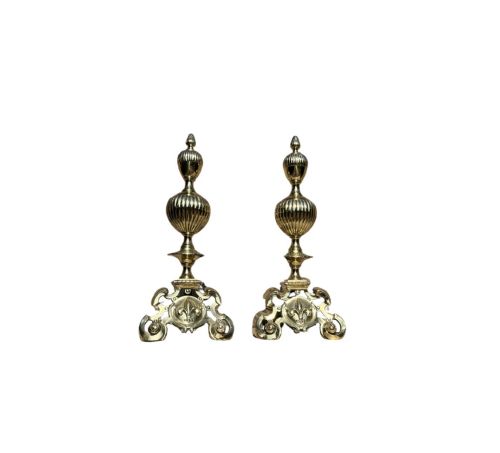
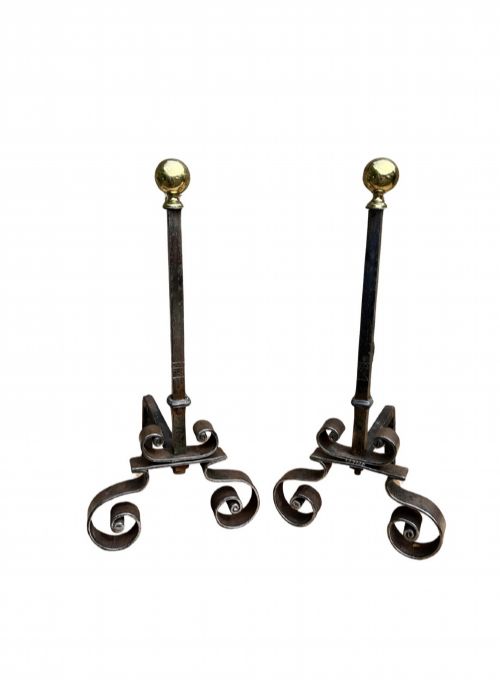
Brass fireplace andirons support fuel wood within an open hearth while adding decorative presence to a chimney breast. The pieces range from simple eighteenth-century utilitarian iron standards with brass finials to highly ornamental Victorian and French Rococo pairs.
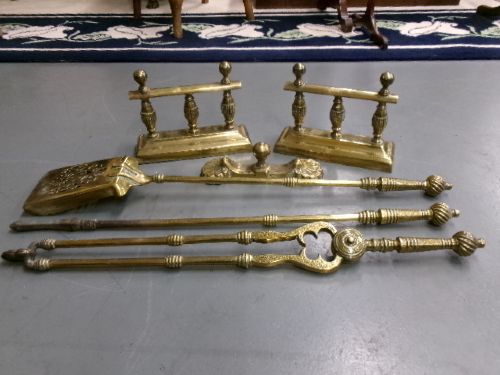
English and French examples dominate the selection, spanning Georgian restraint through to late nineteenth-century revival styles. Buyers frequently encounter matched pairs featuring cast brass shafts, decorative feet, and companion fire tools.
Craftsmanship and weight
Quality rests in the substantial thickness of the cast metal and the crispness of the chased surface ornamentation rather than surface polish alone. Superior pairs exhibit deep relief casting without pitting, alongside robust iron billets securely joined to the main brass standards.
Design integrity separates standard production items from pieces produced in the manner of notable designers or workshops. Weight distribution and stability under load also indicate higher manufacturing standards.
Brass Fireplace Andirons Retail Price Guide 2026
Typical asking prices for brass fireplace andirons among the pieces listed under this phrase on Sellingantiques today, from the lower quarter to the upper quarter. They describe what is for sale here now, not the wider market.
Several pairs incorporate miniature brass sunflowers and cherubs, proving that nineteenth-century domestic warmth demanded a touch of theatrical charm.
William Tonks·James Cartland & Sons
The Brass Fireplace Andirons Glossary
- Andiron
- A horizontal iron bar supported on legs with an upright vertical front, used in pairs to hold logs in a fireplace. Also known as fire dogs.
- Chenet
- The French term for an andiron, frequently applied to ornate examples cast in ormolu, bronze, or gilt brass during the eighteenth and nineteenth centuries.
- Firedog
- An alternative term for an andiron, commonly found in nineteenth-century British records and trade catalogues. They often accompanied matching fire irons and coal buckets.
- Ormolu
- Finely ground high-carat gold applied to a bronze base, creating a rich golden finish seen on French hearth ornaments.
- Billet bar
- The horizontal iron bar extending backward from the upright front of the andiron to support the burning logs.
Brass Fireplace Andirons: Frequently Asked Questions
How do I measure for andirons?
Measure the depth of your hearth to ensure the horizontal iron billets fit comfortably without protruding past the fireplace opening. Check the height of the uprights so they sit properly beneath the mantel or fire basket without obscuring the grate.
Account for clearance around the sides of the hearth to allow adequate space for companion tools and airflow.
Can I use antique andirons in an active fireplace?
Most cast brass and iron pairs function safely in burning hearths provided the iron billets remain structurally sound and free from deep corrosion. Inspect the joints where the vertical front meets the horizontal log bar to ensure they withstand heat.
Solid brass models handle wood fires well, but gilt or ormolu surfaces require care to prevent heat damage to decorative finishes.
What is the difference between andirons and fire dogs?
The terms describe the same object, with andiron serving as the standard English term and fire dog originating from older domestic inventories. Regional preferences and trade catalogues determined which word appeared on historical listings.
Both describe a pair of metal supports featuring a decorative front upright and a rear log-bearing bar.
How do I clean polished brass andirons?
Remove surface dust with a dry cloth before applying a mild brass cleaner sparingly to the cast surfaces. Avoid harsh abrasives that wear away fine chasing and historical patination built up over centuries.
Buff gently with a soft microfibre cloth to restore the warm golden lustre without stripping the aged tone.