

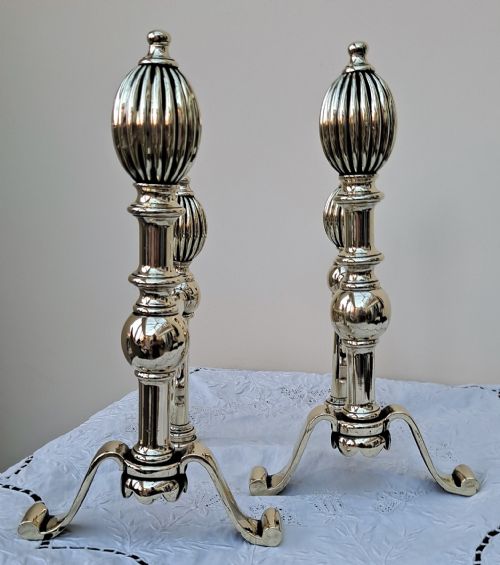
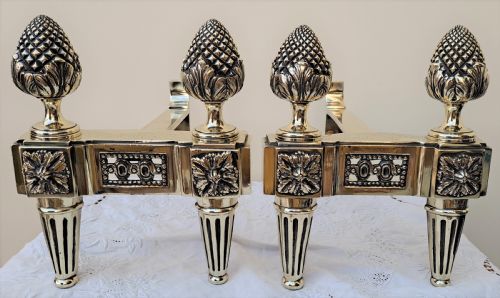
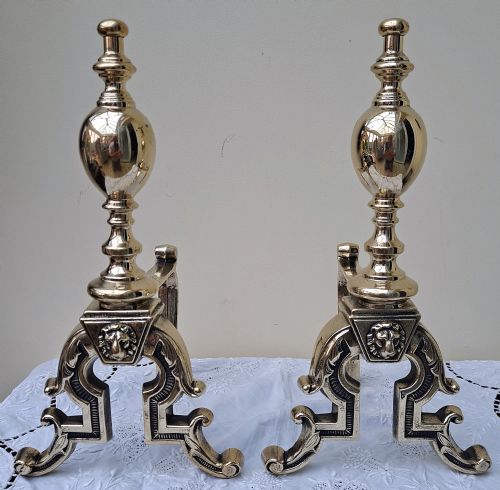


Polished Brass Firedogs
Polished brass firedogs bring a bright, functional warmth to the hearth, offering sturdy support for logs while catching the firelight.
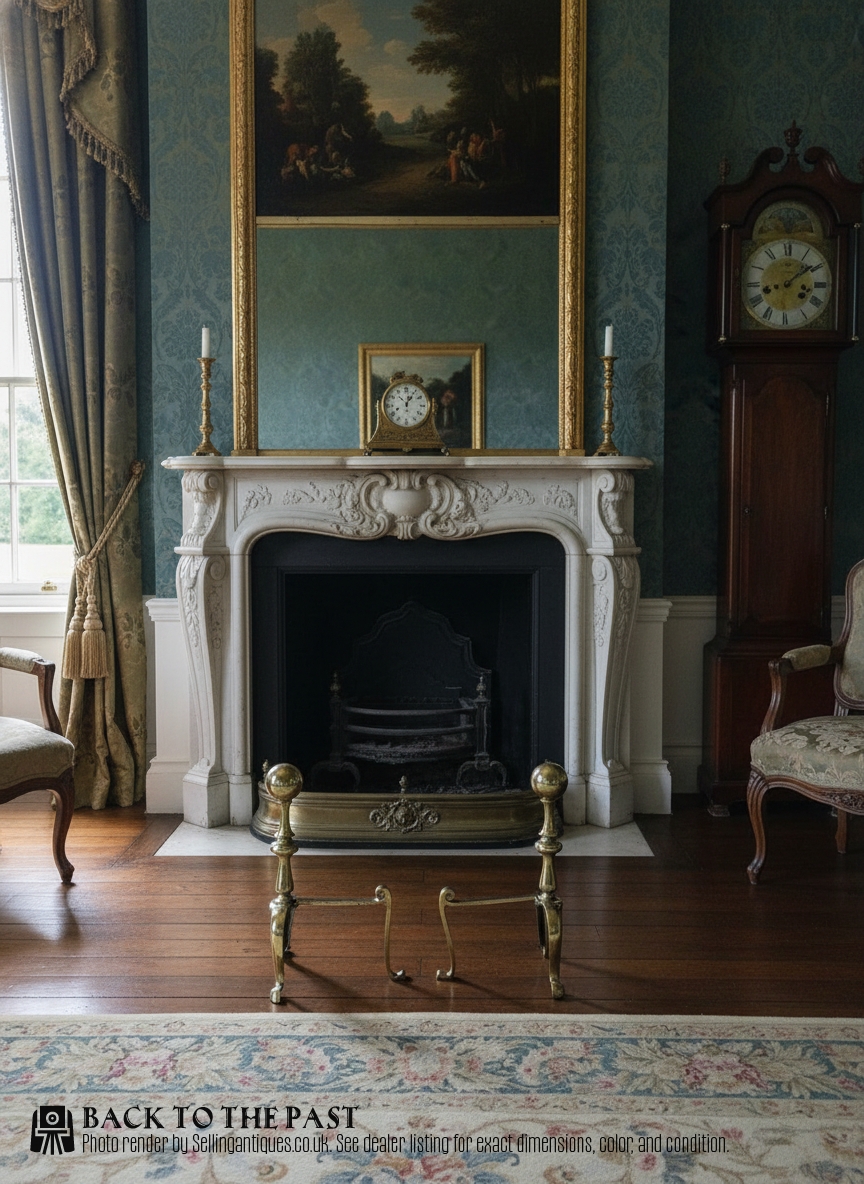
Polished Brass Firedogs
Polished brass firedogs are essential hearth furniture designed to hold logs above the hearth floor for better airflow and combustion. When searching for polished brass firedogs, buyers encounter heavy metal supports ranging from simple Georgian forms to ornate Victorian designs.
The selection on this page consists predominantly of nineteenth-century Victorian and Georgian examples, often paired with iron or wrought iron components for structural strength. These pieces appear both as standalone pairs and alongside companion fireside sets and tools.
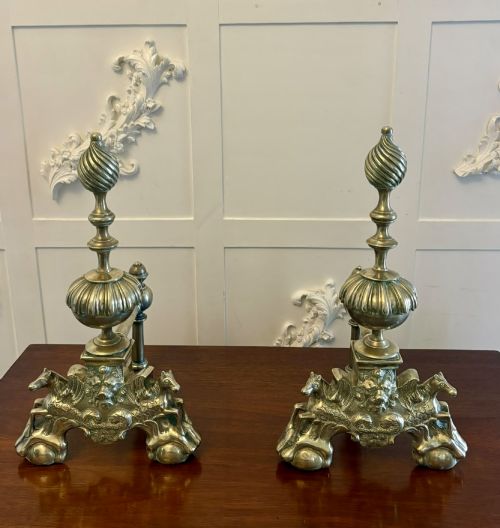
Stylistic variations span from restrained English domestic designs to Dutch Baroque influences and Regency revivals. Many items feature substantial brass construction combined with copper or steel elements to withstand daily hearth use.
How they were made
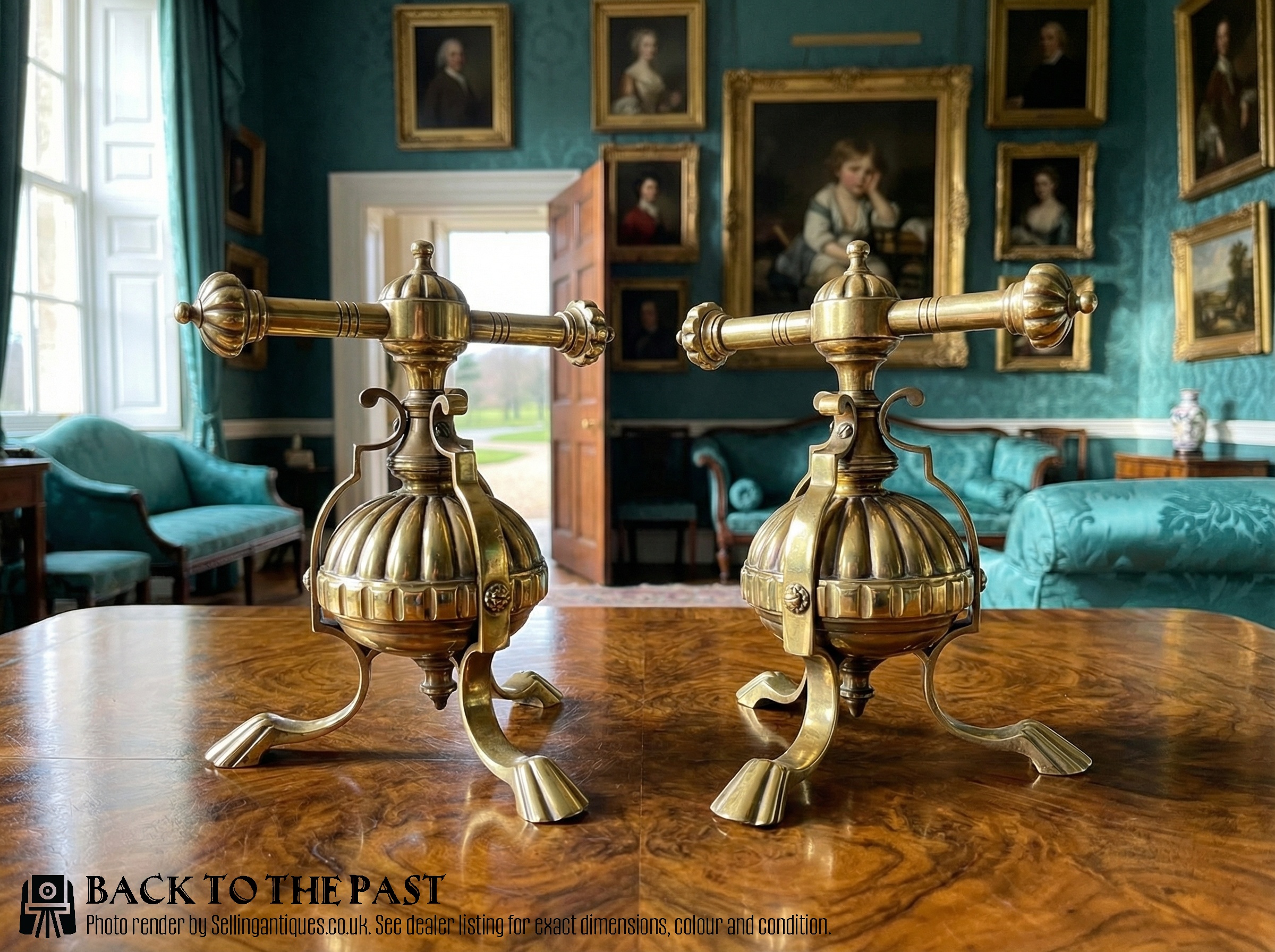
Makers constructed these hearth supports using cast and turned brass, frequently combining the bright metal with internal iron or wrought iron bars to bear the weight of burning logs. This dual-material method ensured the decorative polished front remained visually striking while the internal billets provided rugged durability.
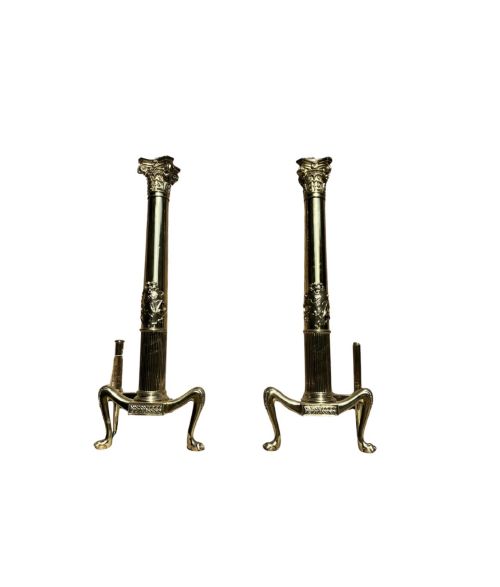
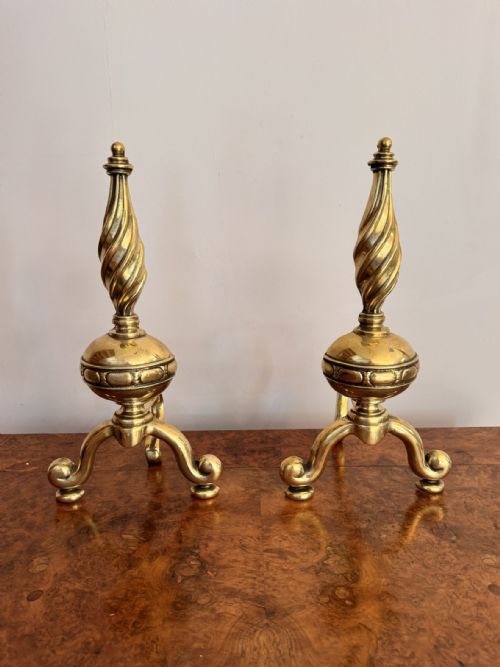
Surface finishing involved careful polishing of the brass components, sometimes enhanced with gilt brass or contrasting copper details. Artisans shaped the feet and finials through casting and lathe-working, creating substantial weight and solidity in the finished objects.
Polished Brass Firedogs Retail Price Guide 2026
Typical asking prices for polished brass firedogs among the pieces listed under this phrase on Sellingantiques today, from the lower quarter to the upper quarter. They describe what is for sale here now, not the wider market.
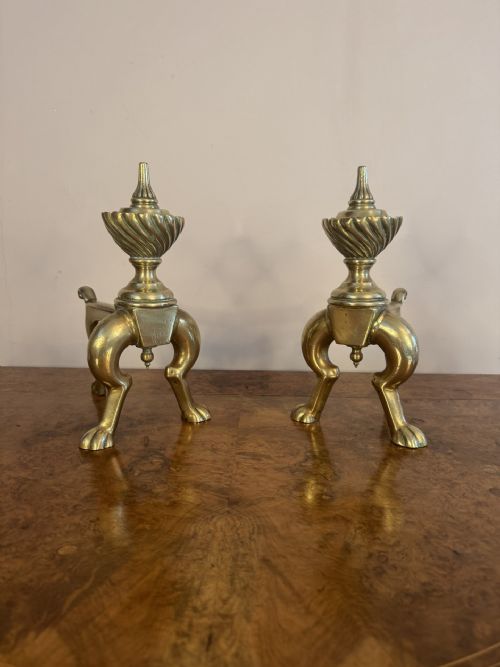
Some nineteenth-century hearth dogs feature fierce claw and ball feet designed to grip the hearth as if guarding the family fire.
What varies in quality
Quality in these hearth furnishings rests upon the thickness of the brass casting and the precision of the turned and chased details. Finer examples display crisp definition in ornate motifs, robust weight, and integrated ironwork that remains straight and secure.
Lesser pieces show thinner metal casting, simpler stamped decoration, or loose joints between the decorative brass fronts and the supporting iron billets. The presence of marked maker details or complete matched suites also elevates the standing of individual pairs.
James Cartland & Son
The Polished Brass Firedogs Glossary
- Firedogs
- Heavy metal supports placed horizontally in a fireplace to hold logs off the hearth floor. They often feature decorative front standards and sturdy rear bars.
- Andirons
- An alternative term for firedogs, commonly used interchangeably in nineteenth-century English and American inventories. They serve the identical function of supporting firewood.
- Gilt Brass
- Brass treated with a layer of gold or gold-coloured wash to impart a richer finish. This treatment enhances the reflective quality near the hearth.
- Wrought Iron
- Iron shaped through heating and hammering, utilised for the structural billets of firedogs. It provides the tensile strength needed to endure intense fireplace heat.
Polished Brass Firedogs: Frequently Asked Questions
How do I use firedogs?
Firedogs sit within the hearth fireplace opening with their long horizontal bars pointing towards the back wall. You place logs across these iron bars to elevate the firewood, which improves air circulation beneath the fuel for a cleaner, hotter burn.
Pairs must be spaced to match the length of the logs you burn. The heavy front standards remain visible outside the fire, acting as a decorative terminal for the hearth arrangement.
Can I polish brass firedogs?
Polished brass naturally tarnishes when exposed to heat, smoke, and household humidity. Regular cleaning with a suitable metal polish restores the bright finish seen on nineteenth-century examples.
Take care to avoid abrasive pads that scratch the metal surface or wear away finer chased details. Many owners prefer maintaining a moderate shine rather than a mirror finish to preserve the historic character.
How do I date Victorian firedogs?
Victorian firedogs often display registration marks, maker stamps, or stylistic cues typical of the nineteenth century. Heavier castings and ornate rococo or classical revival motifs point towards the middle and later decades of the era.
Comparing the construction methods, such as the joining of the brass front to the iron billet, helps distinguish earlier Georgian forms from later Victorian reproductions and revivals.
Do firedogs require matching fire tools?
Historical hearth arrangements frequently combined firedogs with matching companion sets including pokers, tongs, and shovels. While matching sets create a unified appearance, mixing individual brass and iron pieces was equally common in period homes.
Choosing companion items depends entirely on personal taste and whether you intend to use the fireplace actively or display the accessories purely for decoration.