


Brass Fireplace Dogs
Brass fireplace dogs are sturdy hearth supports that bring functional warmth and period character to an open grate.

Brass Fireplace Dogs
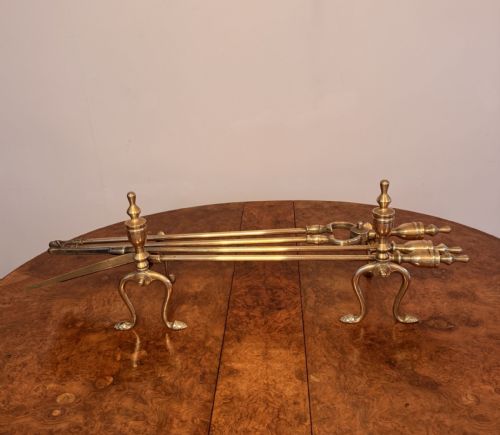
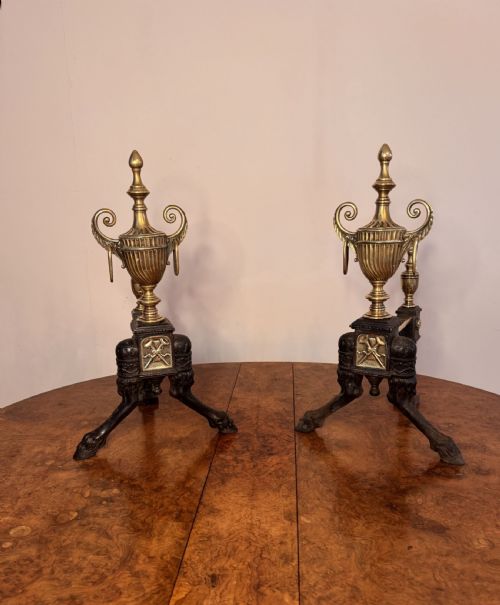
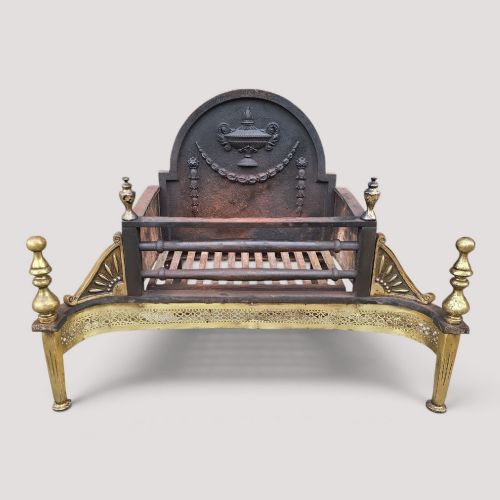
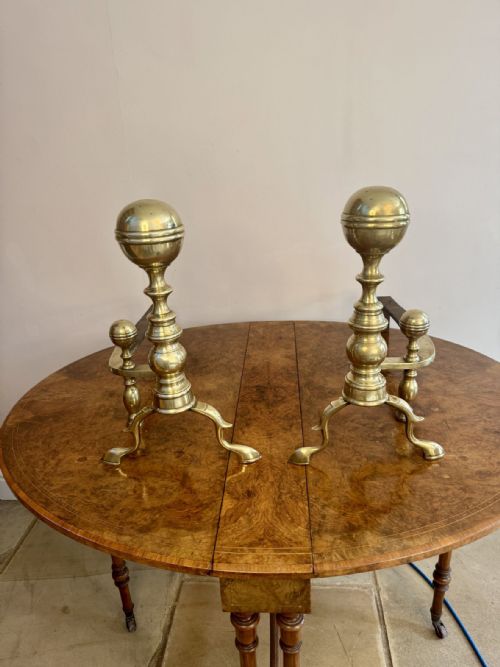
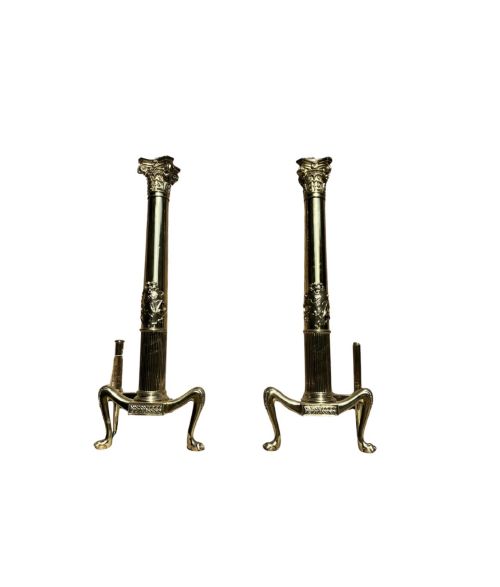
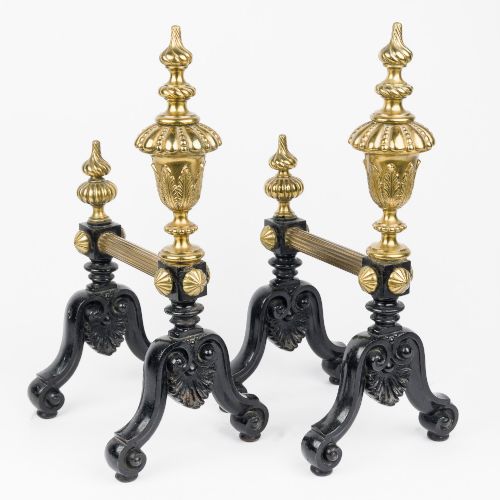
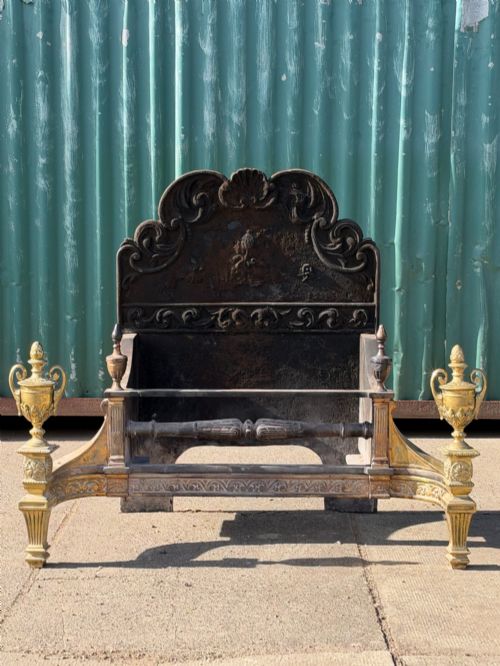
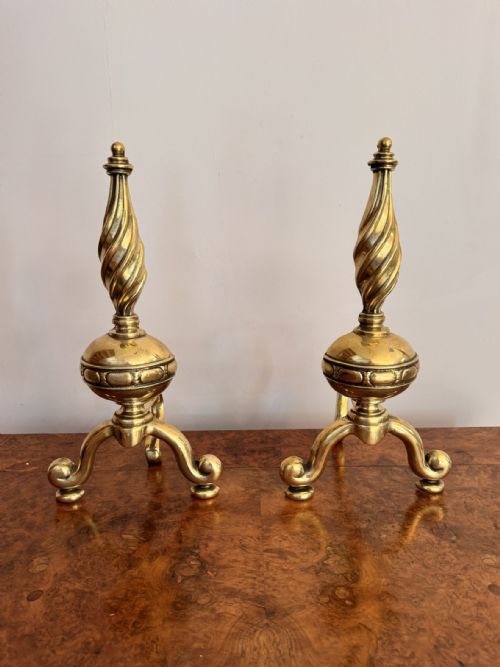
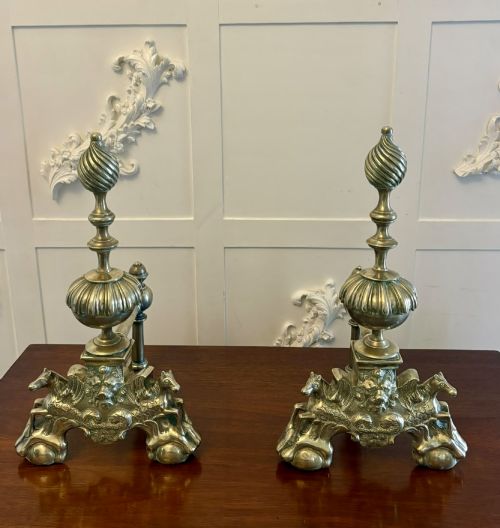
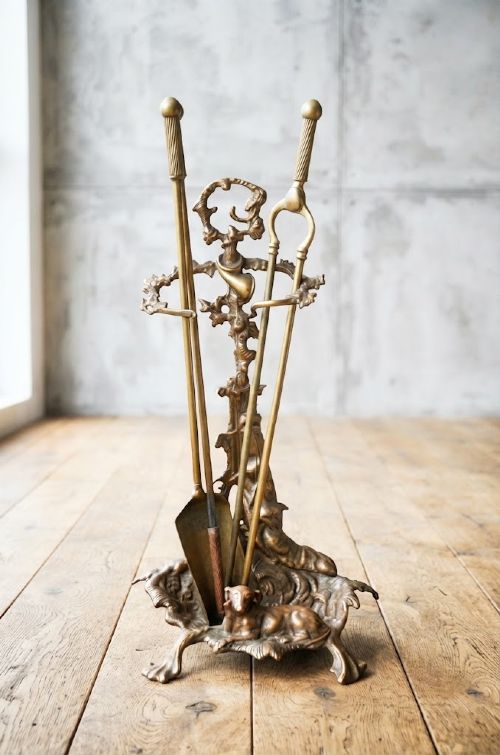
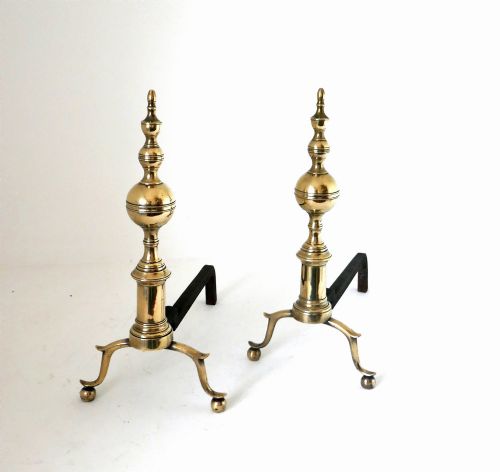
Brass fireplace dogs, also known as andirons or fire dogs, support logs within an open hearth while adding a decorative focal point to the room. The items on this page span the eighteenth and nineteenth centuries, including Georgian, Victorian, Federal, and Arts and Crafts examples.
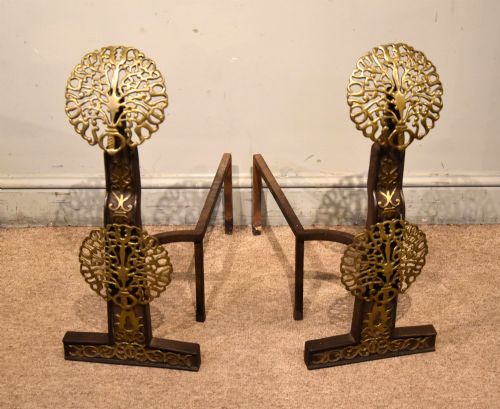
Most pieces appear in pairs, combining solid brass fronts with sturdy iron or wrought iron billets designed to bear the weight of burning wood. You will encounter both plain functional forms and stylised decorative designs reflecting specific aesthetic movements such as the work associated with Christopher Dresser.
How they were made
Maker workshops combined cast and sheet brass for the decorative fronts, utilising the bright metal to catch the flickering light of the hearth fire. Iron and wrought iron formed the internal shafts and billet bars, materials chosen specifically to withstand intense, repeated heat without warping.
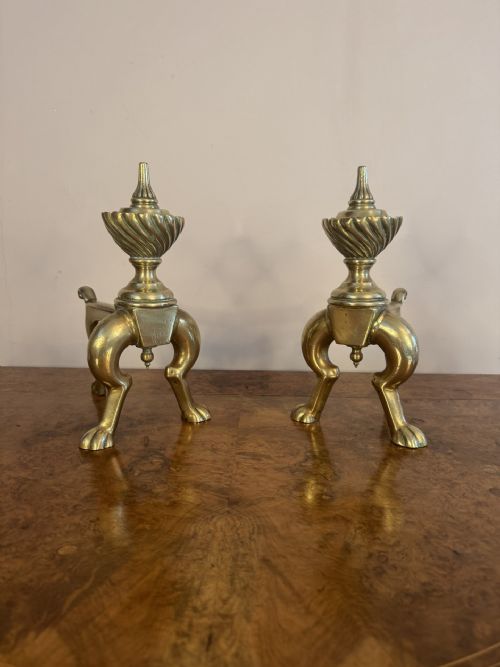
Casting techniques allowed makers to produce varied finials and shaped legs, ranging from simple geometric pillars to ornate period silhouettes. Individual components were joined mechanically or forged together, creating robust hearth furniture built for daily domestic service.
Brass Fireplace Dogs Retail Price Guide 2026
Typical asking prices for brass fireplace dogs among the pieces listed under this phrase on Sellingantiques today, from the lower quarter to the upper quarter. They describe what is for sale here now, not the wider market.
Keep a cloth handy; these polished sentinels have spent centuries watching rooms warm up and are very good at catching the light.
What varies in quality
Quality rests in the weight of the metal and the crispness of the casting rather than surface shine alone. Finer examples display cleanly detailed brass work and robust iron framing that remain true and balanced.
Design ambition separates standard hearth furniture from exceptional pieces, particularly where specific period movements like Arts and Crafts influence the silhouette. Weighty construction and harmonious proportions mark out the pieces that command the strongest attention.
Christopher Dresser
The Brass Fireplace Dogs Glossary
- Andiron
- A horizontal metal bar raised on legs, with an upright pillar at the front, used to support logs in an open fireplace. Pairs of these items sit on either side of the hearth.
- Billet bar
- The horizontal rear-extending iron shaft attached to a fire dog that directly holds the wood. This structural part bears the thermal load of the fire.
- Finial
- The decorative terminal ornament at the top of an andiron front. These details often define the historical style of the piece.
- Wrought iron
- Tough, malleable iron beaten into shape by hand, frequently utilised for the functional rear components of fire dogs. It resists the thermal shock of burning fuel.
Brass Fireplace Dogs: Frequently Asked Questions
What do brass fireplace dogs actually do?
These pieces sit inside the hearth to elevate logs off the floor, allowing air to circulate underneath for a better burn. They also stop wood from rolling forward into the room.
Beyond their practical role, the polished brass fronts reflect light and serve as a decorative centrepiece for the fireplace when the hearth is unlit.
How do I clean antique brass fire dogs?
Gentle dusting with a soft cloth is usually enough to maintain the surface of older metalware without removing the character built up over generations. Avoid harsh commercial abrasive cleaners that strip away the subtle tones of the brass.
If polishing is necessary, use a mild, traditional metal polish applied sparingly with a cloth, taking care to keep substances away from any iron components.
Are these pieces suitable for a working fire?
Most antique fire dogs combine a brass decorative front with a heavy iron or wrought iron shaft intended for practical hearth use. You should check the internal iron condition to ensure it remains solid before exposing the set to high heat.
Lighter decorative pairs from later periods may be better suited for display use or paired with a gas grate rather than heavy burning logs.
How can I tell a Victorian set from a Georgian one?
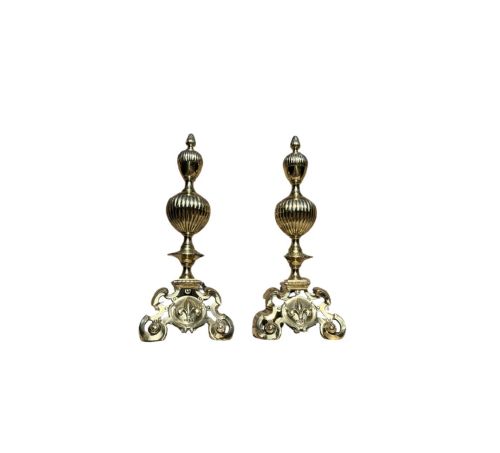
Georgian examples often display classical restraint with balanced proportions, urn finials, and clean lines suited to eighteenth-century hearths. Victorian pieces frequently introduce heavier ornamentation, varied casting techniques, and robust proportions.
Examining the construction methods and the style of the feet and finials helps point towards the correct period of manufacture.