
Pair of Andirons
When choosing a pair of andirons for an open hearth, you select sculptural metalwork that supports logs while anchoring the decorative character of the fireplace.
Pair of Andirons
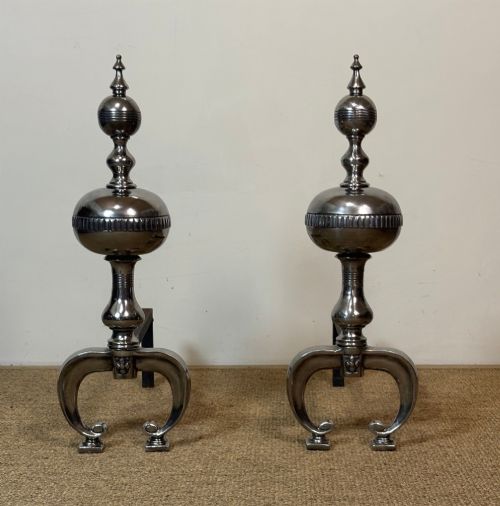
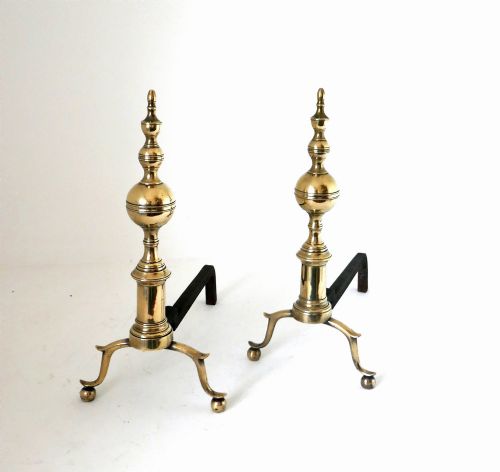
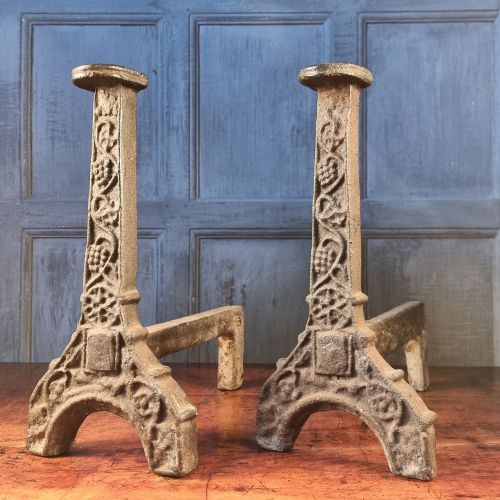
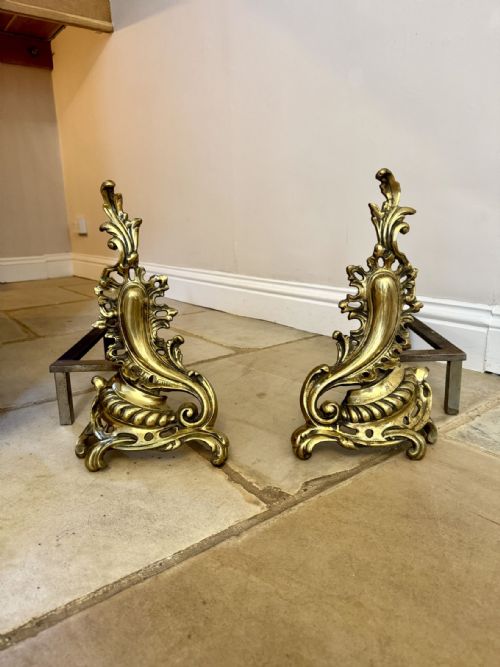
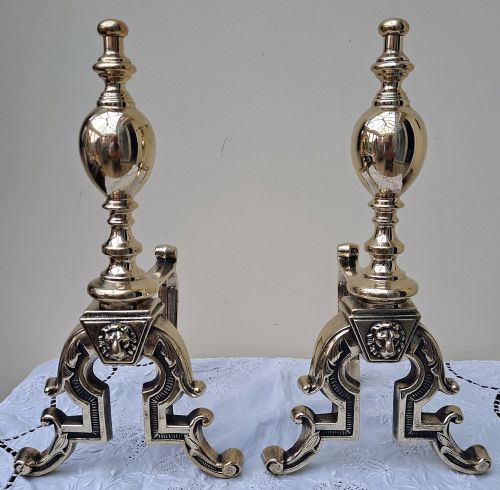
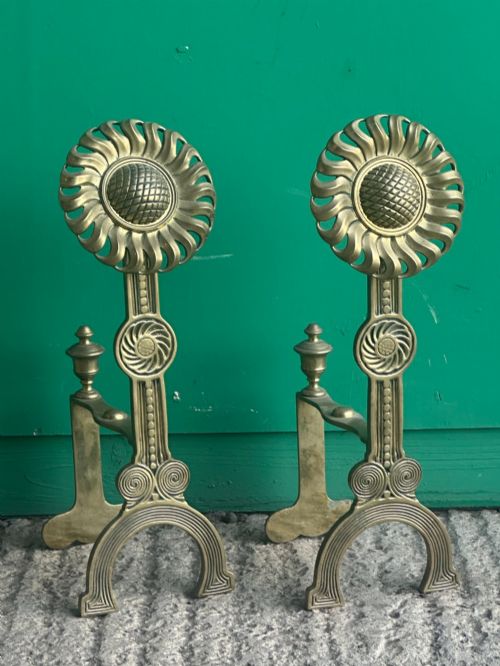
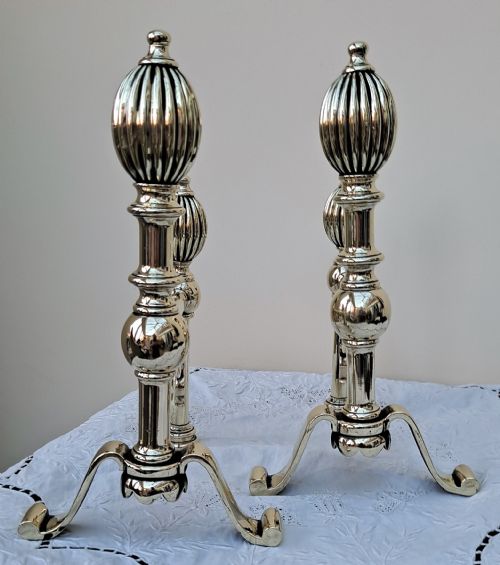
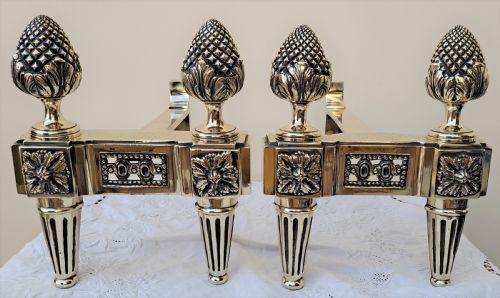
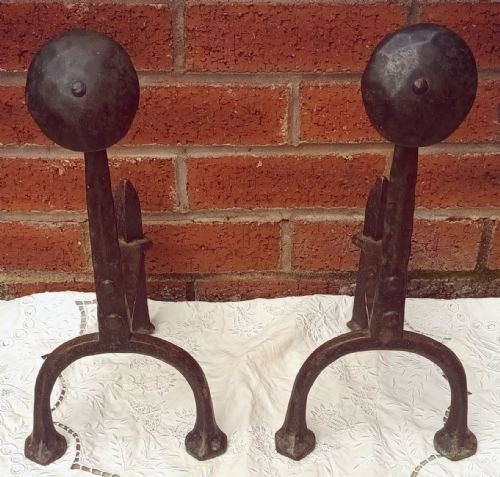
A pair of andirons comprises heavy vertical billets designed to hold firewood above the hearth floor, allowing air to circulate beneath the burning logs. These hearth accessories appear frequently in nineteenth-century interpretations of French Rococo, Gothic Revival, and Arts and Crafts styles, alongside earlier Georgian and seventeenth-century forms.
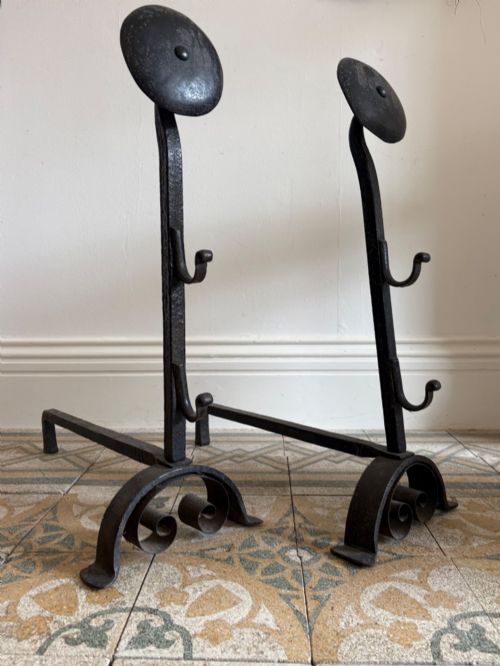
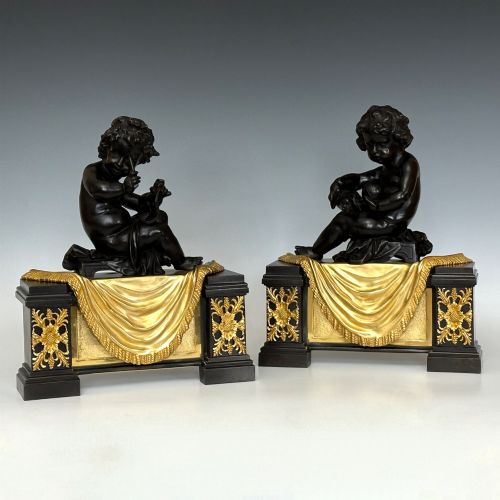
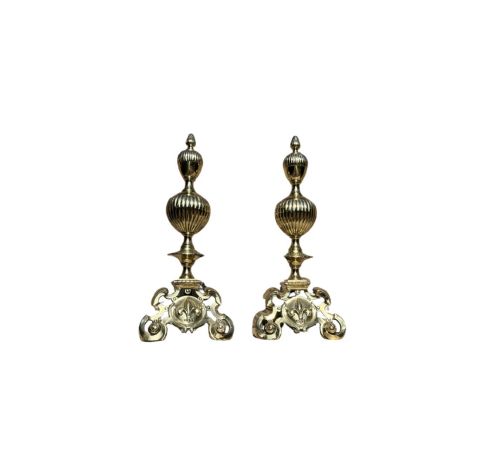
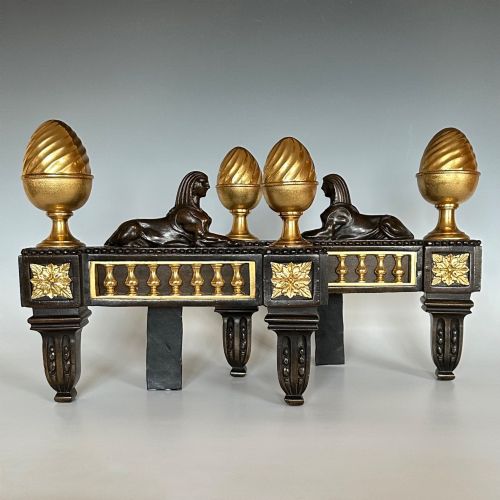
The inventory encompasses both robust utilitarian iron supports and highly decorative brass or ormolu items intended for formal reception rooms. Many examples incorporate matching fire tool rests or integrate with companion sets designed for complete fireplace furnishing.
Materials and construction
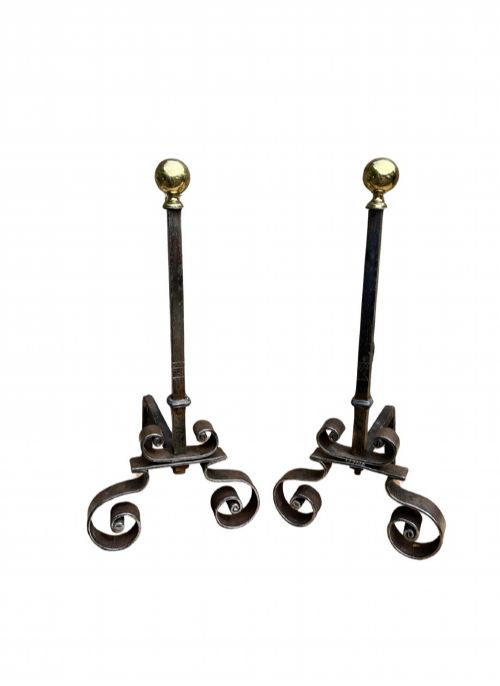
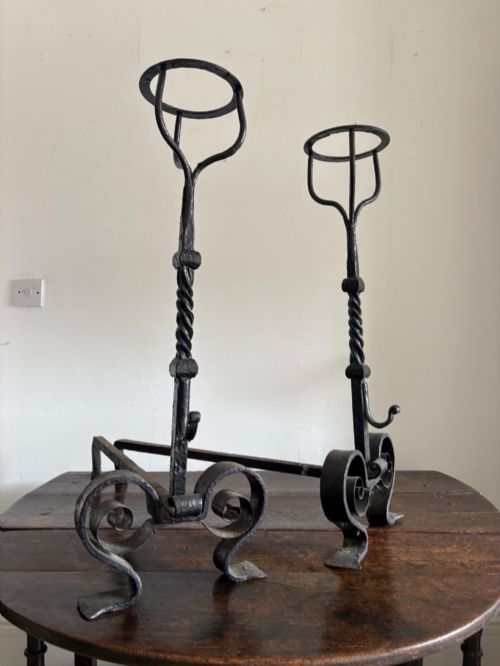
Foundry production utilised cast iron and brass for structural strength and intricate surface detailing, often poured into sand moulds to achieve heavy, rigid billets. Wrought iron and steel were hand-forged, hammered, and joined by smiths to create linear profiles and sturdy Arts and Crafts iterations.
Gilt bronze and ormolu finishes applied mercury gilding or modern electroplating to cast bases, producing a rich golden lustre favoured in French chenets. Copper and nickel elements occasionally appeared in later decorative interpretations alongside mixed-metal assemblies.
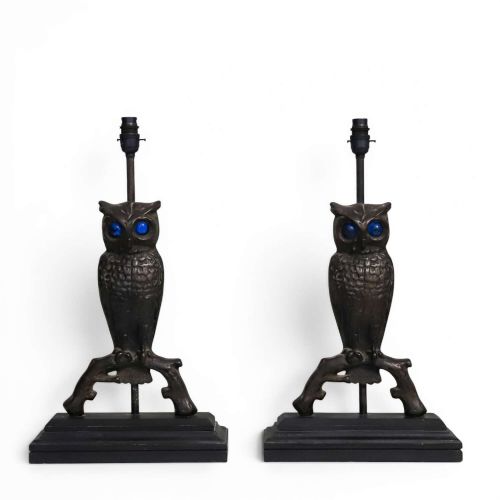
Unusual variants include sturdy horse whip designs and expressive cast iron owls.
Distinguishing quality
Superior quality rests upon the crispness of the casting and the depth of hand-chased detail on mounts, figures, and firedog fronts. Weight and substantial metal gauge indicate robust construction designed to withstand intense hearth temperatures without warping.
Design integrity separates ordinary production from works influenced by notable makers and designers, where proportions remain balanced and motifs reflect specific historical revival movements accurately.
William Tonks·James Cartland and Sons·The Carron Foundry
The Pair of Andirons Glossary
- Andirons
- Heavy metal supports placed in pairs on either side of a fireplace to hold logs above the hearth floor. They often feature an upright decorative front connected to a horizontal billet bar.
- Chenet
- The French term for an andorn or fire dog, frequently used to describe ornate continental examples fashioned from bronze or ormolu. These often incorporate figural or architectural ornamentation.
- Firedogs
- An alternative term for andirons, describing the iron or brass supports used to elevate firewood. The designation encompasses both simple utility pieces and elaborate decorative hearth furniture.
- Ormolu
- Finely ground high-carat gold mercury-gilded to a bronze base, creating a brilliant metallic finish common on nineteenth-century French hearth accessories. It provides a durable, lustrous surface resistant to tarnishing.
- Billet bar
- The horizontal iron or steel leg extending backward from the upright front of an andiron to support the burning logs. Its length determines the depth of wood the assembly can accommodate.
Pair of Andirons: Frequently Asked Questions
How do I choose the right size andirons?
Measure the depth and width of your fireplace opening to ensure the horizontal billet bars fit comfortably inside the hearth space without crowding the sides.
Consider the visual scale of the upright fronts relative to the surrounding mantelpiece and fireplace opening so the hardware complements rather than overwhelms the room.
Can antique andirons still hold real logs?
Most sturdy iron and heavy brass examples remain completely functional for burning wood in an active open fireplace.
Lighter decorative ormolu and delicate figural pieces are better suited for decorative hearth placement or integration with an electric or gas fire basket.
What is the difference between andirons and fire dogs?
The terms are used interchangeably in most historical contexts to describe metal hearth supports for burning firewood.
Regional preferences and dealer descriptions often favour one term over the other, though both refer to the same functional fireplace furniture.
How do I clean antique brass and iron andirons?
Remove surface soot and accumulated dust using a soft brush and warm soapy water, avoiding abrasive scouring pads that scratch aged metal surfaces.
Preserve the existing patina on iron by applying a light coat of protective wax, while unlacquered brass may be polished gently if a brighter finish is desired.