




Brass Log Supports
Brass log supports are the hearth furniture that holds fuel off the floor for a better draft, and you are looking at heavy metal pairs built to anchor a fireplace.

Brass Log Supports
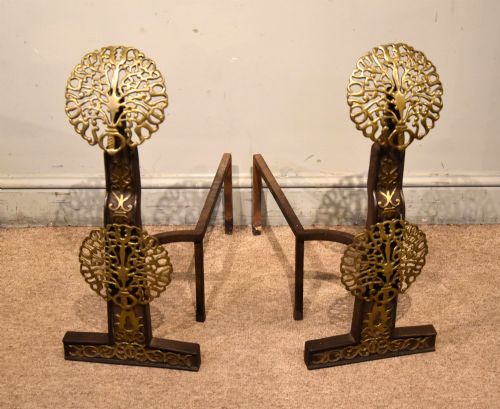
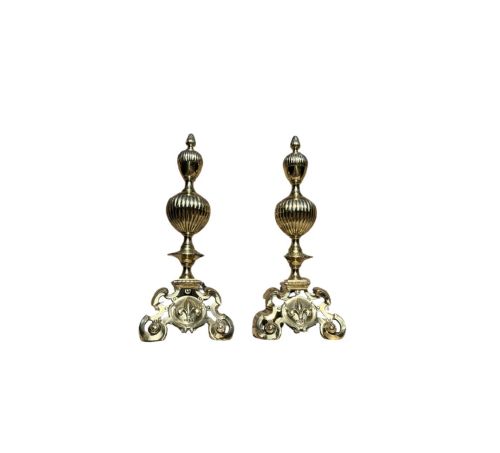
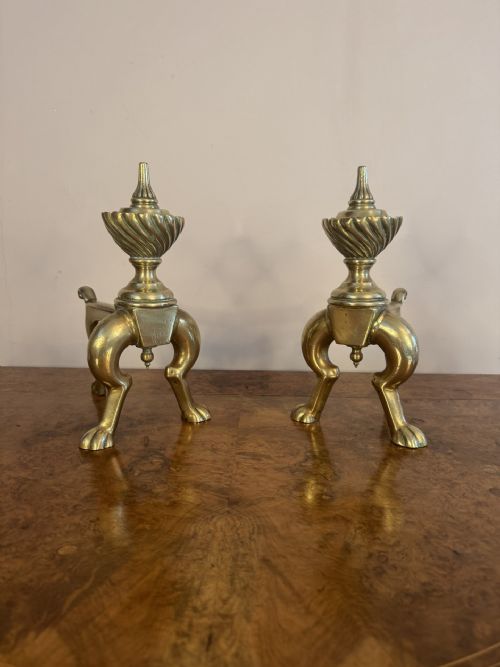
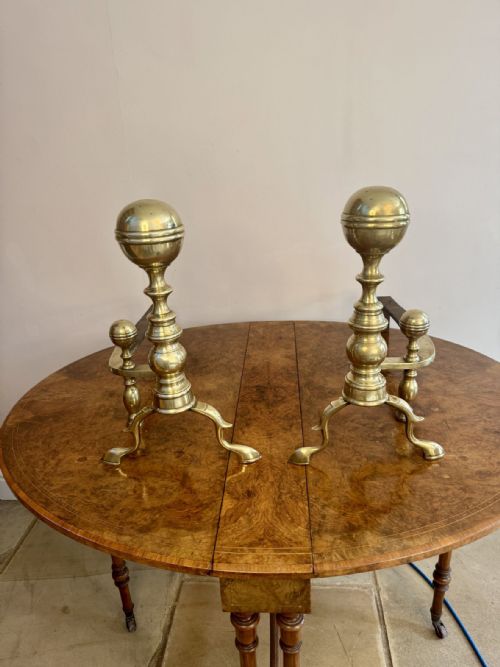
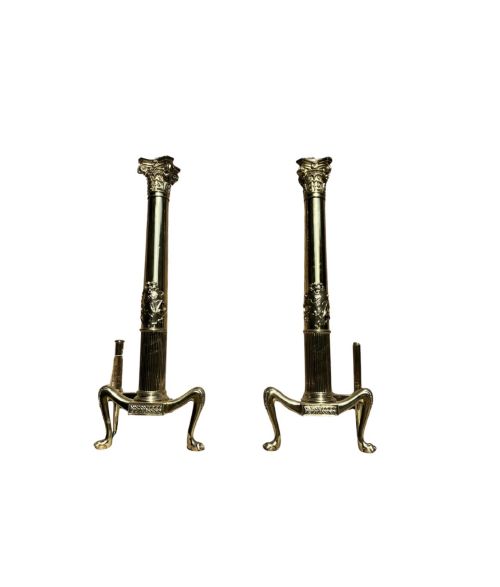
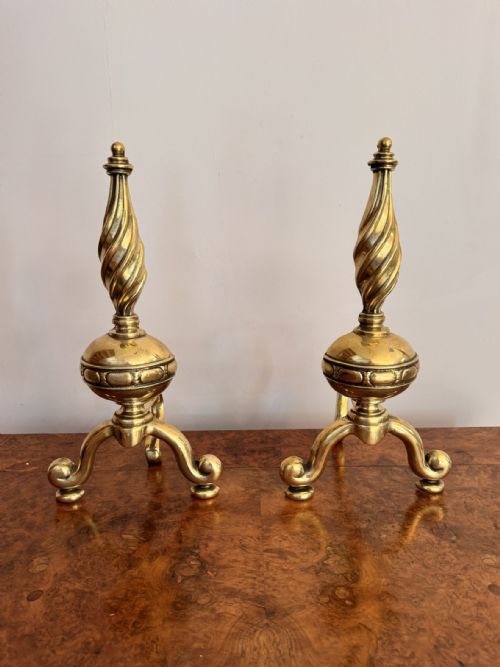
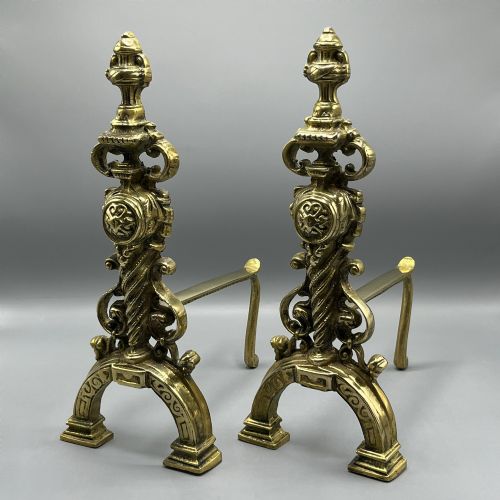
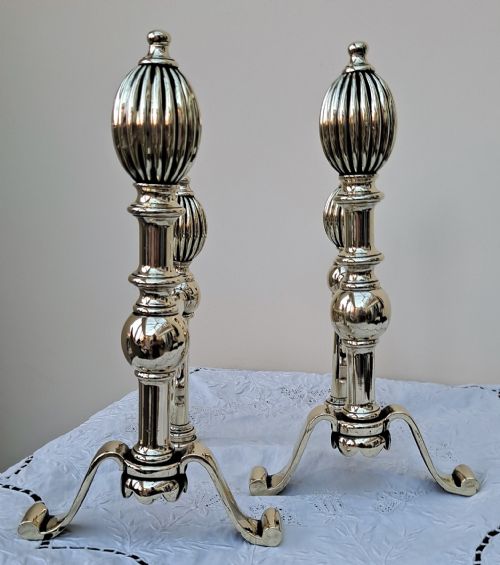
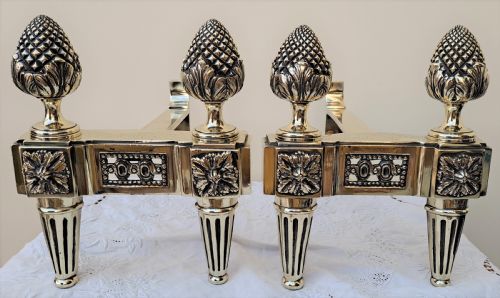
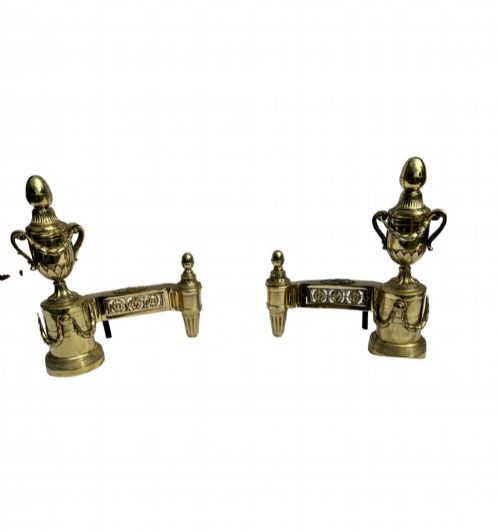
Brass log supports, which appear here most commonly as pairs of Victorian and Georgian andirons or firedogs, serve to elevate wood inside an open hearth. These heavy fireplace accessories organise the grate and keep fuel stable whilst the fire burns.
You will most frequently meet solid or gilt brass examples dating from the nineteenth century, alongside earlier Regency designs and occasional iron hybrids. The forms range from simple functional uprights to ornate French provincial and revival styles.
How they were made
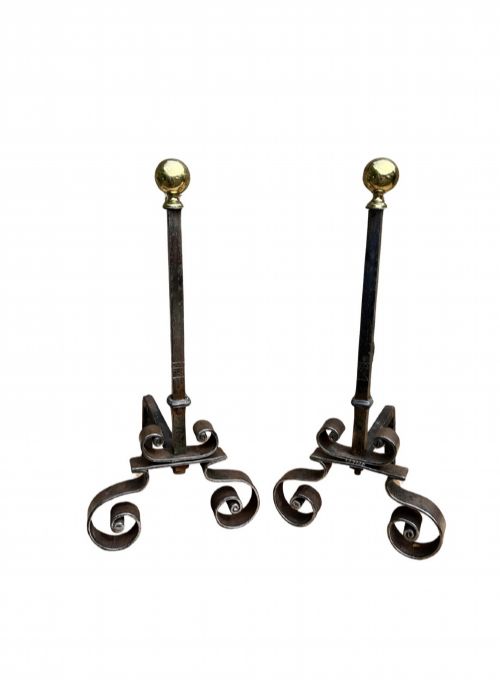
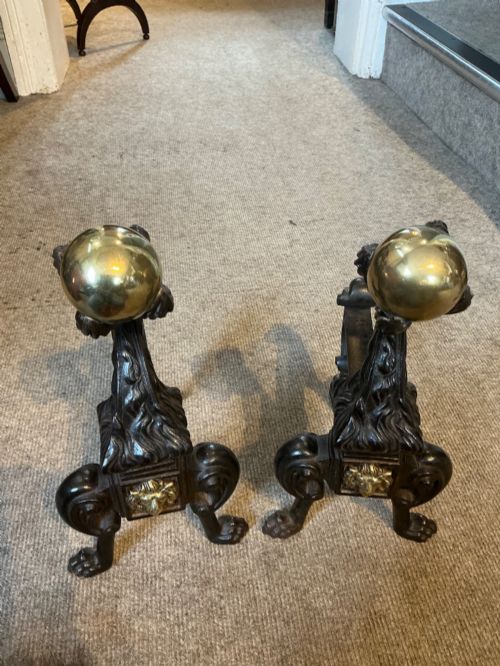
The primary materials recorded in these listings are brass, cast iron, and wrought iron, often combined with copper or steel for structural strength. Metalworkers cast the main decorative fronts in brass whilst forging the heavy iron billet bars that bear the weight of the logs.
Gilt finishes and polished surfaces give the brass components their characteristic gleam, whereas the iron elements remain dark and utilitarian. This dual construction ensured that the visible part of the support looked decorative whilst the hidden bar withstood intense hearth heat.
Brass Log Supports Retail Price Guide 2026
Typical asking prices for brass log supports among the pieces listed under this phrase on Sellingantiques today, from the lower quarter to the upper quarter. They describe what is for sale here now, not the wider market.
Listings span the nineteenth century predominantly, featuring materials from basic cast iron to gilt brass and copper.
What varies in quality
Quality reveals itself in the weight of the metal and the crispness of the cast detailing on the front standards. Superior examples display deep, sharp ornamentation and solid construction that prevents the uprights from wobbling under heavy fuel.
The distinction between standard production items and top tier pieces lies in the finishing of joints and the purity of the brass used. Heavier castings with integrated iron billets represent a higher standard of manufacture than lighter, purely decorative alternatives.
The Brass Log Supports Glossary
- Andirons
- Supports used in a fireplace to hold burning logs above the hearth floor. They typically consist of a vertical decorative front and a horizontal bar extending backward.
- Firedogs
- An alternative term for andirons, often used interchangeably in historical listings. They support firewood to allow air circulation underneath.
- Billet bar
- The horizontal iron bar of an andiron that directly supports the logs. It connects to the decorative front standard.
- Gilt brass
- Brass that has been treated with a thin layer of gold or gold-coloured finish to enhance its lustre. This treatment appears on high-status nineteenth-century fireplace accessories.
- Neoclassical
- A style drawing inspiration from classical antiquity, marked by symmetry and restrained ornamentation. It influences several of the Regency and Victorian pieces found in this category.
Brass Log Supports: Frequently Asked Questions
How do I use brass log supports?
Place a pair of supports inside your fireplace hearth with the vertical decorative fronts facing outward into the room. The horizontal bars extend backward into the firebox to cradle the logs.
This setup elevates the firewood off the hearth floor, which improves airflow beneath the logs and helps the fire burn more cleanly. Ensure your fireplace opening is deep enough to accommodate the full length of the iron bars.
Can I burn real fires with them?
Most of these pieces are built from solid brass and iron specifically to withstand the heat of a working wood fire. The robust metal construction handles high temperatures during regular use.
Check whether the specific pair relies purely on decorative brass or includes a sturdy iron billet bar before loading heavy logs. Iron and steel components bear the weight and heat, whilst the brass fronts remain decorative.
How do I clean polished brass?
Maintain polished brass surfaces by dusting them regularly with a soft cloth to prevent soot accumulation. Avoid harsh chemical abrasive cleaners that can strip away historical patina or damage gilt finishes.
Gentle soap and warm water usually suffice for routine maintenance of older metalwork. Dry the pieces thoroughly after cleaning to prevent tarnishing or corrosion on any exposed iron parts.
How do I date a pair?
Examine the casting style, fastening methods, and material combinations to determine the period of manufacture. Nineteenth-century Victorian examples often feature heavier brass casting and ornate detailing compared to earlier Georgian designs.
Stylistic cues such as Neoclassical motifs or Gothic revival elements provide further clues to the decade of production. Reviewing the listed period categories helps align the physical characteristics with known eras.