

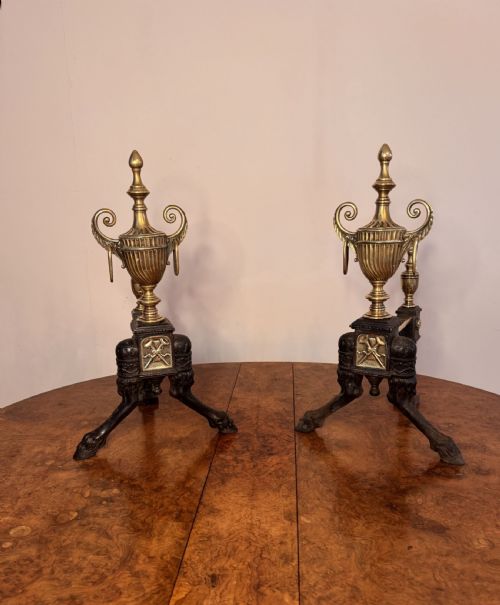
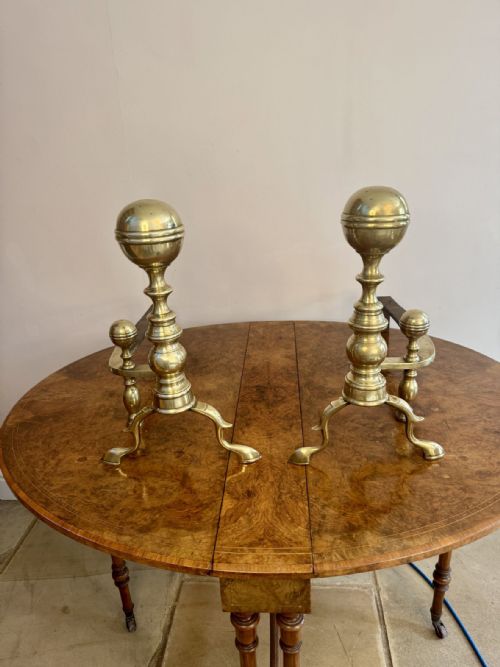
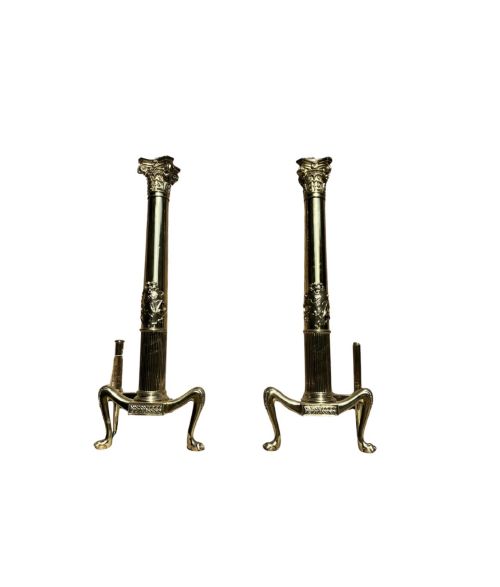
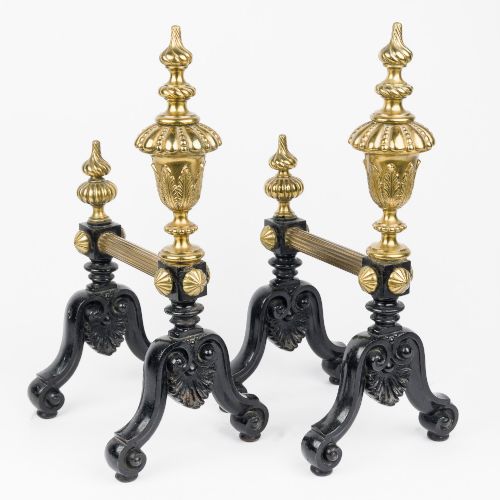
Traditional Brass Andirons
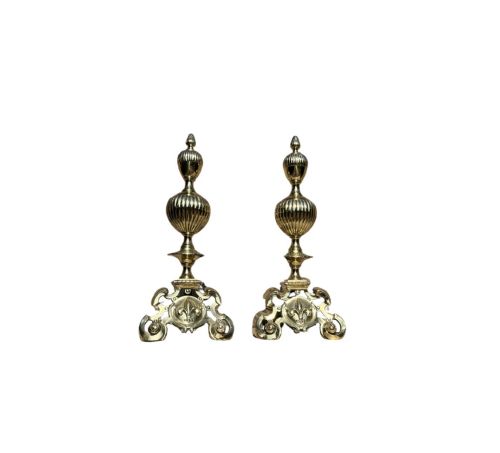
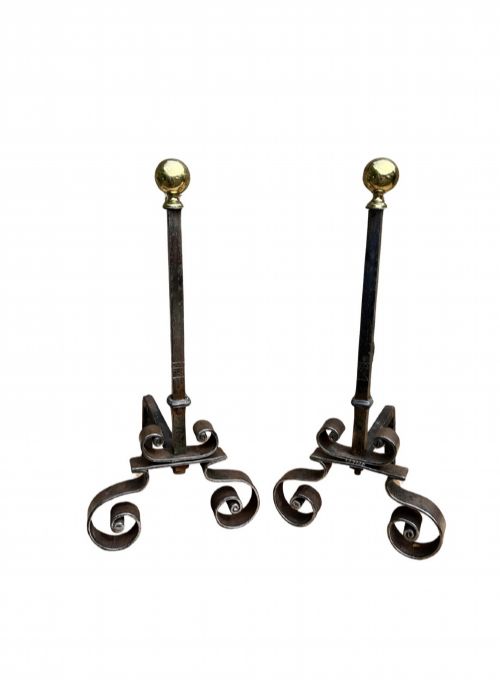
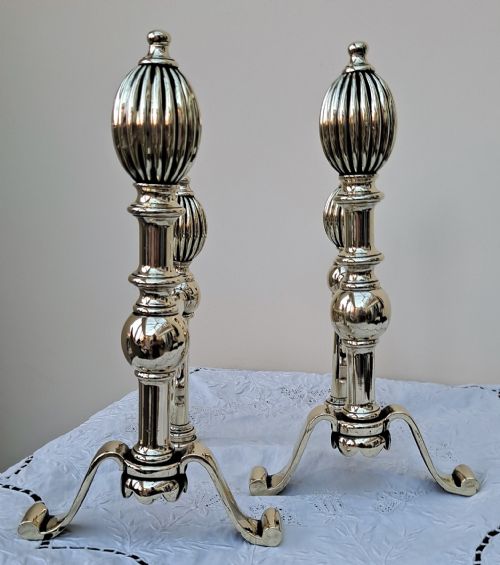
Traditional brass andirons anchor a hearth with warmth and weight, offering sturdy metal supports designed to hold logs for burning.
Traditional Brass Andirons
Traditional brass andirons serve as essential fireplace furniture designed to elevate logs above the hearth, allowing air to circulate beneath the fire. These heavy metal supports commonly appear as pairs, often accompanied by matching fire tools or baskets.
The pieces on this page span from the eighteenth century through the Victorian era, with nineteenth-century English and French examples forming the bulk of the selection. Buyers frequently encounter solid brass and cast brass variations paired with iron components.
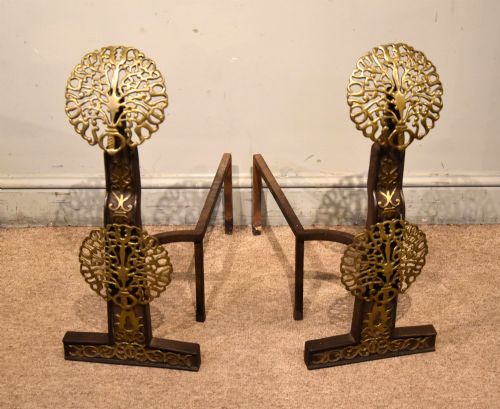
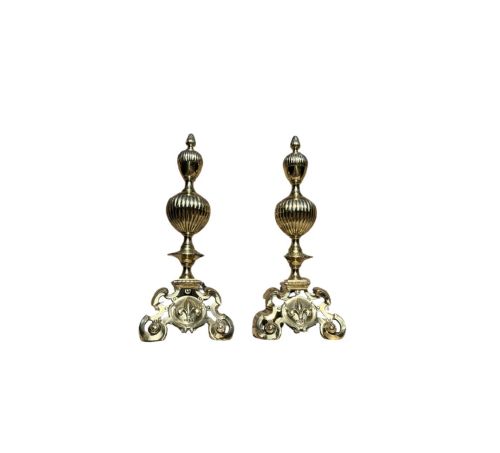
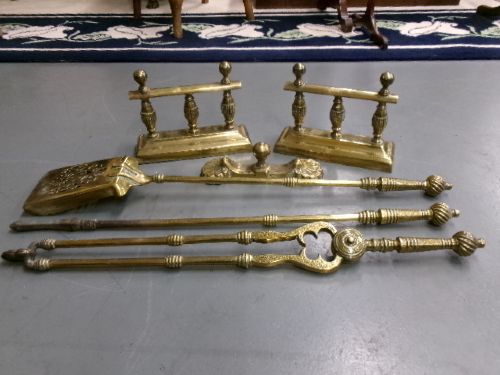
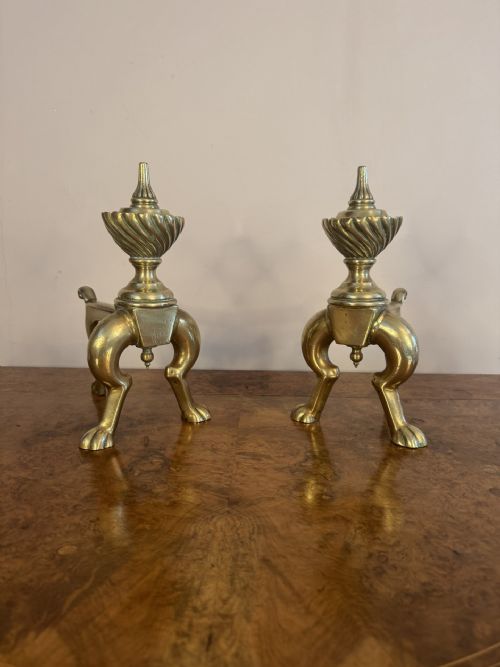
Forms range from simple utilitarian firedogs to monumental gilt pairs and ornate designs influenced by Georgian, Regency, and Baroque styles. Many sets include companion fire irons, pokers, and shovels to complete the hearth arrangement.
How traditional brass andirons were made
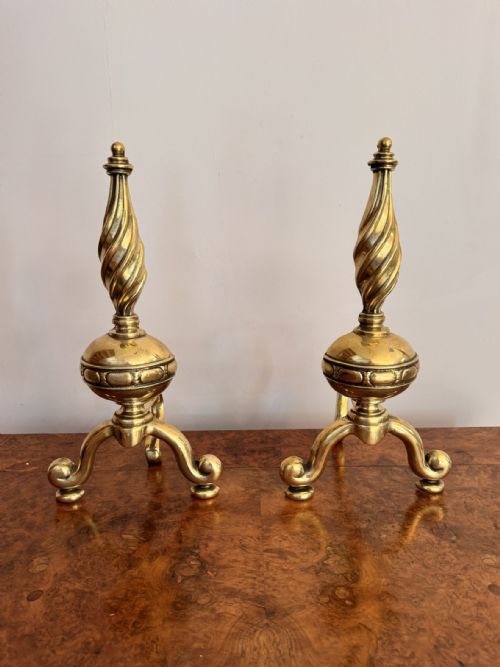
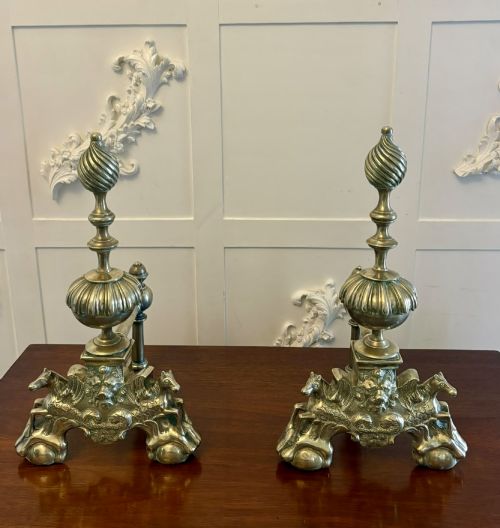
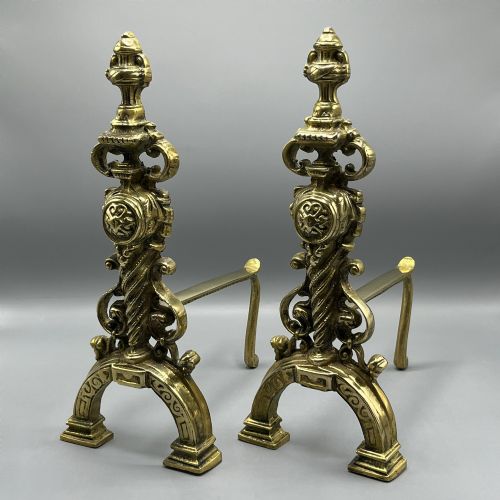
Craftsmen utilised casting techniques to shape molten brass into decorative fronts, scrolling feet, and substantial finials. Cast brass allows for intricate ornamentation and detailed surface work seen on Victorian and Baroque style examples.
Makers combined brass with wrought iron and cast iron to provide structural strength for the main billets that support the weight of burning wood. Steel and copper elements also appear in specific companion pieces and decorative highlights.
Surface finishing involved polishing and gilding to enhance the bright metallic lustre of the brass components. Construction often relies on heavy iron bars secured with bolts to withstand intense hearth temperatures.
Traditional Brass Andirons Retail Price Guide 2026
Typical asking prices for traditional brass andirons among the pieces listed under this phrase on Sellingantiques today, from the lower quarter to the upper quarter. They describe what is for sale here now, not the wider market.
Some nineteenth-century brass dogs doubled as neat rests for heavy iron pokers while the fire crackled away.
What varies in quality in traditional brass andirons
The weight and thickness of the metal dictate the structural integrity and longevity of the pair. Substantial casting and heavy gauge components indicate superior manufacturing standards compared to lighter, thinner alternatives.
Depth of detail in the chasing and casting separates standard production from finer examples. Crisp moulding along the columns, feet, and finials reveals the skill of the original metalworker.
Completeness of the original set influences the historical interest of the pieces. Surviving pairs that retain their matching iron billets, fire tools, or integrated fire baskets represent a more cohesive hearth ensemble.
James Cartland & Son
The Traditional Brass Andirons Glossary
- Andiron
- A metal support used in pairs to hold logs in an open fireplace. Also frequently referred to as a firedog.
- Billet bar
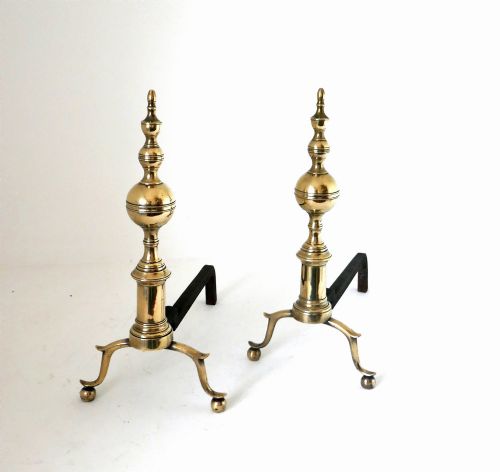
- The horizontal iron bar extending backward from the front standard to support the burning logs. This structural component bears the direct heat and weight of the fire.
- Fire basket
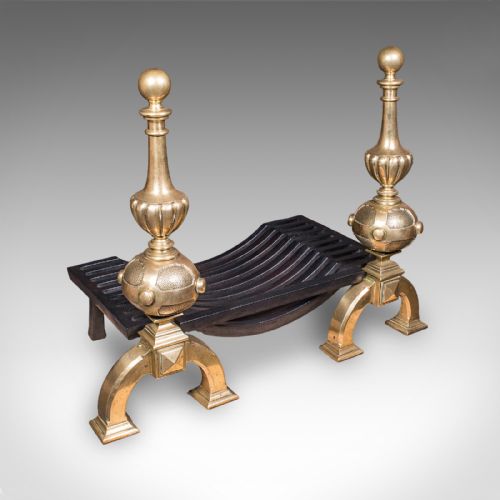
- A metal grate designed to hold coal or wood within a fireplace, sometimes incorporating integrated andirons. These units combine the functions of a traditional grate with decorative firedogs.
- Gilt brass
- Brass treated with a thin layer of gold or gold-coloured finish to enhance brilliance. This treatment appears on more ornate pairs from the nineteenth century.
- Companion set
- A matching collection of fireplace tools, such as pokers, tongs, and shovels, often displayed alongside the andirons. These suites share stylistic motifs with the primary fire dogs.
Traditional Brass Andirons: Frequently Asked Questions
What is the difference between andirons and firedogs?
The terms are generally used interchangeably to describe the decorative metal supports placed inside an open fireplace. Both words refer to the upright front standards and horizontal bars that hold burning logs.
Historical records and regional preferences often dictate which term appears on a listing. Both serve the exact same functional and decorative purpose on the hearth.
Can these andirons be used in a working fireplace?
Most traditional pieces are constructed from durable metals like cast brass, iron, and steel designed to withstand high temperatures. The heavy iron billet bars underneath are specifically built to support burning wood.
Buyers should inspect the structural integrity and metal thickness before lighting an active fire. Some highly ornate or gilt pairs are better suited for decorative hearth display.
How do I identify Victorian andirons?
Victorian examples frequently showcase heavier casting, ornate detailing, and influences from earlier periods such as the seventeenth-century revival or French Baroque styles. They often appear alongside matching brass fire tools and companion sets.
The manufacturing techniques of the nineteenth century allowed for more elaborate surface ornamentation. Makers during this era produced both solid brass designs and cast brass fronts paired with iron.
Do andirons always come with fire tools?
Many listings include complete suites that feature matching fire irons, pokers, tongs, and shovels alongside the pair of dogs. These companion sets were designed to create a unified aesthetic across the hearth.
Other listings offer the andirons independently as a standalone pair. Both configurations reflect period domestic arrangements depending on the specific room.