


Wrought Iron Firedogs
These wrought iron firedogs are robust hearth supports shaped by blacksmiths across centuries to hold logs for burning.

Wrought Iron Firedogs
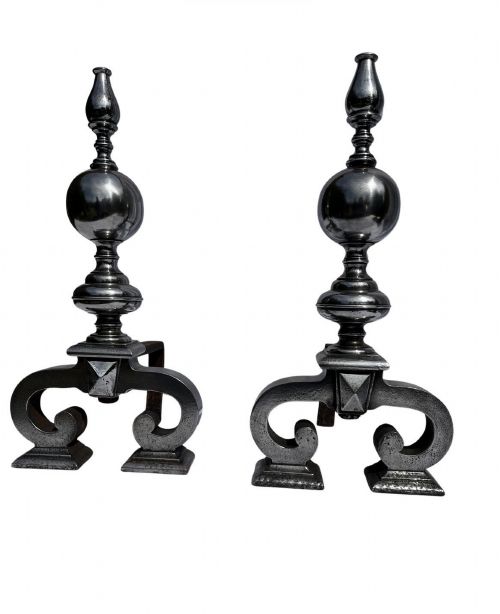
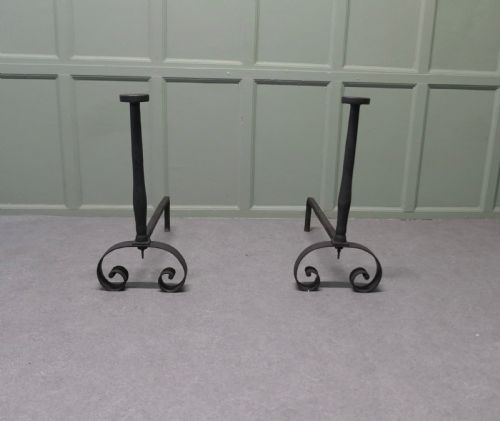
Wrought iron firedogs are practical hearth accessories designed to raise firewood off the hearth floor and improve air circulation. When you search for wrought iron firedogs, you encounter pairs of sturdy metal supports that often work alongside fire baskets and fire backs. The selection spans straightforward utility pieces alongside more decorative examples designed to anchor a traditional fireplace.
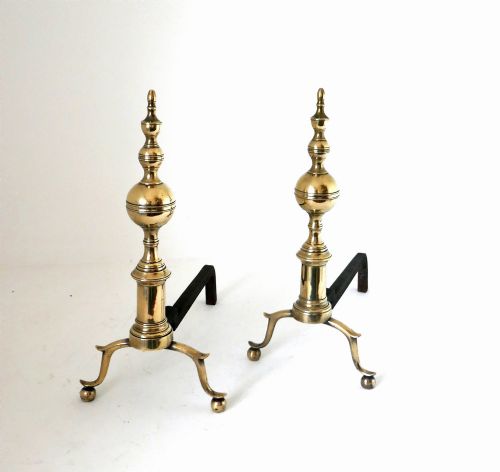
The pieces on this page originate from periods ranging from the eighteenth century through the Edwardian era. You will find forms originating from English, French, and American workshops, showing both utilitarian forged construction and detailed stylistic influences. These items serve as both functional hearth ironmongery and decorative focal points for period fireplaces.
How they were made
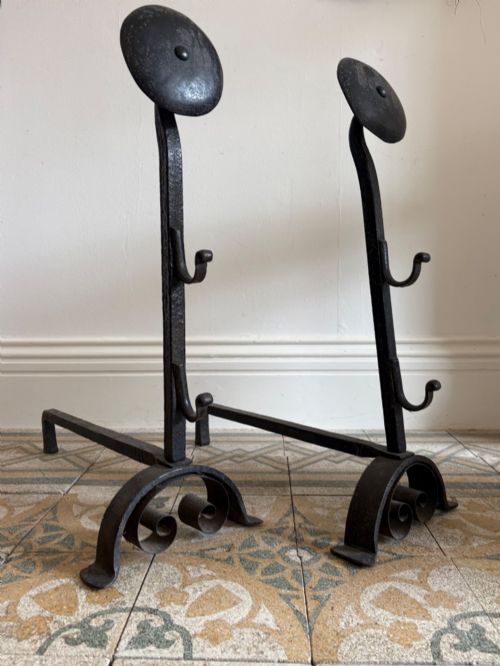
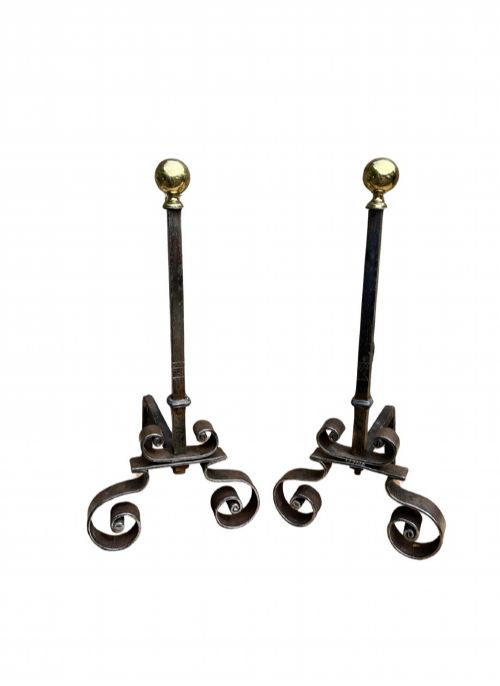
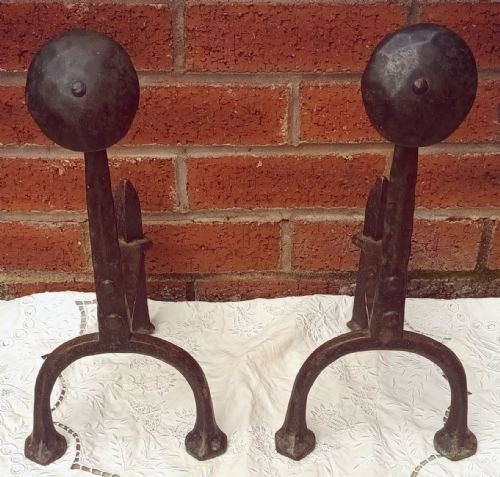
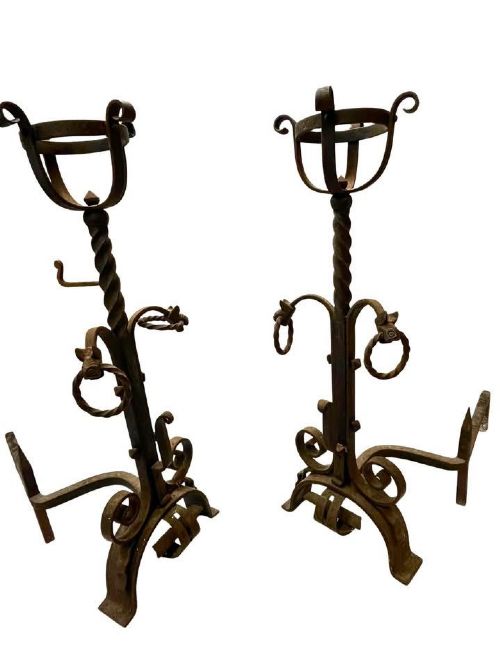
Blacksmiths shaped these objects using traditional hot-working techniques at the forge, hammering bars of wrought iron and forged iron into shape while glowing hot. Many examples incorporate mixed metals, combining the dark texture of iron with polished brass or cast iron components for decorative contrast. Craftsmen utilised hand-forging methods to create durable structural shafts and scrolled terminals designed to withstand intense hearth temperatures.
Surface finishes vary from raw dark metal and shiny iron treatments to polished surfaces that highlight the underlying texture of the forged material. Construction methods rely on heavy riveting and solid joints rather than modern welding, ensuring structural integrity under the weight of heavy logs. The integration of brass finials or copper details demonstrates how makers combined diverse metals within a single hearth set.
Wrought Iron Firedogs Retail Price Guide 2026
Typical asking prices for wrought iron firedogs among the pieces listed under this phrase on Sellingantiques today, from the lower quarter to the upper quarter. They describe what is for sale here now, not the wider market.
What varies in quality
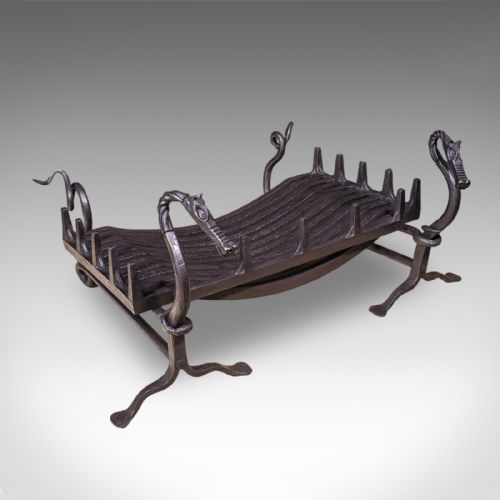
The distinction between standard utility items and finer examples lies in the expressiveness of the forged work and the proportion of the design. Heavier gauge metalwork and confident, balanced scrolls demonstrate a higher level of blacksmithing skill than simple, uniform production pieces. The presence of secondary metals like brass, or distinct stylistic motifs such as dragon details, elevates the decorative ambition of the object.
Overall mass and substantial proportions dictate the physical presence of the firedog on the hearth. Pairs that retain their matching form without heavy pitting or excessive corrosion from hearth exposure represent better-preserved examples of period craftsmanship.
The Wrought Iron Firedogs Glossary
- Firedog
- A horizontal iron bar supported on legs, used in pairs to hold logs in an open fireplace. They are often synonymous with andirons.
- Andiron
- An alternative term for a firedog, typically featuring an upright front standard that can be decorative or functional. They form the primary supports for wood fires.
- Chenet
- The French term for an andiron or firedog. These often exhibit more ornate brass mounts or sculptural motifs.
- Forged iron
- Metal shaped by heating and hammering with hand tools. This technique leaves subtle hammer marks and texture characteristic of bespoke blacksmithing.
- Fire basket
- A metal grate designed to hold coal or wood within a fireplace opening. They frequently appear paired with matching firedogs.
Wrought Iron Firedogs: Frequently Asked Questions
How do I use firedogs?
Firedogs are placed inside the hearth in matching pairs to support burning logs above the floor of the fireplace. This elevation allows air to circulate underneath the wood for a cleaner, hotter burn.
They also prevent logs from rolling forward into the room. Many people use them alongside a fire basket or fire back to complete the hearth arrangement.
What is the difference between firedogs and andirons?
The terms are generally used interchangeably to describe the same hearth supports. Firedog is the older English term, while andiron became widely adopted over time.
Regional preferences often dictate which term appears on a listing. Both refer to the twin metal stands placed in the fireplace.
How do I date an old firedog?
Dating relies on examining the manufacturing marks, metal composition, and stylistic details such as Arts and Crafts or Gothic Revival motifs. Hand-forged texture and assembly methods like heavy riveting point towards eighteenth and nineteenth-century production.
Comparing the form against documented examples from periods like the Georgian era or Edwardian period helps narrow down the origin.
Can these be used in a modern fireplace?
Many antique firedogs remain fully functional for use in working open fireplaces. You must ensure the size of the pair matches the dimensions of your hearth opening.
They also serve decorative purposes in non-working fireplaces or can be repurposed creatively as planters.