

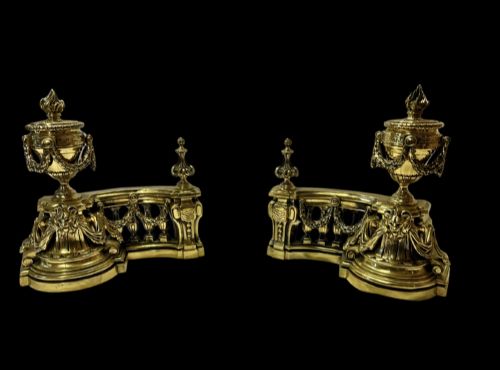


Ornate Brass Firedogs
Ornate brass firedogs anchor a hearth with heavy cast metal, period styling and decorative presence.
What ornate brass firedogs are
Ornate brass firedogs provide a functional and decorative support for logs inside an open fireplace, elevating wood to improve airflow. These hearth accessories are most frequently met as matching pairs dating from the nineteenth century, including specific years like 1880, 1890 and 1900.
The objects combine sturdy iron frames with brass elements, appearing in styles such as Victorian Gothic Revival, Baroque Revival, French Rococo and Victorian Classical Revival. Buyers encounter forms described variously as firedogs, andirons, fire dogs and chenet fire tool rests.
Originating from English and continental workshops, these items reflect the decorative tastes of the Victorian era. They serve both to hold fuel in place and to ornament the fireplace opening when the hearth is unlit.
How they were made
Makers utilised a combination of cast brass, gilt brass, iron, cast iron and wrought iron to construct these hearth pieces. The structural billets and internal bars typically relied on durable iron, while the decorative fronts and finials were cast in brass or finished with gilding.
Foundries employed traditional sand-casting techniques to shape the brass components, achieving intricate surface relief and sculptural detail. Wrought iron elements were hand-forged and joined to the cast portions to withstand intense hearth temperatures.
Retail Price Guide 2026
Typical UK retail prices for ornate brass firedogs, calculated from the Sellingantiques database of over a million retail prices indexed since 2003. This retail price guide relies exclusively on Sellingantiques data; no external sources or auction records are used, so the figures do not describe the wider market.
Some pairs double as tool rests, holding miniature pokers ready for action.
What varies in quality
The distinction between standard items and exceptional pieces rests upon the crispness of the brass casting and the depth of the decorative relief. Finer examples display carefully chased surface details and heavy gauge metals that offer substantial weight.
Artistic execution in styles such as French Rococo or Baroque Revival dictates the upper tier of the range. Pieces showing superior surface finish and harmonious integration of iron and brass components command greater aesthetic interest.
The Ornate Brass Firedogs Glossary
- Firedog
- A metal support used in pairs to hold logs in an open fireplace. Also known as an andiron.
- Andiron
- An alternative term for a firedog, consisting of a horizontal billet raised on legs with a vertical decorative front. These items protect the hearth base and support burning wood.
- Chenet
- The French term for a firedog or fire dog, frequently associated with Rococo or continental designs. They often incorporate ornate scrolling and tool rests.
- Gilt brass
- Brass that has been treated with a thin layer of gold or gold-coloured finish to enhance its decorative sheen. This treatment appears on high-status nineteenth-century hearth furniture.
- Wrought iron
- Iron that has been heated and shaped with tools by a blacksmith, providing toughness and fibrous strength. It forms the durable internal shafts of many fire dogs.
Frequently Asked Questions
What are firedogs used for?
Firedogs support logs inside an open fireplace to allow air to circulate underneath the wood for a better burn.
They also serve a decorative purpose, framing the hearth with polished metalwork and sculptural forms.
How do I style firedogs at home?
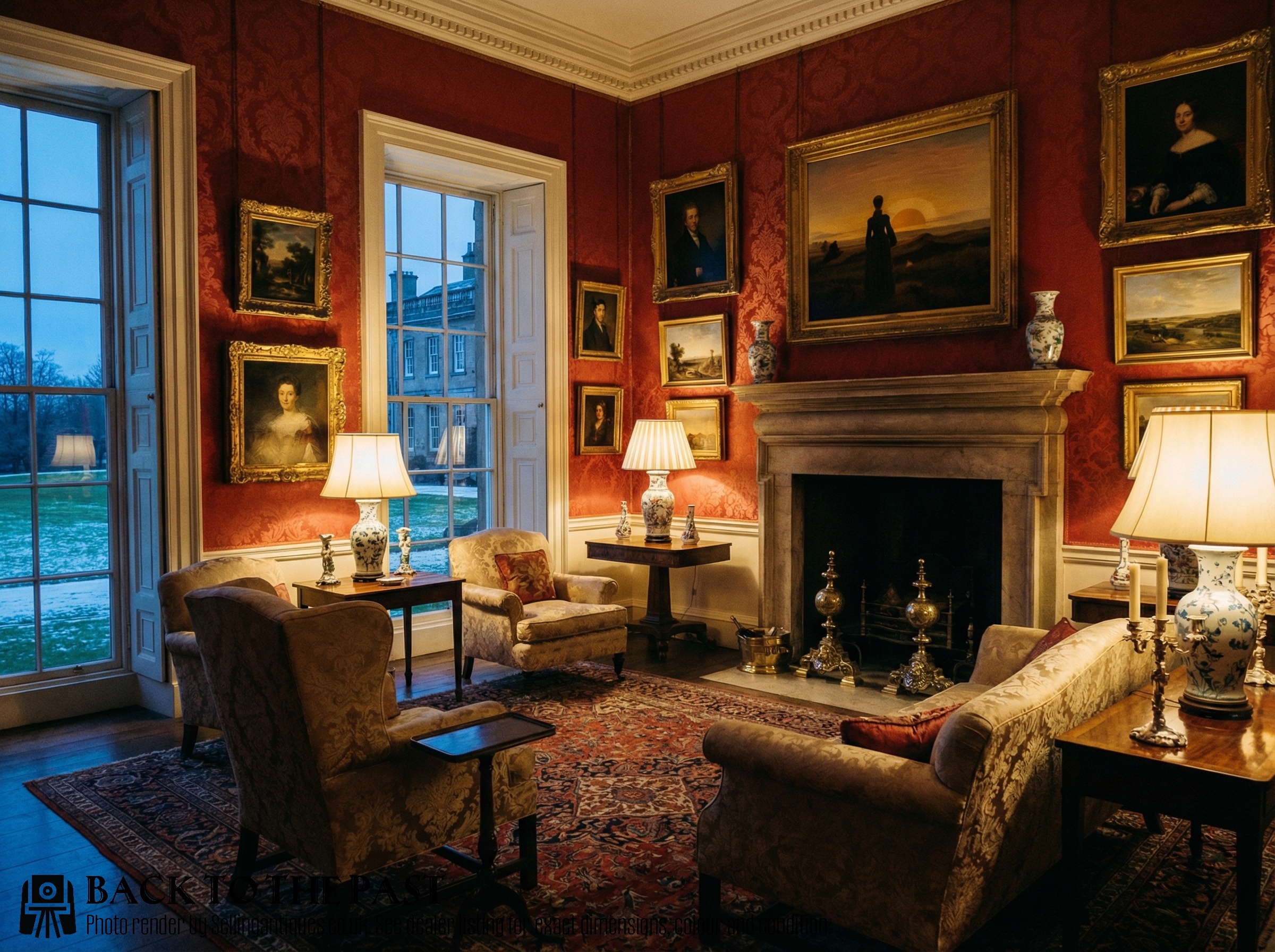
Place them symmetrically inside the fireplace opening directly on the hearth floor, either supporting logs or standing alone.
They pair well with matching fenders and fire irons to create a cohesive nineteenth-century period interior.
Are these pieces strictly for decorative use?
Most pieces are built with robust iron and brass structures intended for active fireplace use with burning wood.
Some highly decorated or gilt examples are handled with greater care to preserve delicate surface finishes.
How do I identify nineteenth-century styles?
Nineteenth-century pieces often draw on historical aesthetics such as Gothic Revival, Baroque Revival and French Rococo.
Examine the casting quality, metal combinations of iron and brass, and decorative motifs to determine the period character.