


19th Century Andirons
These 19th century andirons bring sculptural weight and historical character to a hearth, holding logs above the ash.
What 19th century andirons are
When you search for 19th century andirons, you encounter robust pairs of firedogs designed to support firewood within an open hearth. The selection spans straightforward utility and ornamental revivalism.
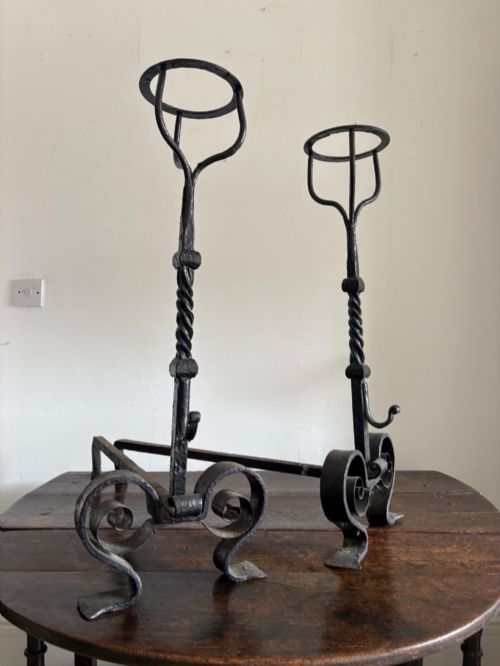
Most examples originate from the Victorian period, frequently configured as heavy cast iron or bright brass pairs. Forms range from domestic inglenook accessories to large French designs.
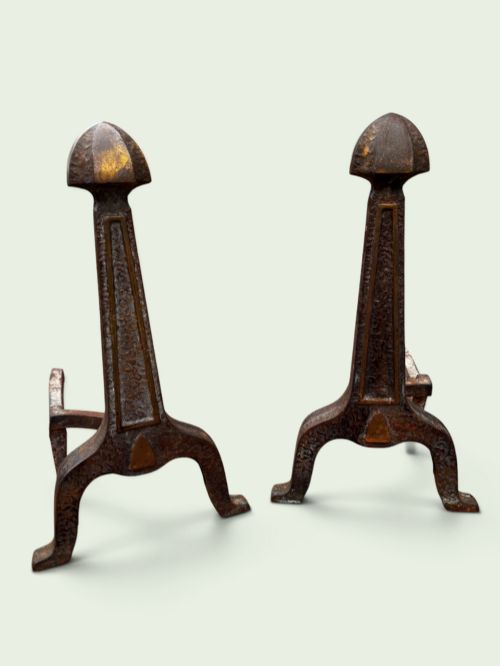
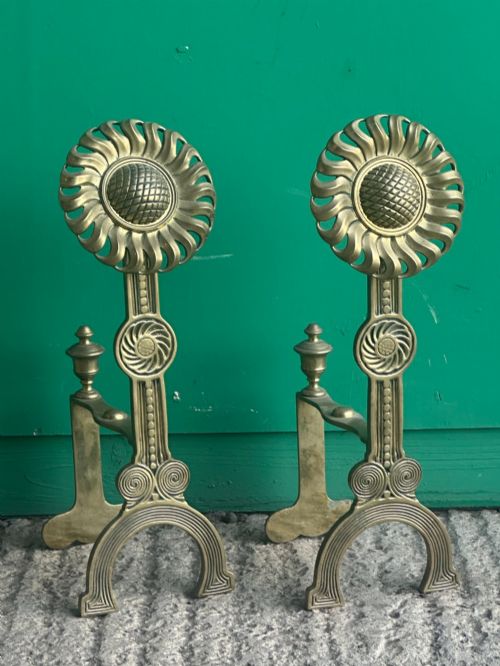
Makers drew on diverse historical aesthetics, producing pieces in Gothic Revival, Aesthetic Movement, 17th Century Revival, and Baroque styles. Certain pairs incorporate grates or feature specific motifs like sunflowers or lions.
How they were made
Foundries utilised casting techniques in both iron and brass to produce sturdy structural bodies and decorative fronts. Molten metal poured into moulds allowed for crisp surface detail and substantial weight.
Combinations of brass and iron appear often, pairing durable iron shafts with polished brass terminals or decorative facades. This method balanced utilitarian strength with visual display.
Retail Price Guide 2026
Typical UK retail prices for 19th century andirons, calculated from the Sellingantiques database of over a million retail prices indexed since 2003. This retail price guide relies exclusively on Sellingantiques data; no external sources or auction records are used, so the figures do not describe the wider market.
Listings feature periods spanning the Victorian era alongside broader nineteenth-century dates, utilising cast iron, brass, and combined iron-and-brass materials.
What varies in quality
The distinction between standard utility pairs and superior examples lies in the ambition of the casting and the crispness of the chased or moulded detail. Heavy proportions and sculptural depth separate ordinary workshop output from finer designed pieces.
Design attribution and historical stylistic adherence also drive distinction, particularly when specific artistic movements like the Aesthetic Movement or named foundries are referenced in the manufacture.
Thomas Jeckyll·William Tonks·Carron Foundry
The 19th Century Andirons Glossary
- Andirons
- Supports for firewood in an open fireplace, consisting of a horizontal bar on legs with an upright decorative front. They are also known as firedogs.
- Inglenook
- A large recess for a fireplace, often accommodating seating, which frequently requires large-scale andirons. Pieces designated for this setting tend to be exceptionally heavy.
- Gothic Revival
- An architectural and decorative style drawing inspiration from medieval forms, visible in pointed arches and structural motifs on fireplace furniture.
- Aesthetic Movement
- A late nineteenth-century design current emphasising visual beauty over narrative meaning, famously represented by sunflower brass motifs.
Frequently Asked Questions
Can I use them in a working fireplace?
Most pairs are robustly cast in iron or brass and were built precisely for holding logs in active hearths.
Ensure the dimensions and weight suit your specific fireplace opening before burning wood.
How do I clean brass andirons?
Warm soapy water and a soft cloth generally suffice to remove dust and soot accumulation without harming the metal.
Avoid harsh chemical abrasives that strip the historic surface character entirely.
What is the difference between andirons and firedogs?
The terms are used interchangeably to describe the same utilitarian fireplace supports.
Regional preferences historically favoured one word over the other, but the function remains identical.
How do I identify a revival style?
Look at the decorative motifs, such as Baroque scrolls or medieval Gothic arches cast into the upright fronts.
These visual cues connect the nineteenth-century manufacture to earlier historical periods.