



Arts and Crafts Firedogs
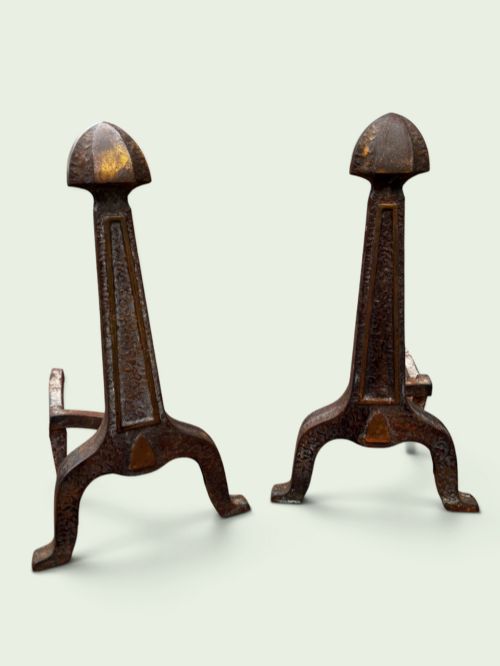
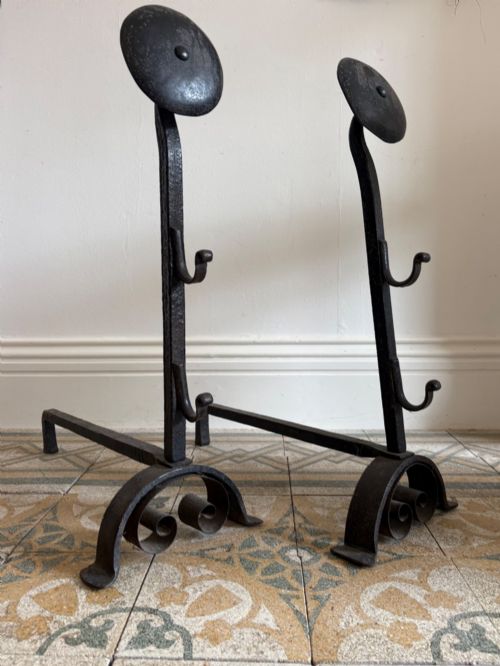
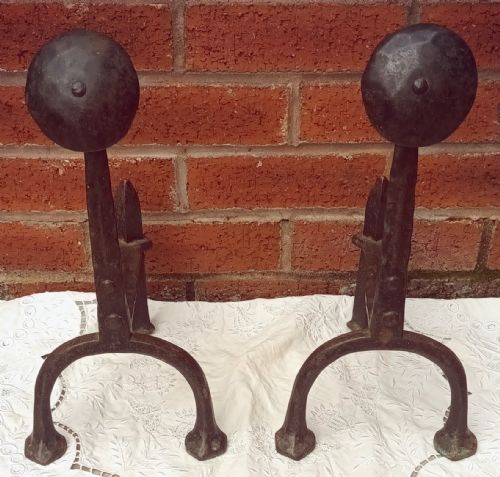
These arts and crafts firedogs anchor the hearth with honest metalwork, combining practical function with the distinctive hand-worked character of the movement.

Arts and Crafts Firedogs
When you search for arts and crafts firedogs, you encounter functional hearth furniture designed to support logs within an open fireplace. These pieces date across the nineteenth century, the Victorian era, the Edwardian period, and into the mid-twentieth century.
The forms on this page primarily take the shape of pairs of andirons or fire dogs. They emerge from periods including the nineteenth century, nineteen hundred, and nineteen forty, reflecting both the Gothic Revival and Aesthetic Movement alongside traditional Arts and Crafts designs.
Materials and construction
Maker workshops utilised robust metals such as wrought iron, forged iron, cast iron, steel, brass, and cast brass. Copper also appears as a decorative material, adding warmth to the metallic assemblies.
Craftsmen shaped these materials through hand-forging and casting techniques. The construction prioritises visible hammer marks and structural joints rather than concealed fixings.
Arts and Crafts Firedogs Retail Price Guide 2026
Typical asking prices for arts and crafts firedogs among the pieces listed under this phrase on Sellingantiques today, from the lower quarter to the upper quarter. They describe what is for sale here now, not the wider market.
Periods represented include the 19th Century, Victorian, Edwardian, 1900, and 1940.
Distinguishing quality
Quality rests in the subtlety of the hand-forging and the integrity of the metalwork. Pieces with expressive hammer marks and considered proportions stand apart from simpler utilitarian castings.
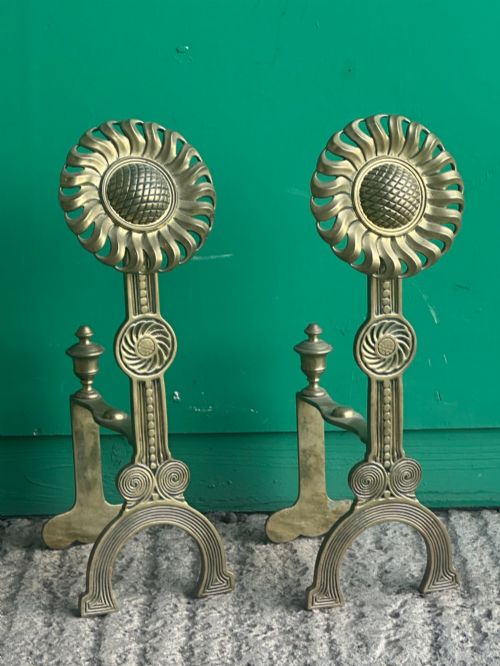
Design sophistication also elevates certain pairs, such as those featuring botanical motifs like sunflower decoration or recognizable stylistic references to makers like Thomas Jeckyll and William Tonks.
Thomas Jeckyll·William Tonks
The Arts and Crafts Firedogs Glossary
- Andirons
- Supports for logs in an open fireplace, consisting of a horizontal bar with upright standards at the front. They allow air to circulate beneath the wood for a better burn.
- Wrought iron
- Iron that has been heated and shaped with hand tools by a blacksmith. This material bends rather than breaks under stress and displays characteristic surface texture.
- Cast brass
- An alloy of copper and brass poured into a mould to create decorative components. This technique allows for repeating motifs like sunflowers on the upright standards.
- Gothic Revival
- An architectural and decorative style drawing inspiration from medieval forms. It heavily influenced early fireplace equipment with pointed arches and robust framing.
Arts and Crafts Firedogs: Frequently Asked Questions
What are arts and crafts firedogs?
These metal supports hold logs inside an open fireplace during use. They combine utilitarian strength with the artistic metalwork typical of the period.
The designs often feature exposed ironwork, hand-forged elements, or applied brass details like sunflowers.
How do I use them in a modern home?
You place the pair inside an open hearth to elevate firewood and improve air circulation. They serve both a practical burning function and a decorative role.
Even in a non-working fireplace, they provide a strong historical focal point for the room.
How do I tell periods apart?
Earlier nineteenth-century examples often lean towards Gothic Revival or Aesthetic Movement aesthetics. Later Edwardian and twentieth-century pairs show simpler, functional forged lines.
Examining the metal type and manufacturing marks helps narrow down the production era.
What materials were used?
Blacksmiths and foundries worked with wrought iron, forged iron, cast iron, steel, brass, and cast brass. Copper frequently appears as an accent material.
These metals were selected for their durability under high fireplace temperatures.