


Vintage Fire Dogs
Vintage fire dogs hold logs in an open hearth while bringing sturdy metalwork and polished brass to the fireplace.
Vintage Fire Dogs
Vintage fire dogs are functional hearth supports designed to hold fuel off the hearth floor and improve airflow for an open fire. When searching for vintage fire dogs, buyers encounter matching pairs meant to sit either side of the grate or log basket.
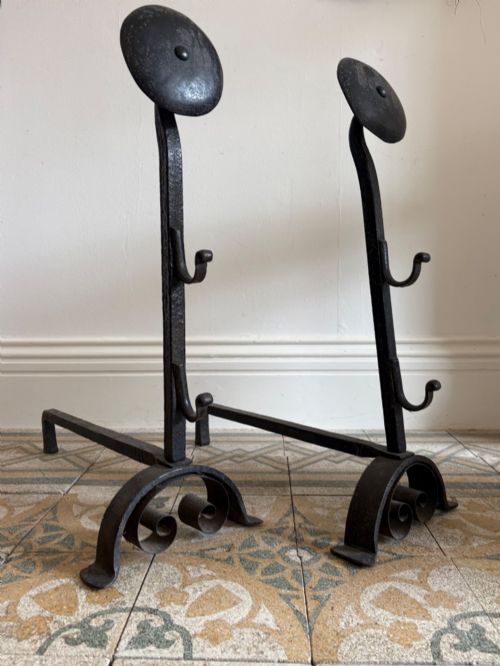
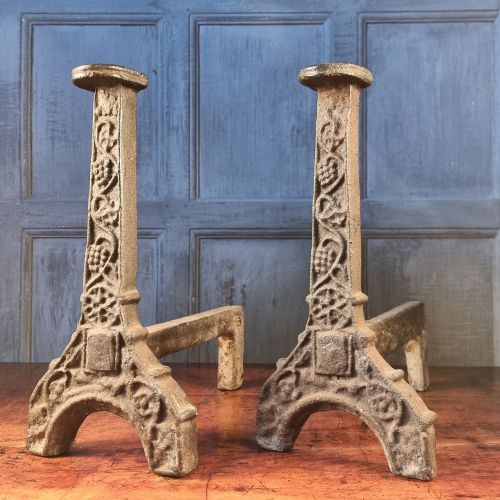
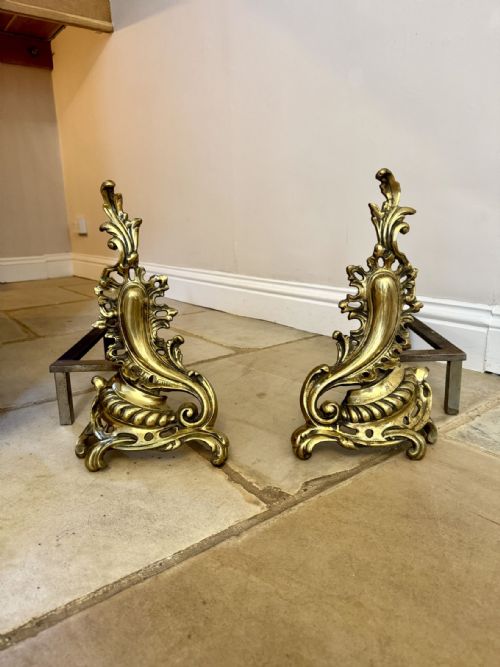
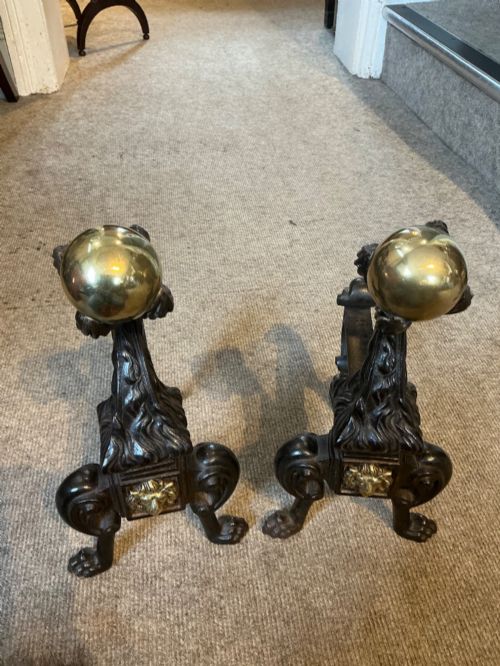
The pieces appearing on this page span the nineteenth century into the early decades of the twentieth century, including Victorian and Edwardian examples. Forms range from simple wrought iron supports to elaborate French rococo designs and Gothic revival pieces.
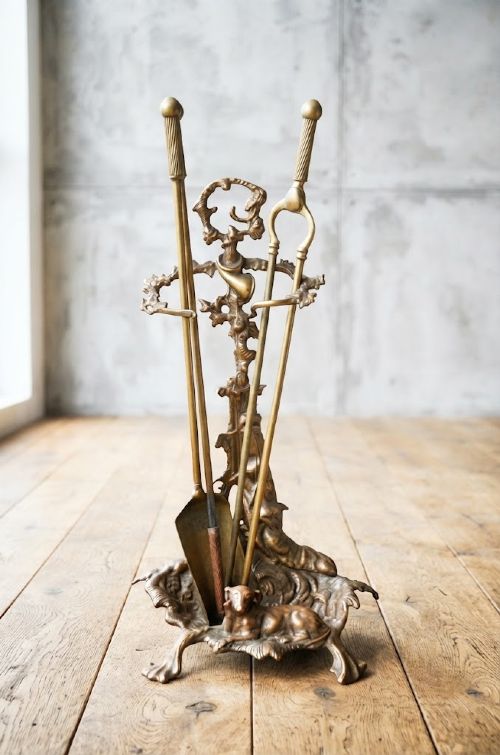
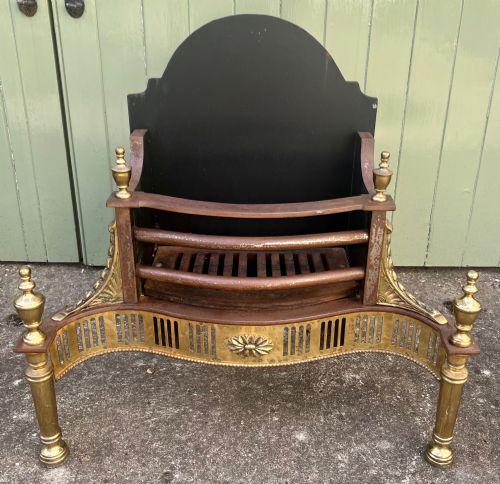
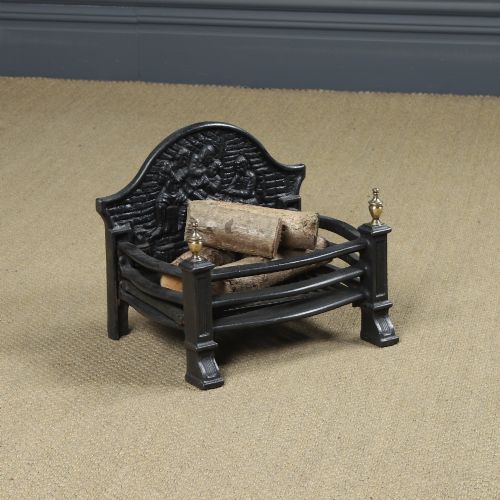
Most items on show take the form of traditional andirons, though related fireplace accessories such as fire grates, log baskets, and companion stands also appear. Makers varied from local blacksmiths hand-forging utilitarian iron to commercial foundries casting decorative brass.
Materials and Construction
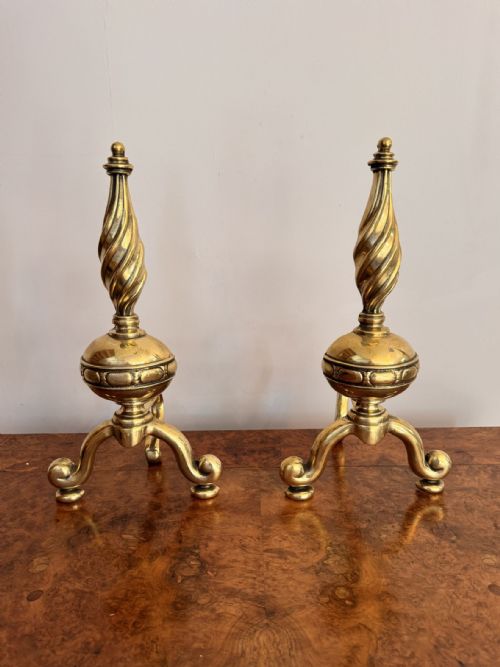
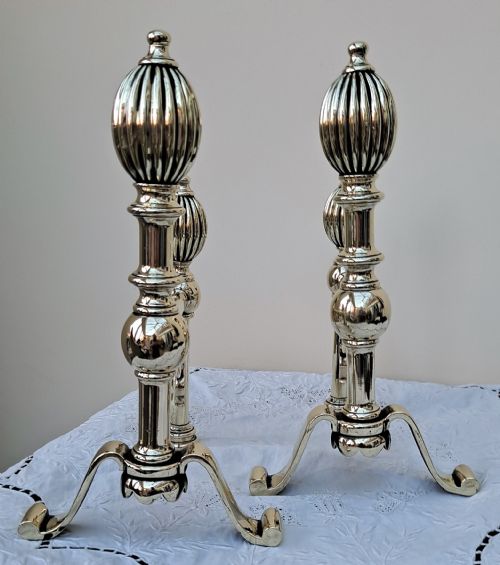
Blacksmiths and founders shaped these hearth pieces using metals suited to intense heat and heavy daily use. Wrought iron and steel provide strong, hand-forged frames, while brass and cast iron offer heavier decorative frontplates.
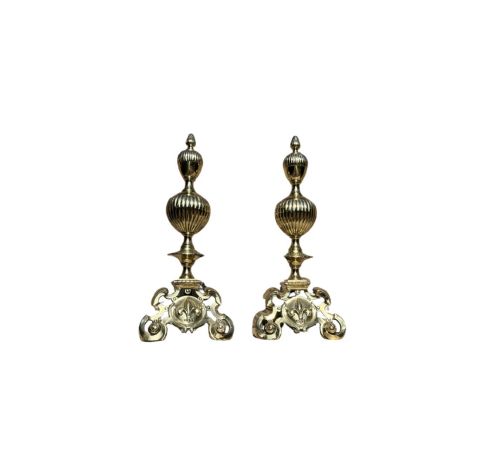
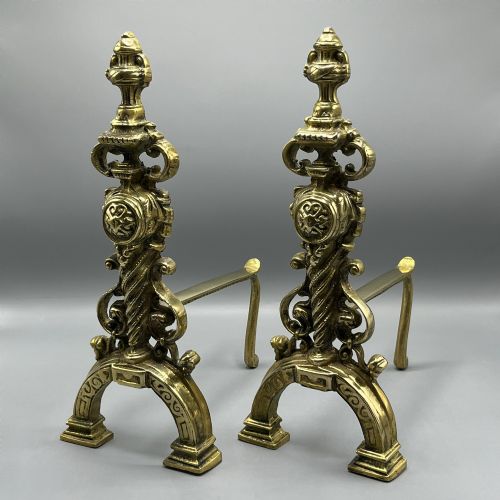
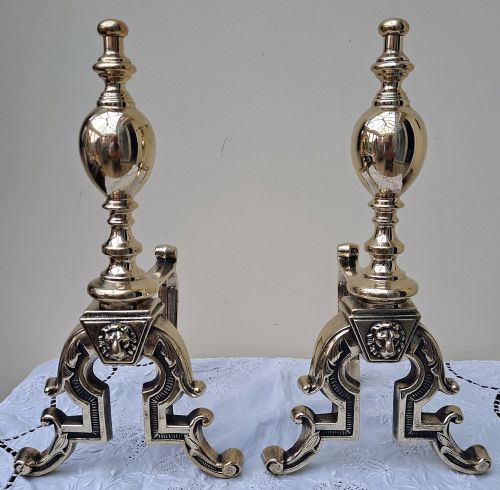
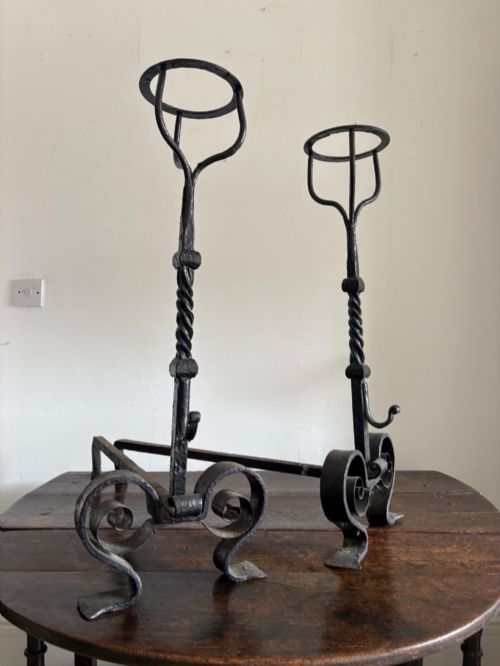
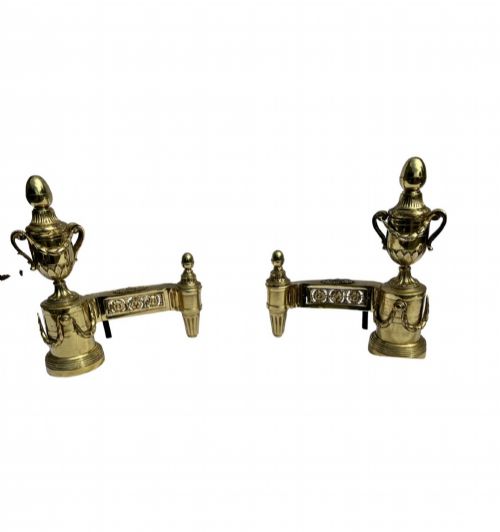
Many brass examples feature solid cast construction with finely detailed motifs, ranging from classical neoclassical urns to floral arts and crafts patterns. Iron variants rely on hand-beaten bars and riveted joints for structural integrity.
Some nineteenth-century pairs doubled as umbrella stands when the hearth went cold for summer.
Assessing Quality and Craftsmanship
Quality rests in the weight of the metal and the crispness of the casting or forging. Finer pairs display clean lines, well-finished joints, and heavy gauge materials that withstand high temperatures without warping.
Design execution separates standard utilitarian items from exceptional decorative pieces. Superior examples feature detailed ornamentation such as hand-chased brass mounts, balanced proportions, and robust billet bars designed to bear heavy logs.
The Vintage Fire Dogs Glossary
- Andirons
- Supports used in a fireplace to raise logs off the hearth so air can circulate beneath them. They typically feature an upright decorative front and a horizontal rear bar.
- Billet bar
- The horizontal iron bar extending backward from the front standard of an andiron to support the burning logs.
- Chenet
- The French term for an andiron or fire dog, frequently applied to decorative ornamental pieces cast in brass or bronze.
- Fire basket
- A metal container used in an open fireplace to hold coal or wood, often flanked by integrated andirons.
- Neo Gothic
- A nineteenth-century revival style drawing upon medieval architectural motifs, visible in pointed arches and heavy cast iron detailing.
Vintage Fire Dogs: Frequently Asked Questions
What is the difference between fire dogs and andirons?
The terms are used interchangeably for the same hearth furniture. Both describe metal supports placed in a fireplace to hold logs.
Historically, regional naming conventions varied, but modern usage applies both labels to matching pairs of upright front standards with horizontal log bars.
How do I choose the right size for my fireplace?
Measure the width and depth of your hearth opening before selecting a pair. The fire dogs must fit comfortably within the space while leaving room around the sides for adequate airflow.
Consider the height of the vertical front standards to ensure they do not block the view of the fire or interfere with existing hearth accessories.
Can I use antique fire dogs with a modern fire?
Most vintage pieces are built from durable cast iron, wrought iron, or solid brass capable of withstanding wood fires. They function well in traditional open hearths.
Care should be taken with delicate decorative surfaces or antique brass to prevent thermal shock or soot staining from modern burning fuels.
How do I clean and maintain vintage metal fire dogs?
Remove accumulated ash and soot using a soft brush and warm soapy water, avoiding harsh chemical abrasives that can strip historic finishes. Dry the metal thoroughly to prevent surface rust.
Brass surfaces benefit from occasional gentle polishing to maintain their lustre, while iron parts can be lightly oiled to preserve the dark metal finish.