



Heavy Iron Firedogs
Heavy iron firedogs anchor a hearth with sheer weight, holding wood above the ash so air can feed the flames properly.
Heavy Iron Firedogs
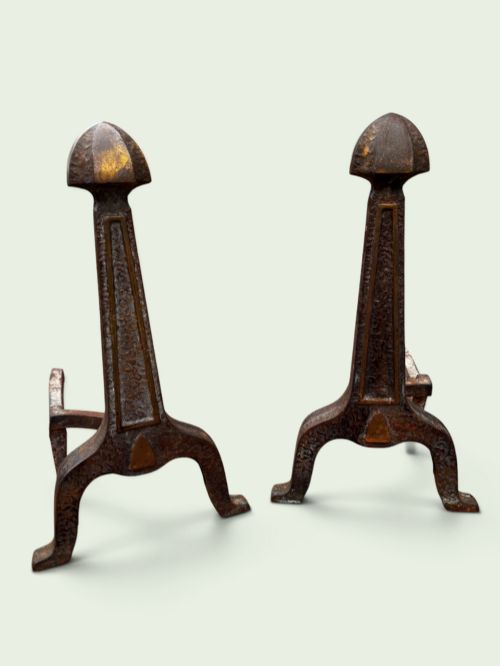
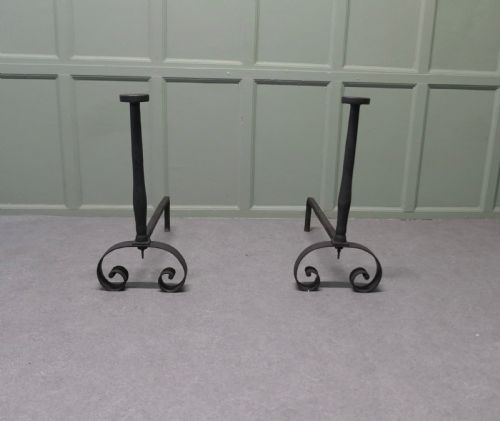
Heavy iron firedogs appear in various forms across multiple centuries, serving as the sturdy structural supports within an open fireplace. Buyers searching this phrase encounter robust items designed to elevate logs for better burning.
The selection ranges from Victorian examples to 16th-century pieces, often paired with grates, fire baskets, or fire backs. Many come as matched pairs utilising cast iron, wrought iron, or polished iron.
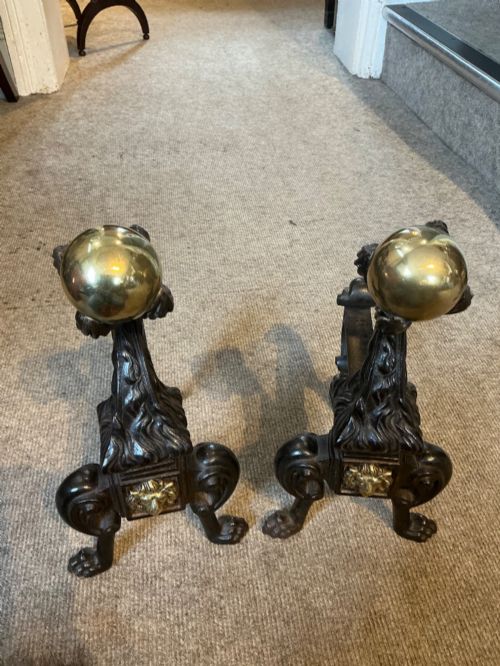
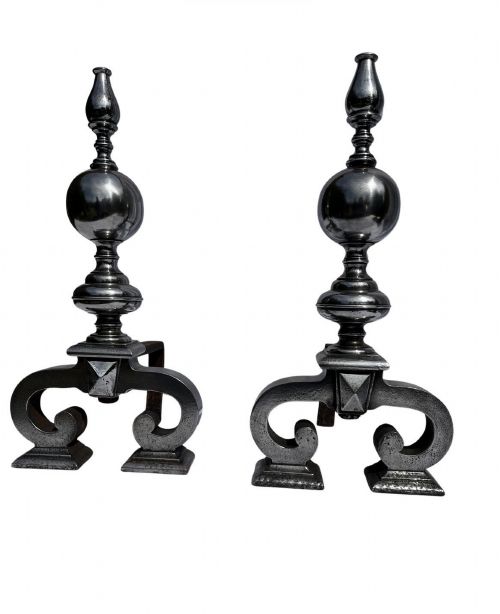
Some variants incorporate bronze, steel, or brass elements alongside the iron body, reflecting styles from Gothic Revival to Dutch Baroque and French Country.
How they were made
Foundry work relied heavily on casting iron to achieve the solid forms and substantial weight required for hearth use. Wrought iron techniques provided alternative methods for shaping durable metal through heating and hammering.
Metalworkers often combined iron with brass, bronze, or steel, attaching decorative components to the main structural shafts. Polished iron finishes appeared on later examples to create a brighter surface texture against the dark metal.
Some 16th-century iron dogs bear precise casting dates so future generations know exactly when the hearth work was cast.
What varies in quality
The proportional heft and structural integrity of the metalwork distinguish standard production from exceptional examples. Substantial casting thickness and clean joints determine how well a pair withstands intense hearth heat.
Refinement in surface finishing and decorative detail separates basic utility items from ornate period pieces. The integration of mixed metals, such as bronze or brass mounts on an iron body, indicates a higher tier of design ambition.
The Heavy Iron Firedogs Glossary
- Andirons
- Supports for logs in a fireplace, synonymous with firedogs. They typically feature an upright front pillar and a horizontal bar extending backward.
- Fire basket
- A metal container that holds fuel inside the hearth. These often sit between or incorporate a pair of firedogs.
- Inglenook
- A large recessed space around a fireplace. Heavy iron firedogs frequently anchor these substantial hearth setups.
- Fire back
- A heavy metal plate placed at the back of a fireplace. It protects the wall and reflects heat forward into the room.
Heavy Iron Firedogs: Frequently Asked Questions
How do I use firedogs?
Place the pair of firedogs securely inside the hearth base with the horizontal bars pointing backward into the fireplace cavity. Logs rest upon these metal supports to allow air circulation underneath the burning wood.
Heavier sets can also support a fire basket or integrate with an iron fire back. Ensure the hearth floor is level and capable of bearing the substantial weight of the iron.
Can I burn wood on them?
These pieces were built specifically to hold burning fuel within an open fireplace. The robust iron and steel construction handles high temperatures safely during use.
Keep the metal clean of excessive ash buildup after fires cool. Regular maintenance prevents corrosive residue from degrading the surface.
How do I date an iron firedog?
Examine the manufacturing marks, surface texture, and stylistic details such as Gothic Revival or Dutch Baroque motifs. Listed examples span from the 16th century through the Victorian era.
Cast iron techniques and metal composition shift across these periods. Comparing the assembly methods with documented historical periods helps clarify the age.
Are firedogs and andirons the same?
The terms refer to the same fundamental hearth accessory used for supporting firewood. Regional preferences and historical periods dictated which term makers and buyers used.
Both descriptions appear interchangeably across antique listings for heavy iron fireplace equipment. The function of elevating fuel remains identical regardless of the name.