
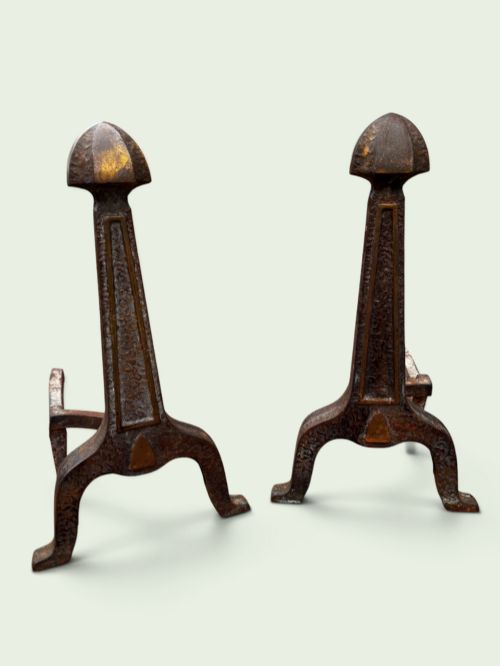
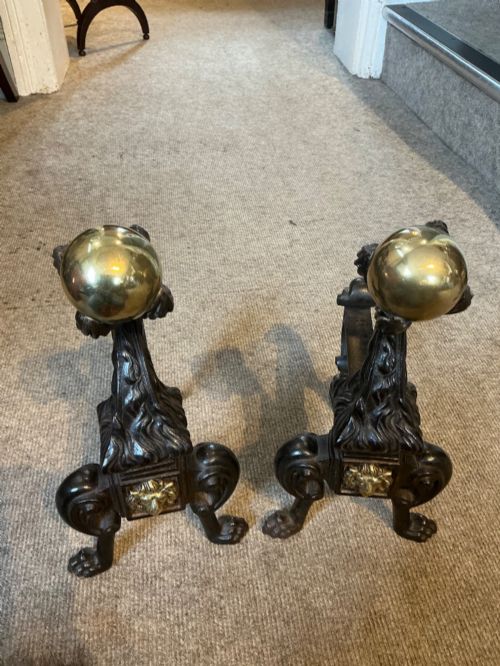
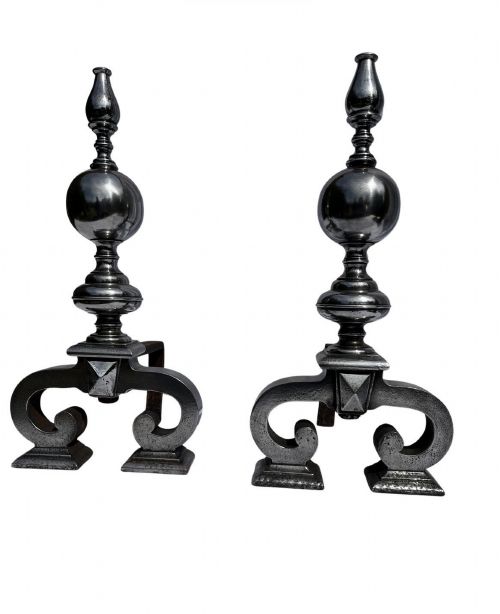


Victorian Cast Iron Firedogs
Victorian cast iron firedogs anchor a hearth with robust metalwork, offering practical support for logs and defining the character of a period fireplace.
Victorian Cast Iron Firedogs
Victorian cast iron firedogs are heavy hearth accessories designed to hold wood off the floor of a fireplace for better airflow. When searching this phrase, a buyer looks at practical ironwork meant to sit within an open hearth.
The pieces on this page span the 19th century, with dates reaching from the eighteen-sixties towards the early twentieth century. Most examples appear simply as pairs of andirons, though some listings include grates, fire baskets or companion tool sets.
Makers and designers worked within styles that ranged from straightforward utilitarian forms to Gothic Revival and Neo-Classical designs. Buyers are most likely to meet sturdy iron pairs intended for everyday hearth use rather than purely decorative ornaments.
Materials and construction
These firedogs rely primarily on cast iron, shaped in foundry moulds to create sturdy uprights and supportive horizontal billets. The metal is often complemented by elements of polished iron, wrought iron, steel or brass.
Foundries utilised traditional casting techniques to achieve the substantial weight required to support heavy logs. Accents such as brass finials or polished steel fronts were incorporated to brighten the appearance of the dark iron against the hearth.
Judging quality in hearth ironwork
Quality in these pieces rests upon the crispness of the casting and the thickness of the metal. Finer examples display clean lines and well-defined decorative details without the surface pitting common in hurried production.
The balance between the vertical front standard and the horizontal rear support determines the structural integrity. Heavier assemblies demonstrate a higher standard of foundry work and material density.
The Victorian Cast Iron Firedogs Glossary
- Andirons
- Supports for firewood in an open fireplace, synonymous with firedogs. They typically consist of an upright front pillar and a horizontal bar extending back into the hearth.
- Fire Basket
- A metal grate designed to hold coal or wood within a fireplace. These often incorporate or sit alongside matched andirons.
- Gothic Revival
- An architectural and decorative style popular during the Victorian era. It draws inspiration from medieval forms, featuring pointed arches and heavy geometric detailing.
- Neo-Classical
- A style influenced by classical antiquity that emphasises symmetry, clean lines and classical motifs. It appears in more restrained Victorian metalwork designs.
Victorian Cast Iron Firedogs: Frequently Asked Questions
What are victorian cast iron firedogs used for?
These metal supports hold logs above the hearth floor to improve air circulation and help wood burn efficiently. They also protect the back wall of the fireplace from direct heat.
Beyond practical burning, they frame the hearth visually and anchor the arrangement of other fireside accessories like pokers and shovels.
How do I know if they are period pieces?
Period pieces display the manufacturing techniques, material weights and design motifs typical of nineteenth-century foundries. Examining the construction reveals the hand-finished surfaces and heavier gauge metals common to the era.
Matching stylistic cues like Gothic Revival or Neo-Classical forms with period materials helps confirm the age of the metalwork.
Can I use them in a working fireplace?
Sturdy cast iron and wrought iron examples are built to withstand high temperatures and heavy logs. They function effectively in active hearths provided the metal remains structurally sound.
Buyers should ensure the size of the firedogs matches the depth and width of their specific fireplace opening before use.
How do I clean cast iron firedogs?
Routine maintenance involves removing ash and soot with a soft brush and a dry cloth. Avoid harsh chemical cleaners that can strip the dark finish of the iron.
Light applications of suitable protective oils help prevent surface oxidation while preserving the deep colour of the cast metal.