
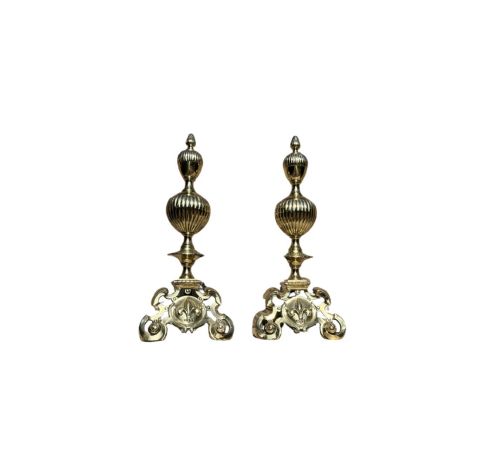
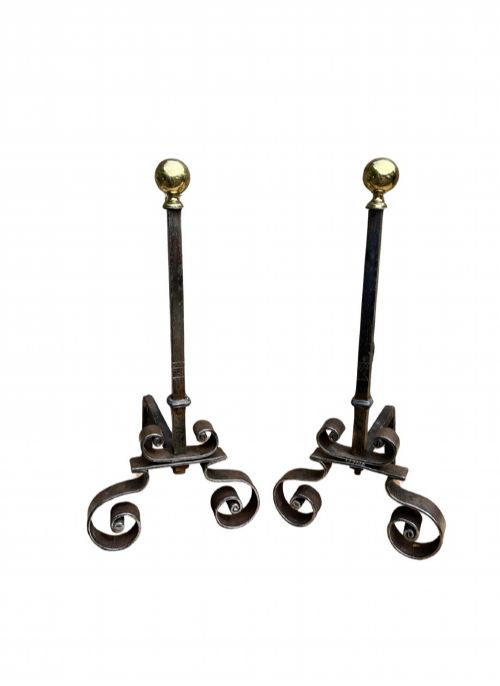
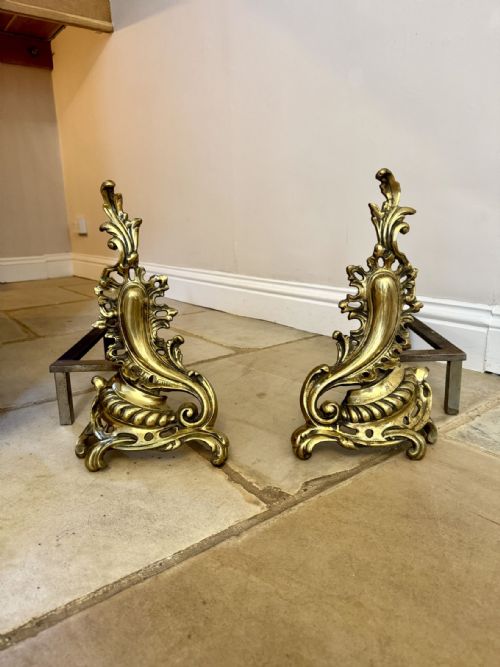
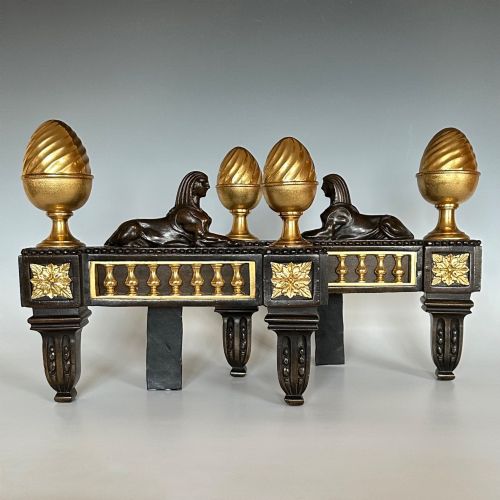


French Brass Chenets
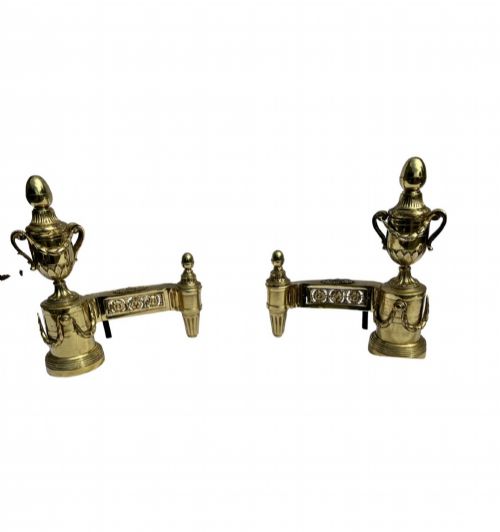
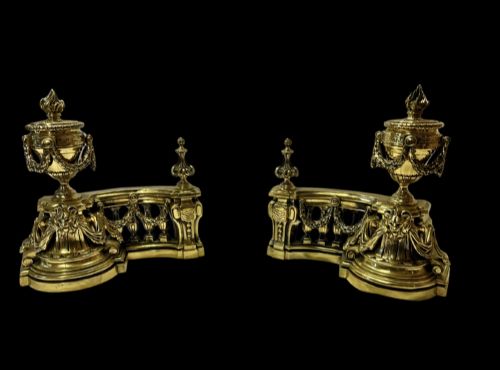
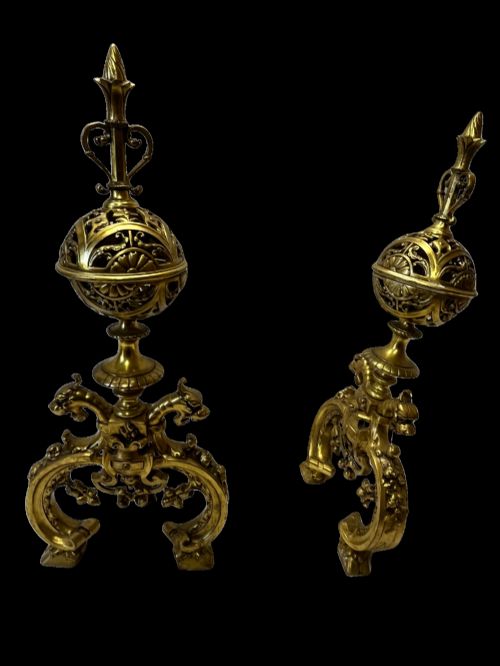
French brass chenets are hearth furniture that hold logs off the fireplace floor, bringing sculptural metalwork and period style to a room.
French Brass Chenets
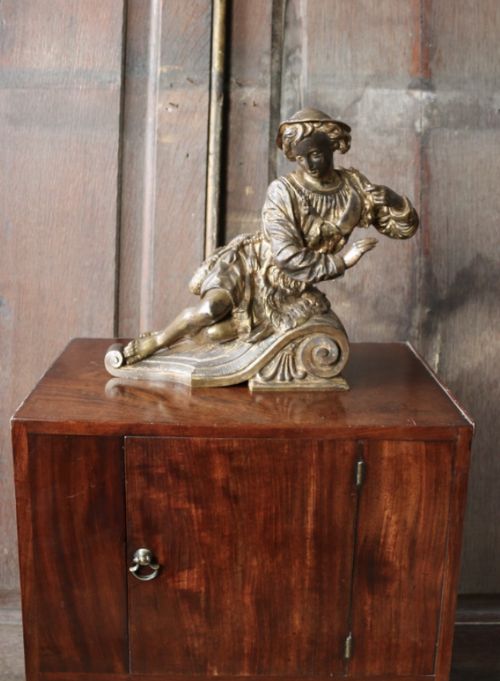
French brass chenets, also known as fire dogs or andirons, sit inside the hearth to support burning wood. These fireplace accessories appear in forms ranging from simple cast brass columns to elaborate figurative designs.
The pieces on this page span several centuries, with nineteenth-century examples and revivals appearing most frequently alongside eighteenth-century works. Buyers encounter pairs decorated with cherubs, putti, and rococo scrollwork designed to stand at either side of the fireplace opening.
Makers produced these functional ornaments in brass, ormolu, and gilt bronze, often pairing the main standards with matching fenders and fire tool rests. The surviving examples demonstrate how French metalworkers adapted classical, baroque, and rococo motifs for domestic hearths.
Materials and Construction
Foundry workers shaped these fireplace accessories using cast brass, bronze, and iron, combining rigid structural frames with decorative surface elements. Many pieces employ cast brass bodies fitted with wrought iron bars or billets that extend into the hearth to bear the weight of logs.
Gilding techniques transformed base metals through the application of ormolu and parcel gilt finishes, creating the characteristic gold-toned surfaces seen on rococo and baroque revival pieces. Artisans chased the cast metal details by hand, sharpening the contours of acanthus leaves, figures, and scrollwork after the casting process.
Listings feature brass, ormolu, gilt bronze, and iron materials across nineteenth-century revival styles and eighteenth-century origins.
Quality Variations
Weight and structural integrity also separate grades of work, with superior pairs utilising heavy solid brass or gilt bronze rather than thinner plated metals. The retention of original gilding and the precision of adjustable width mechanisms further distinguish the best examples from workshop copies.
The French Brass Chenets Glossary
- Chenet
- A French term for an andiron or fire dog placed on the hearth to support logs. These metal supports often feature decorative frontispieces.
- Ormolu
- Finely ground high-carat gold mercury-gilded to a bronze or brass object. This technique produces a durable, rich golden surface sheen found on fine period pieces.
- Rococo
- An ornate design style characterised by asymmetry, C-scrolls, and naturalistic plant motifs. It dominates many nineteenth-century revival fireplace accessories.
- Andiron
- A horizontal iron bar supported by legs with an upright decorative standard at the front. Pairs of these objects hold firewood above the hearth floor.
- Putti
- Depictions of plump, winged infant figures frequently cast in bronze or brass. They appear as decorative elements on classical and rococo hearth furniture.
French Brass Chenets: Frequently Asked Questions
What are french brass chenets used for?
These pieces function as firedogs that elevate firewood above the floor of the hearth to improve air circulation. They stand at the front of the fireplace to keep burning logs contained.
Beyond their practical role, they serve as decorative metalwork that frames the fireplace opening. Pairs frequently coordinate with matching fenders and tool sets.
How do I style chenets in a modern room?
Place a matched pair directly inside the fireplace opening on the hearth floor, either flanking a grate or supporting logs. They add metallic warmth and sculptural weight to empty hearth spaces.
Collectors often position them against brick or stone surrounds to contrast the polished brass surfaces. They work effectively as standalone decorative objects when a fireplace is not in active use.
How can I tell a nineteenth-century copy from an eighteenth-century original?
Nineteenth-century copies often reference earlier periods such as the Louis XV or Louis XVI reigns through revival styles. Examining the casting seams, tool marks, and wear patterns helps indicate the manufacturing era.
Earlier pieces show hand-finishing techniques and patination consistent with eighteenth-century foundry practices. Documentation or stylistic markers within the casting design also point toward specific revival periods like the 1850s or 1880s.
What is the difference between chenets and andirons?
The terms are largely interchangeable, with chenet representing the French terminology for the decorative fire dog. Both refer to metal supports placed inside the hearth.
Some regional contexts reserve andiron for utilitarian iron supports, while chenet emphasises the ornamental French front standard. Many listings use both terms to describe the same dual-purpose hearth accessory.