

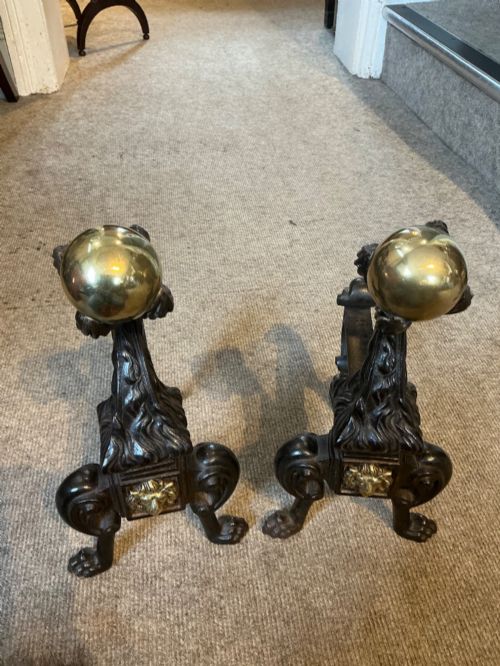

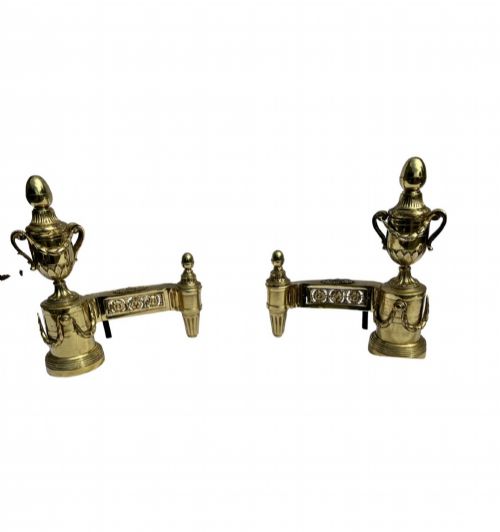
Antique Brass Fire Dogs
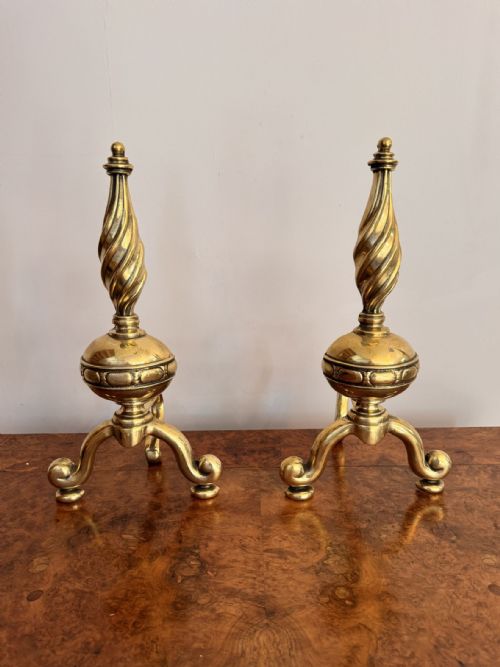
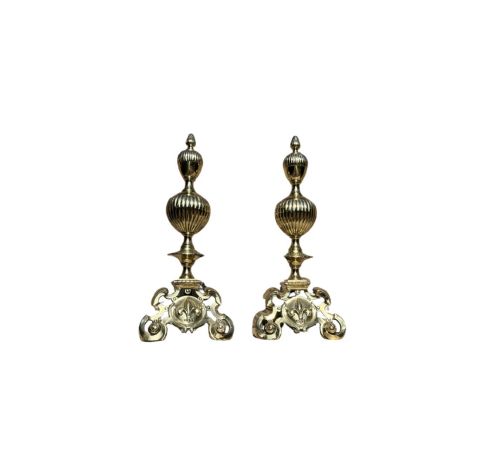
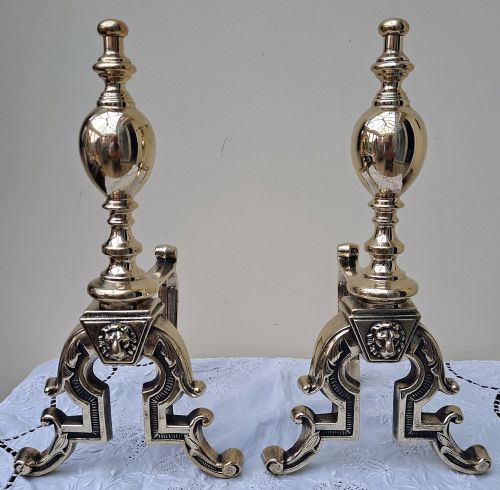
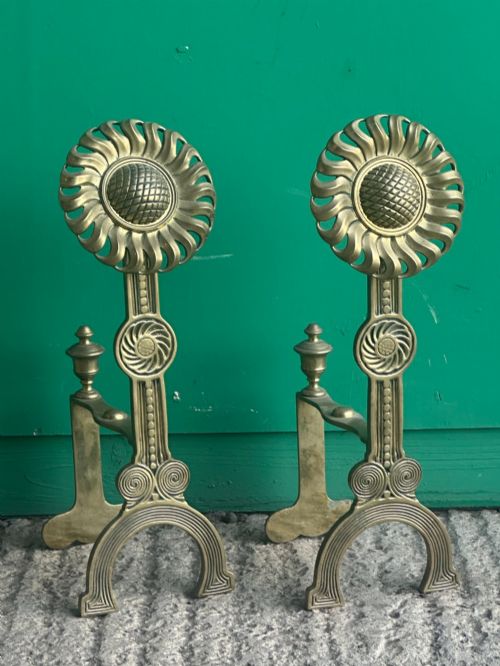
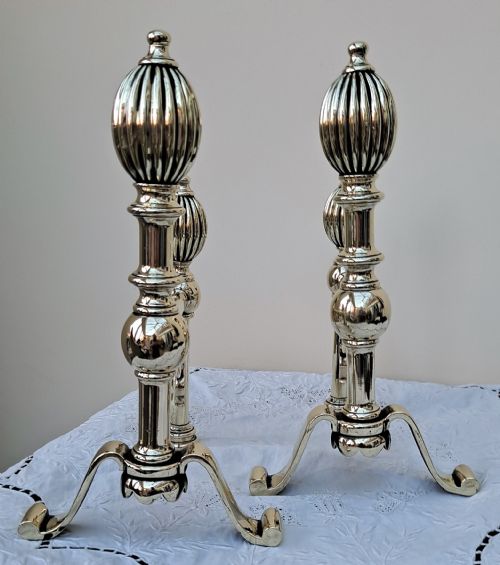
These antique brass fire dogs are the sturdy, decorative hearth supports you need to anchor your open fire with period character.

What antique brass fire dogs are
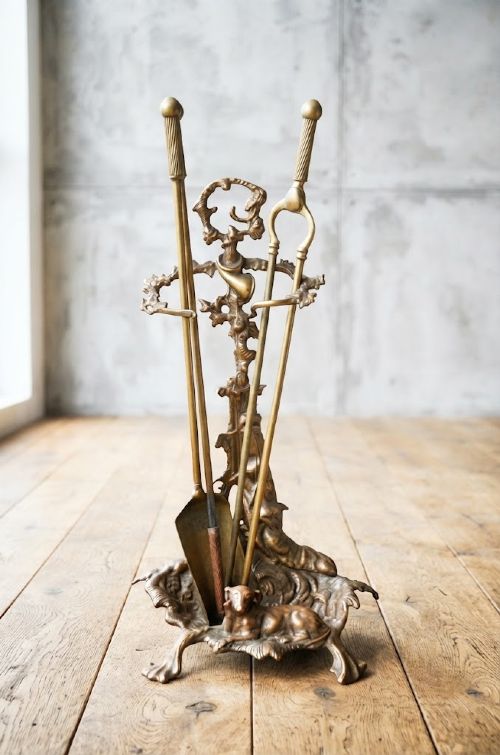
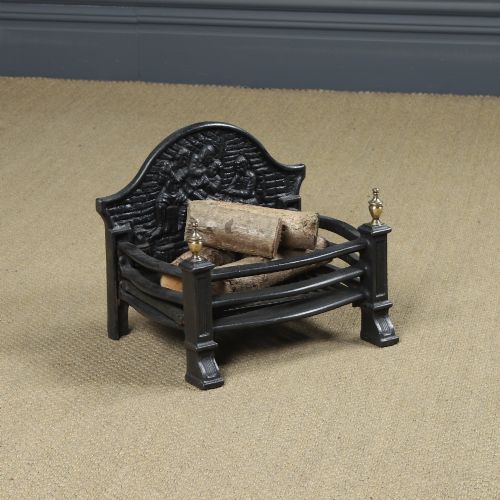
When you search for antique brass fire dogs, you are looking at heavy hearth supports designed to hold logs within an open fireplace. The pieces on this page are metal fireplace accessories that frequently appear alongside matching fire irons or grates.
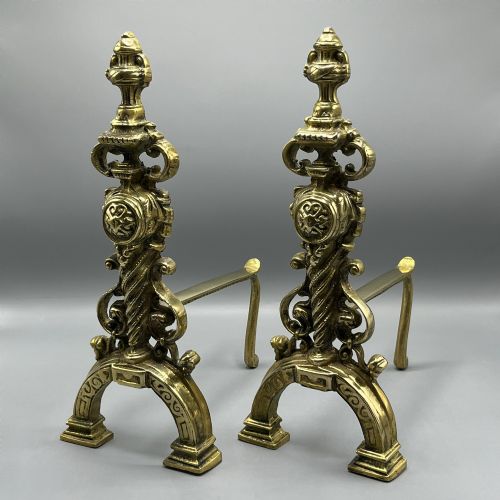
You are most likely to meet Victorian pairs and nineteenth-century examples in brass, cast iron, and bronze. These furnishings range from simple utilitarian rests to large, ornate pairs with distinct stylistic periods.
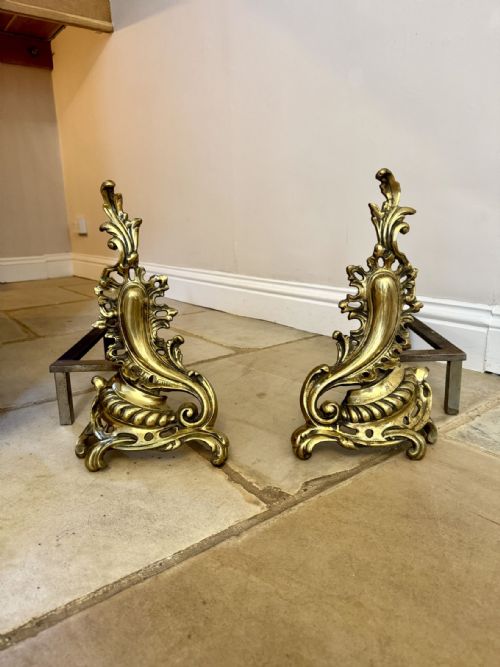
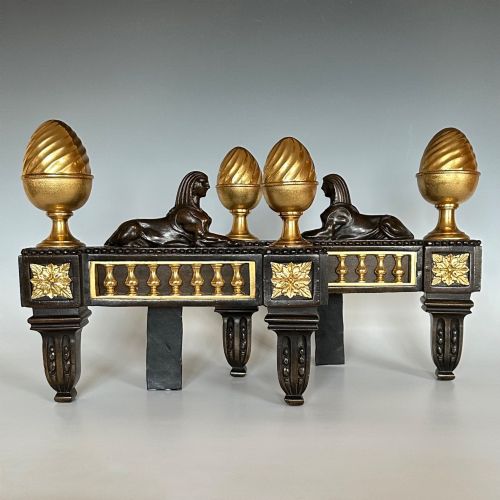
The selection includes Regency bronze and ormolu chenets alongside neoclassical iron designs. Such fireplace furniture transforms a plain hearth into a substantial focal point in a period room.
How they were made
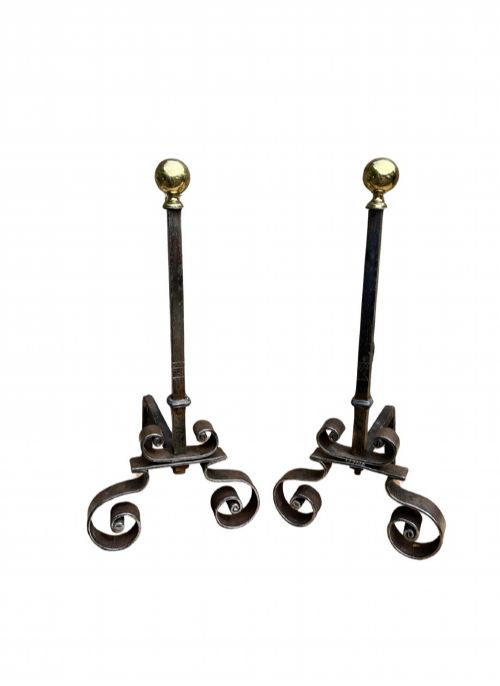
Makers utilised solid brass, cast iron, wrought iron, and bronze to construct these durable hearth supports. Many pieces combine a brass decorative front with an iron support bar designed to take the direct heat of the fire.
Foundry techniques involved casting molten metal into sand moulds to create ornate fronts, which were then finished by hand. Ormolu elements on Regency chenets involved applying finely ground gold to a bronze base.
Retail Price Guide 2026
Typical UK retail prices for brass fire dogs, calculated from the Sellingantiques database of over a million retail prices indexed since 2003. This retail price guide relies exclusively on Sellingantiques data; no external sources or auction records are used, so the figures do not describe the wider market.
Greyhound motifs appear on Edwardian fire dogs, giving hunting dogs a permanent guard duty by the hearth.
What varies in quality
Quality rests on the weight of the metal and the crispness of the cast decoration. Heavier solid brass examples show deeper relief in their ornamentation and greater stability on the hearth.
Subtlety of finish separates standard utilitarian pairs from finer ones. Superior sets show careful chasing of the metal surface and harmonious matching with auxiliary fire irons.
James Cartland & Son
The Antique Brass Fire Dogs Glossary
- Andirons
- Another term for fire dogs, these are horizontal metal bars supported on legs with an upright decorative front. They hold logs off the hearth to improve air circulation for the fire.
- Chenets
- The French term for fire dogs, often used to describe decorative Regency examples in bronze and ormolu. They serve the same functional purpose as traditional andirons.
- Ormolu
- Finely ground gold applied to a bronze base, seen on high-end Regency pieces. This technique gives a rich, golden finish to detailed metalwork.
- Fire grate
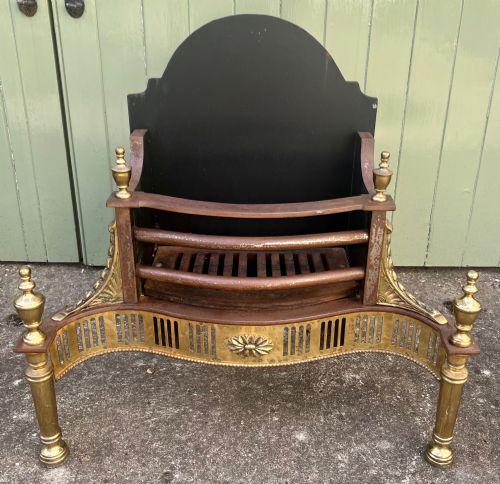
- A metal basket that holds coal or wood within a fireplace, sometimes paired with fire dogs. It sits between or behind the upright supports.
- Neoclassical
- A design style drawing inspiration from classical antiquity, reflected in the geometric lines and symmetry of certain nineteenth-century fire grates.
Frequently Asked Questions
How do I use fire dogs?
Fire dogs sit on the hearth inside the fireplace opening to support logs and keep them elevated. This elevation allows air to circulate underneath the wood for a better burn.
Larger pairs handle substantial logs, while the matching horizontal bars or baskets hold the fuel securely between the uprights.
What is the difference between fire dogs and andirons?
There is no functional difference between the two terms, as both describe the same hearth supports used in open fireplaces. Andirons is simply the more traditional name for the objects.
Both terms appear across nineteenth-century listings for decorative and utilitarian pairs.
How do I clean antique brass?
Antique brass benefits from gentle dusting and occasional cleaning with a mild, non-abrasive metal polish to remove soot and dirt. Avoid harsh chemical cleaners that strip away the aged patina accumulated over the centuries.
Preserving this natural surface layer helps maintain the historical appearance of Victorian and Georgian pieces.
Will these fit my fireplace?
You should measure the width and depth of your fireplace opening before choosing a pair, as these items vary significantly in size. Some extra-large nineteenth-century pairs require deep hearths and wide openings.
Check the height of the upright front to ensure it clears any existing basket or mantel clearance.