





Antique Brass Hearthware
Antique brass hearthware brings warmth and period character to a fireside, offering functional metalwork shaped by centuries of domestic use.
Antique Brass Hearthware
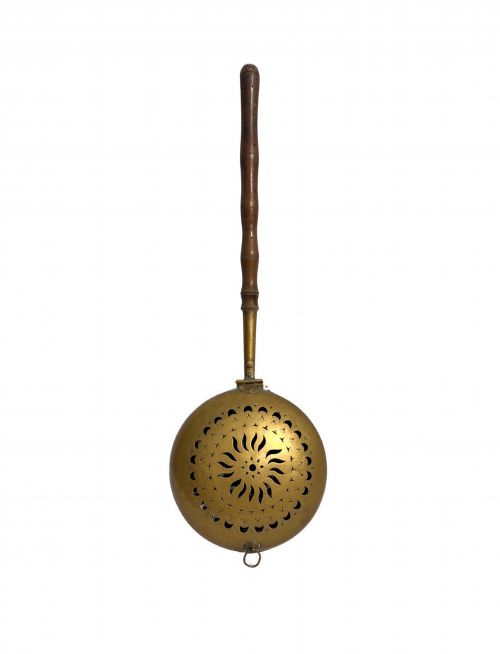
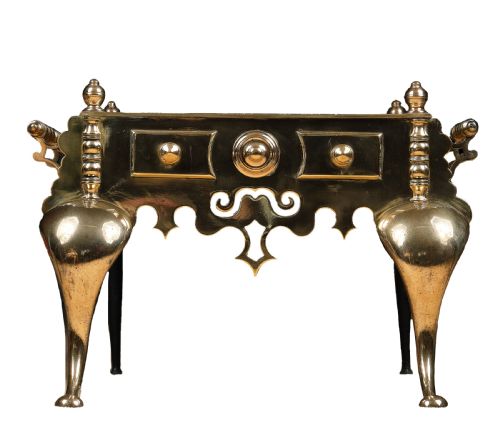
Antique brass hearthware comprises functional and decorative metal accessories designed for the fireplace, spanning coal scuttles, fire dogs, kettles, and warming pans. These domestic objects originate across multiple periods, with Victorian and George III examples appearing frequently alongside 17th-century Continental items and Edwardian pieces.
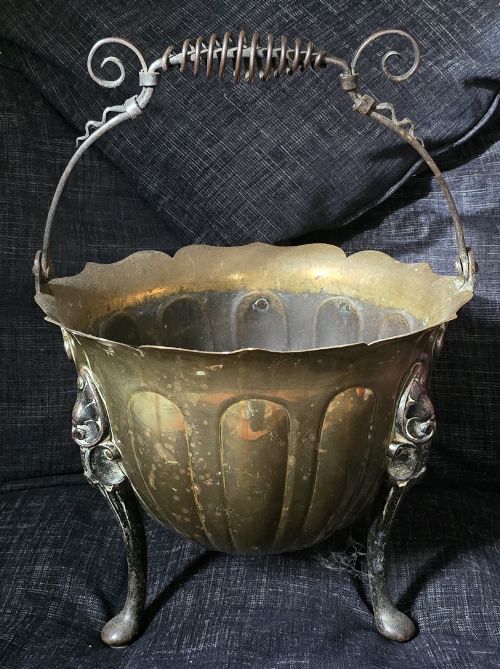
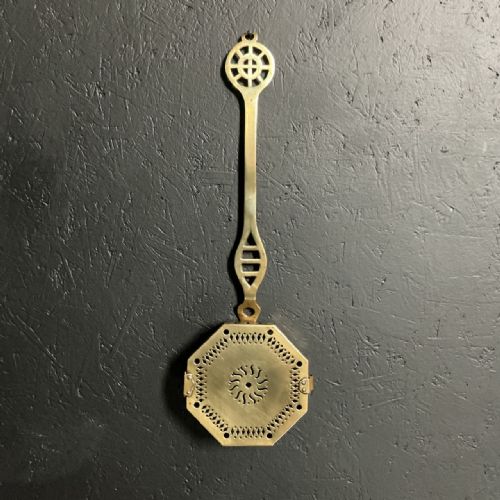
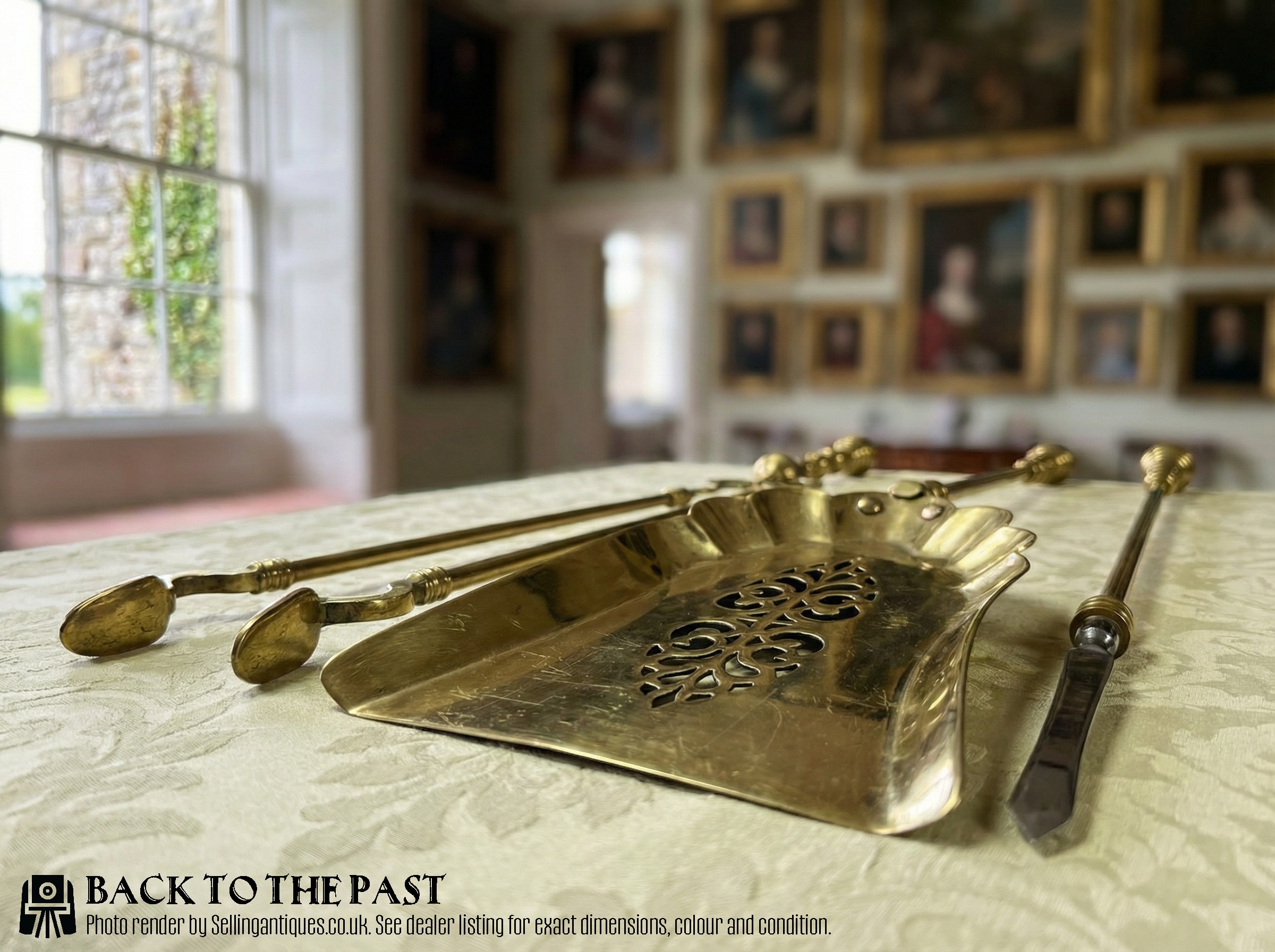
Buyers encounter items ranging from helmet coal scuttles and companion fire tool sets to trivets, ladles, and goffering irons. Materials shift between solid brass, copper, wrought iron, and bronze, often combining iron supports with bright brass ornamentation for use around the grate.
How they were made
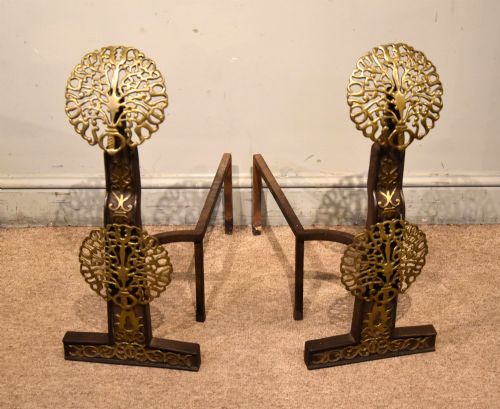
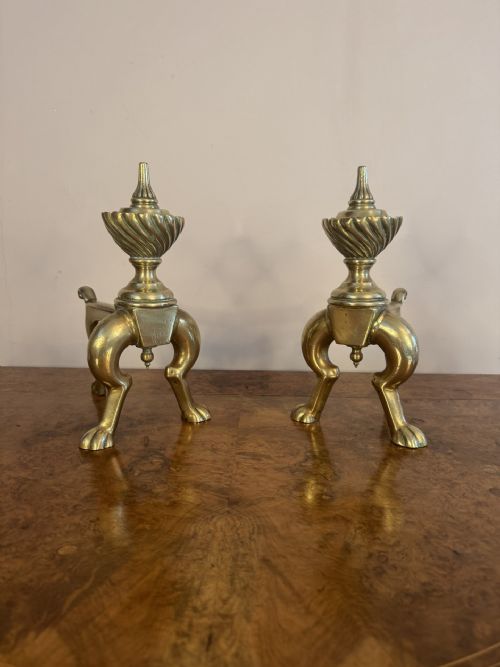
Maker techniques rely heavily on the combination of brass and copper sheet, shaped into helmet coal scuttles and kettles alongside cast bronze and brass components. Fire dogs and andirons pair cast brass decorative elements with robust iron and wrought iron frames to withstand daily heat.
Surface finishing involves polishing and hammering, visible on polished copper bodies and solid brass chestnut roasters. Rivets, joints, and handles demonstrate period metalworking methods used to join heavy metals for long-term hearth use.
Antique Brass Hearthware Retail Price Guide 2026
Typical asking prices for brass hearthware among the pieces listed under this phrase on Sellingantiques today, from the lower quarter to the upper quarter. They describe what is for sale here now, not the wider market.
Some chestnut roasters spent centuries buried in ash, waiting patiently for someone to appreciate their long-dormant culinary ambitions.
What varies in quality
Quality rests in the weight of the metal and the crispness of cast ornamentation, distinguishing heavy duty pieces from lighter domestic items. Superior pairs of fire dogs or coal scuttles show refined detailing in handles, feet, and decorative mounts.
Material selection also defines the tier of a piece, such as solid brass construction versus thinner plated alternatives, alongside the integrity of original iron supports and fixings.
John Linwood of Birmingham
The Antique Brass Hearthware Glossary
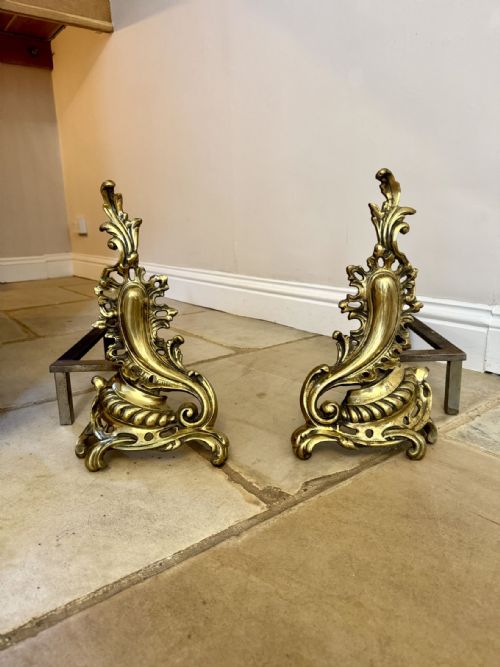
- Andirons
- Supports for logs in an open fireplace, also known as fire dogs. They frequently feature decorative brass fronts paired with iron bars.
- Goffering iron
- A heated metal tool used for setting ruffs and frills on laundry. These cylindrical domestic items appear in brass from the 18th century.
- Footman
- A metal stand or plate warmer placed near the hearth. English examples often sit on four legs to keep food warm by the fire.
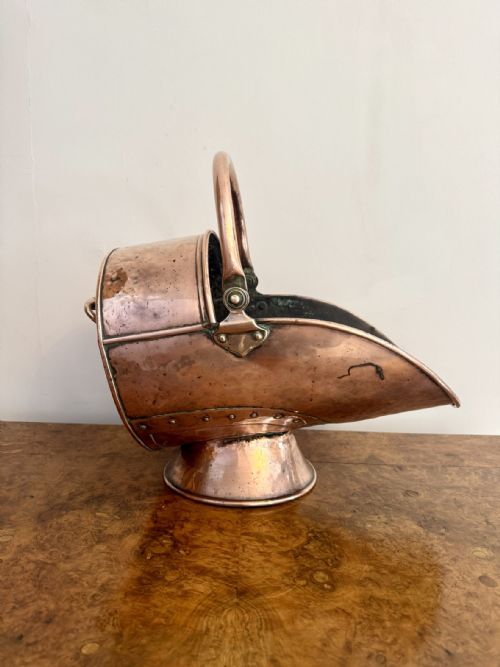
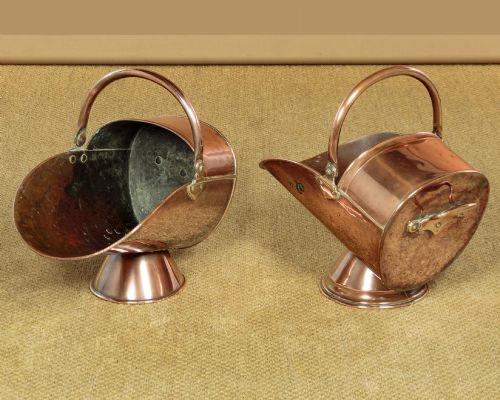
- Helmet scuttle
- A coal bucket shaped with a high back and tapered spout resembling a helmet. They are commonly fashioned from polished copper and brass.
Antique Brass Hearthware: Frequently Asked Questions
How do I clean antique brass hearthware?
Maintain a natural patina by gently dusting the metal rather than applying harsh modern chemical polishes. Overzealous cleaning removes the historic surface character accumulated over generations of fireside use.
Allow copper and brass elements to age gracefully while keeping moving parts free from ash and soot buildup.
Were coal scuttles used daily?
Helmet scuttles and coal buckets served as practical receptacles for transporting fuel to the hearth. Their robust construction in copper and brass was designed for heavy domestic routines.
Today these vessels transition easily from functional fuel holders to decorative fireside storage.
What is the difference between andirons and fire dogs?
The terms are generally used interchangeably to describe the upright metal supports placed inside a fireplace. Both variants provide a decorative front face and a sturdy resting bar for logs.
Georgian and Victorian pairs often incorporate elaborate brass casting on the visible front sections.
How do I date a brass kettle?
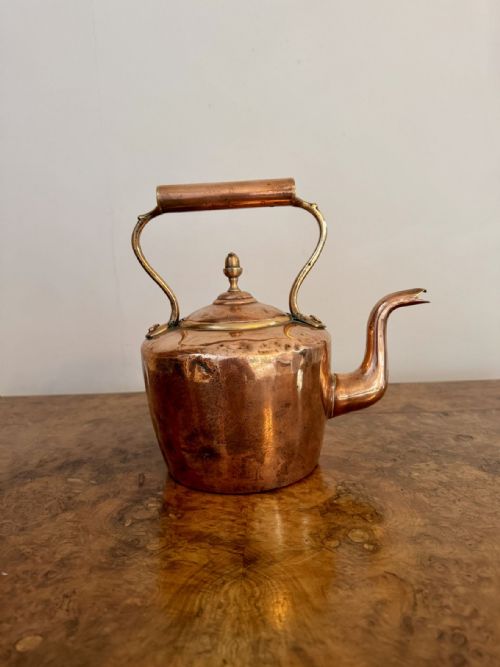
Examine the methods used for joining the metal seams, handle attachments, and the overall weight of the copper body. George III examples often display distinct hand-beaten construction and early handle mountings.
Comparing the form against documented 18th and 19th-century domestic metalwork helps narrow down the production period.