




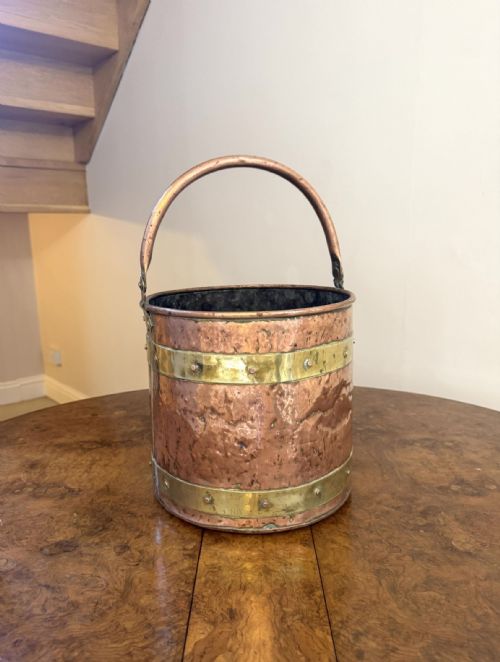
Brass Fireside Bucket
A brass fireside bucket sits beside the hearth to hold fuel, combining sturdy metal construction with decorative presence.

Brass Fireside Bucket
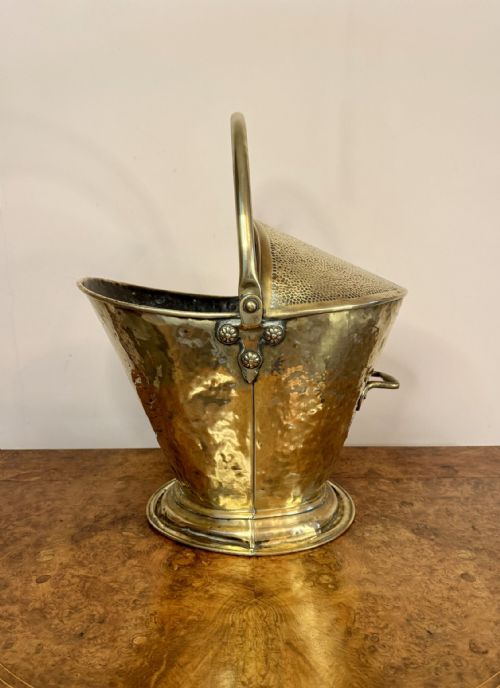
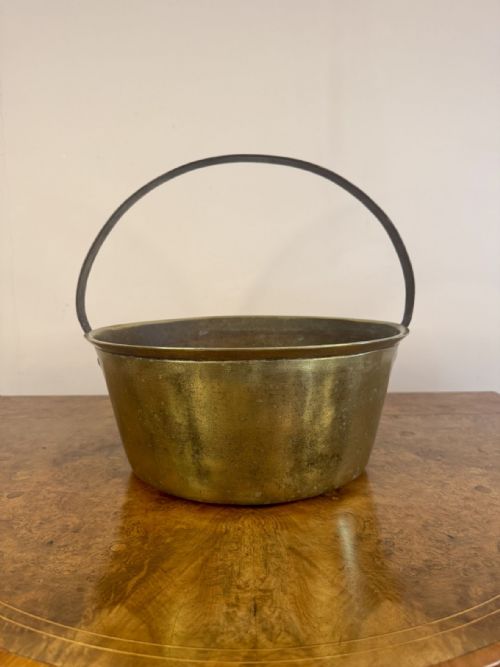
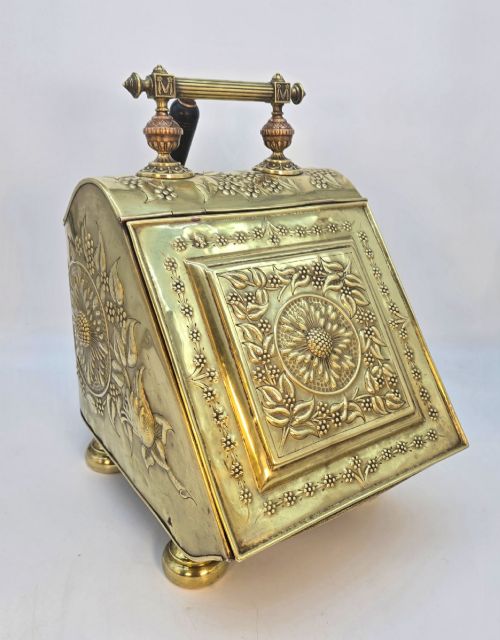
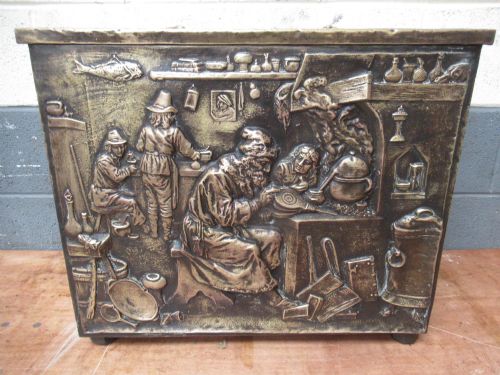
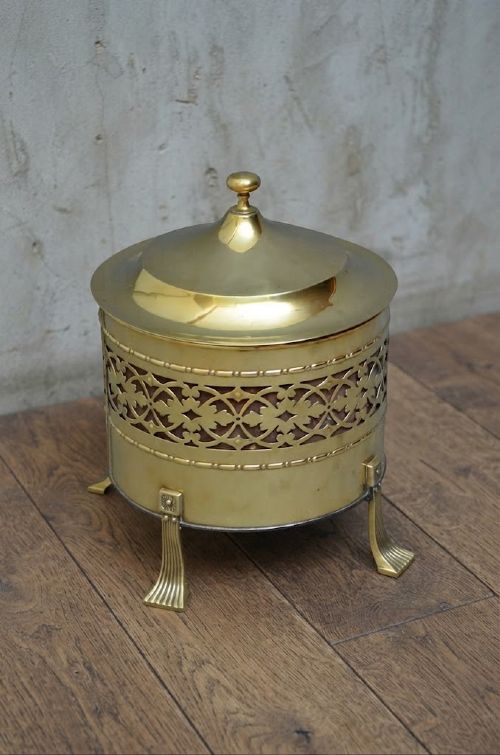
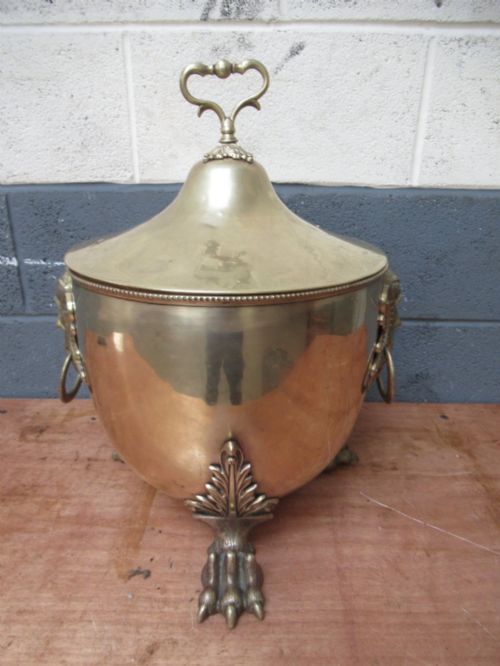
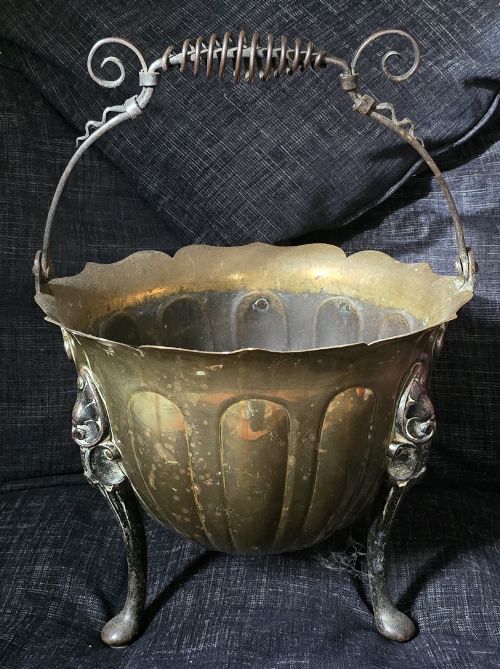
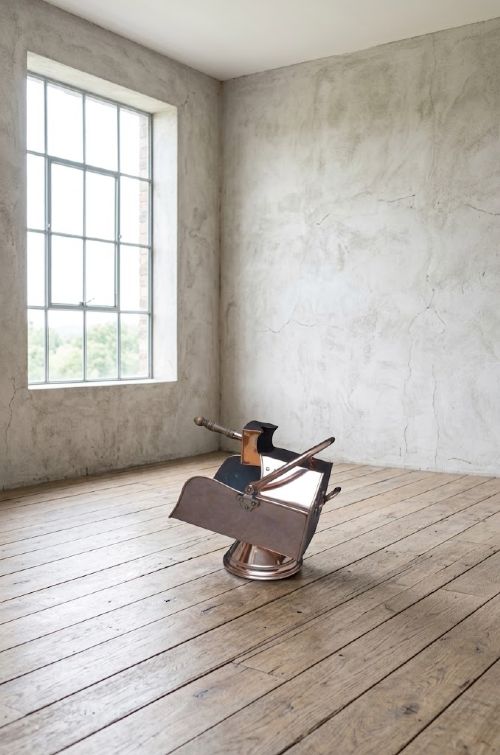
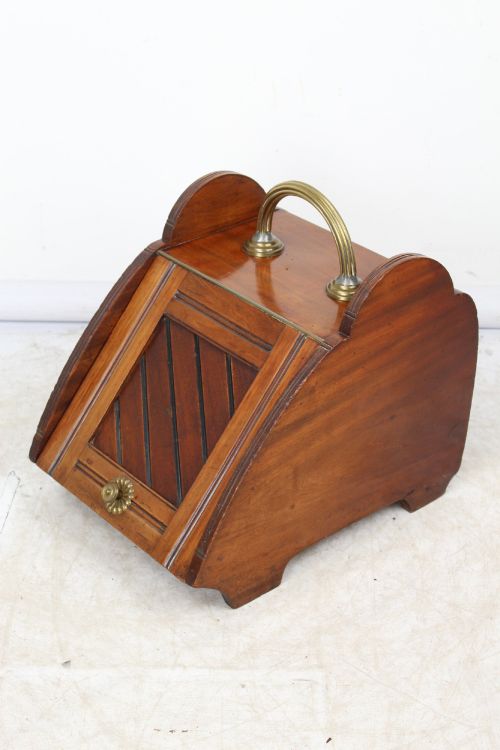
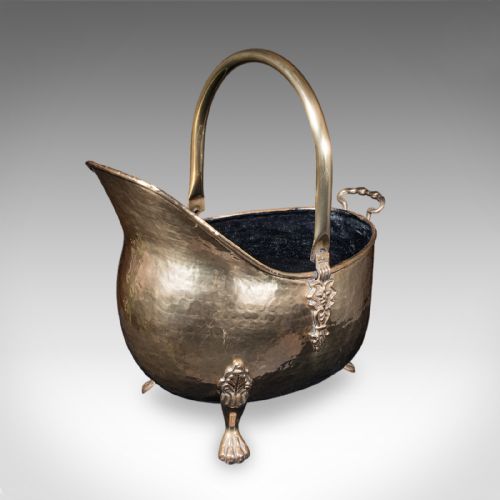
A brass fireside bucket is a functional hearth container designed for holding coal, logs, or kindling near an open fire. These items appear in forms such as coal scuttles, log bins, and coal helmets, spanning periods from the eighteenth century through to the Edwardian era.
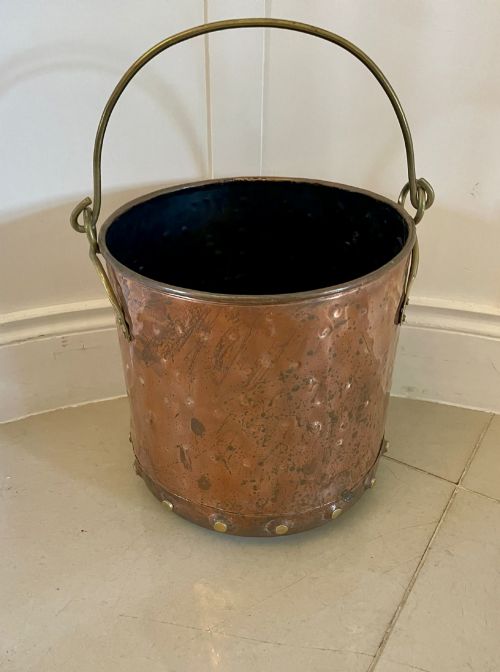
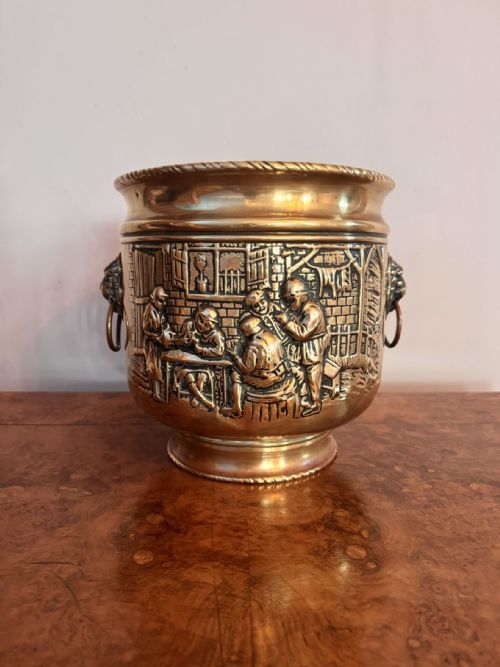
The version most commonly met on this page is the Victorian or Edwardian brass bucket, often paired with copper banding, repoussé decoration, or a swing handle. Many examples also serve alternative decorative functions as planters or storage bins within period interiors.
How They Were Made
Makers utilised sheet brass and copper, sometimes combined with timber bodies like oak or mahogany, to build resilient containers for heavy solid fuel. Metal panels were joined with rivets or seams, while decorative examples incorporated hand-finished embossing, fretwork designs, and cast brass fittings.
Structural strength was reinforced through the addition of iron liners, brass bands, and sturdy swing handles fixed with lion mask or drop-ring mounts. Surfaces were frequently polished to highlight the contrast between warm copper bodies and bright brass rims.
Brass Fireside Bucket Retail Price Guide 2026
Typical asking prices for brass fireside bucket among the pieces listed under this phrase on Sellingantiques today, from the lower quarter to the upper quarter. They describe what is for sale here now, not the wider market.
Listings feature brass, copper, and oak materials spanning Georgian, Victorian, and Edwardian periods.
What Varies in Quality
The standard of a brass fireside bucket depends upon the heaviness of the gauge metal used and the crispness of any hand-embossed or hammered detailing. Early Georgian and Victorian pieces by recognised workshops display superior weight, substantial riveted construction, and integrated handles that remain rigid under heavy loads.
Refinement in design also distinguishes finer pieces, seen in balanced proportions, dovetailed or coopered wooden staves, and intact internal metal liners. Simpler mass-produced later variants lack the sculptural depth of Arts and Crafts or Art Nouveau examples.
Henry Loveridge·Benham and Froud·Petrus Ramus
The Brass Fireside Bucket Glossary
- Coal scuttle
- A domestic container designed for carrying and storing coal, usually featuring a mouth or chute for emptying fuel into the hearth.
- Purdonium
- A box-style coal container, often made of wood with metal linings and a sloping front door, popular in the Victorian period.
- Repoussé
- A metalworking technique where the design is hammered into relief from the reverse side to create ornate surface patterns.
- Tole ware
- Lacquered or enamelled metalware, offering colourful decorative finishes on functional household items.
- Coopering
- The traditional method of constructing vessels from wooden staves bound together with metal or wood hoops.
Brass Fireside Bucket: Frequently Asked Questions
What is a brass fireside bucket used for?
These vessels were originally manufactured to store and transport coal, logs, or peat for open hearths. Their durable metal construction safely contained heavy solid fuel close to the fireplace.
Today, they are frequently utilised as decorative log bins, kindling baskets, or indoor plant holders within period and contemporary rooms.
How do I date a brass fireside bucket?
Dating relies upon observing the manufacturing techniques, materials, and decorative styles visible across the piece. Georgian and eighteenth-century examples often feature heavy coopered oak with cast brass bands, while Victorian and Edwardian pieces frequently showcase embossed brass or copper helmet shapes.
Later Arts and Crafts and Art Nouveau specimens introduce distinctive hand-hammered surfaces and stylized floral motifs that clearly reflect their turn-of-the-century origins.
Are these buckets suitable for actual fireside use?
Most antique brass and copper buckets remain structurally robust enough to hold firewood, kindling, or coal beside a working hearth. Their sturdy metal walls and reinforced bases were engineered specifically for daily domestic service.
Collectors often check for intact internal liners or solid base construction before putting them back into active service with heavy logs.