
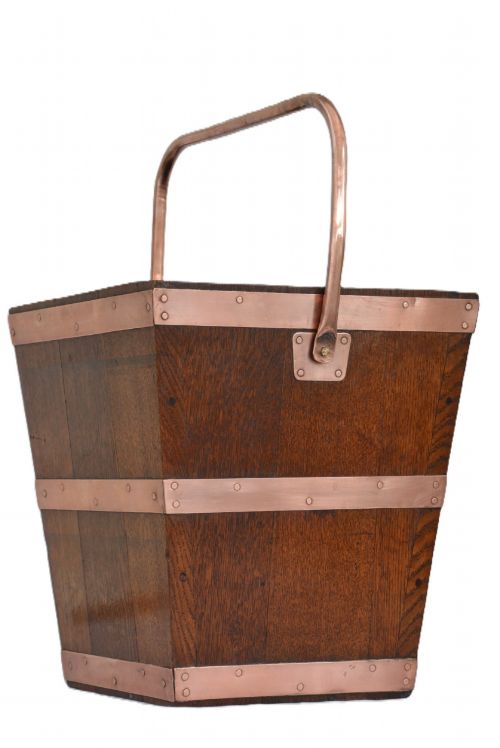
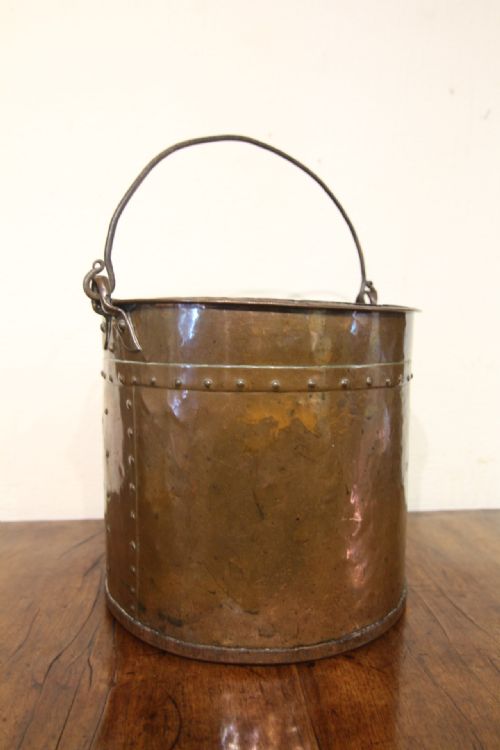


Fireside Log Holder
These fireside log holders manage fuel storage by combining practical storage forms with period metalwork and timber.

What a fireside log holder is
A fireside log holder serves as a designated container for fuel beside the hearth, combining utility with decorative presence. These pieces organise wood, coal, peat, and kindling while containing debris from solid fuel.
The selection on this page centres on Victorian, Edwardian, and Georgian examples alongside later pieces from the nineteen twenties. Forms range from traditional helmet scuttles and coal buckets to triangular bins and low trolleys.
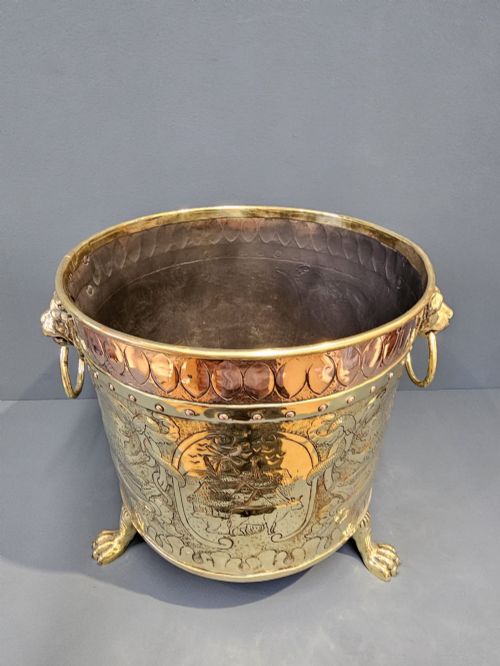
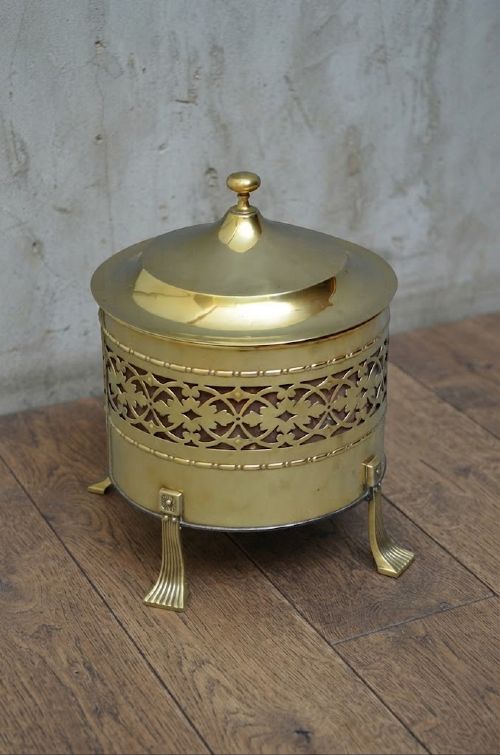
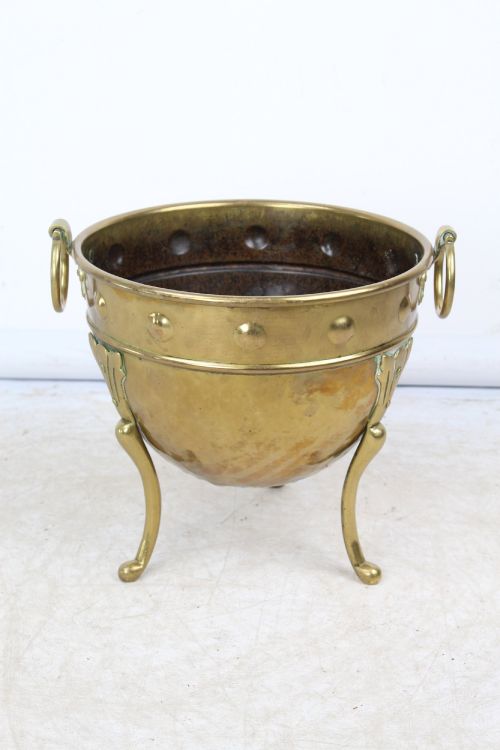
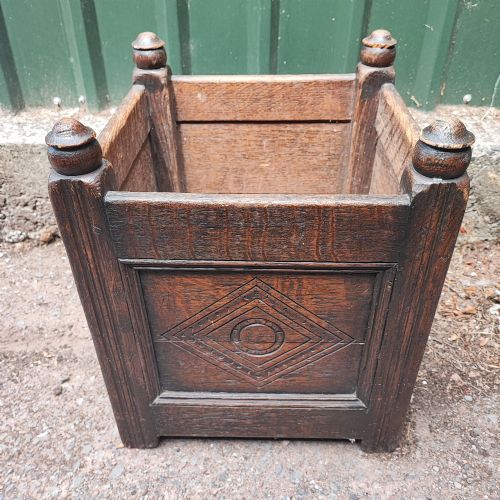
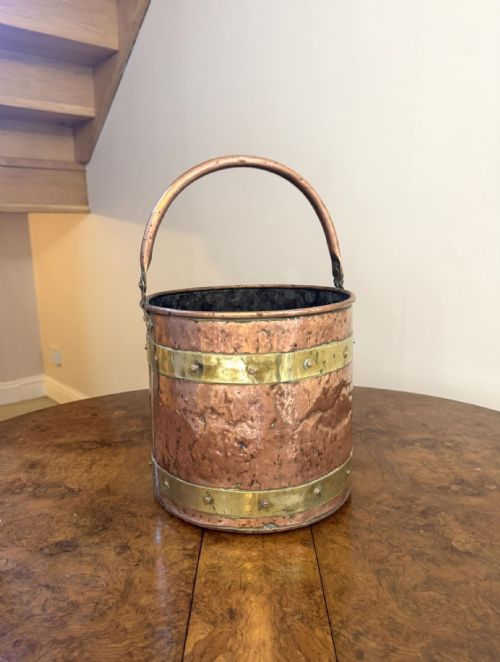
Wooden vessels appear in oak, walnut, and mahogany, frequently banded or fitted with metal components. Metal versions utilise brass and copper, sometimes with internal zinc liners to handle damp fuel.
How they were made
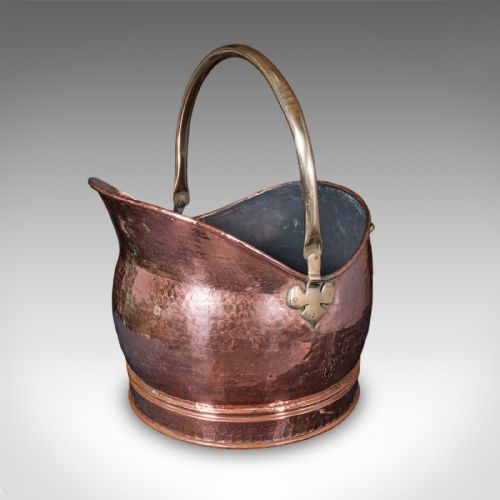
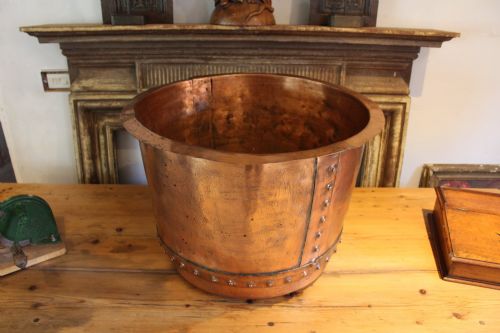
Metal vessels rely on hand-beated copper and cast or sheet brass, often shaped into helmet scuttles or bucket forms. Rivets, swing handles, and applied feet join the metal components securely.
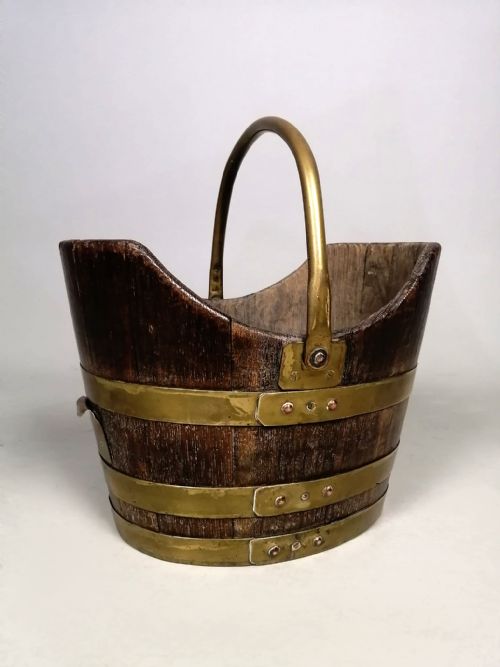
Wooden pieces demonstrate traditional joinery using oak, walnut, and mahogany timbers, sometimes incorporating coopered staves for cylindrical forms. Brass mounts, handles, and banding reinforce the wooden structures.
Retail Price Guide 2026
Typical UK retail prices for fireside log holder, calculated from the Sellingantiques database of over a million retail prices indexed since 2003. This retail price guide relies exclusively on Sellingantiques data; no external sources or auction records are used, so the figures do not describe the wider market.
The listings show materials spanning brass, copper, oak, walnut, mahogany, and zinc across multiple periods.
What varies in quality
The distinction between standard utility items and finer pieces lies in the weight of the metal and the selection of timber. Heavy-gauge copper and solid mahogany or walnut indicate superior domestic grade manufacture.
Detailing on handles, mounts, and riveted joints separates basic production from more considered design. Arts and Crafts examples and earlier Georgian pieces show greater attention to individual form.
The Fireside Log Holder Glossary
- Helmet scuttle
- A traditional fireside vessel featuring a flared lip and raised back, designed for pouring fuel cleanly onto a fire. These shapes typically include a swing handle and a fixed rear grip.
- Peat bucket
- A deep cylindrical container traditionally used in regions where turf served as domestic fuel. These vessels frequently utilise timber staves banded with brass.
- Coopering
- A traditional woodworking technique using curved wooden staves joined together to form watertight or durable cylindrical containers. This method appears on wooden buckets and bins.
- Kindling basket
- An open container designated for smaller dry wood used to start fires. These pieces prioritize accessibility and portability beside the hearth.
Frequently Asked Questions
What materials are these made from?
These fireside pieces utilise a mix of metals and hardwoods including brass, copper, oak, walnut, and mahogany. Some examples incorporate zinc linings to protect the internal structure from moisture.
Material choices often reflect the period and intended fuel type, with metal dominating helmet scuttles and timber featuring in buckets and bins.
How do I date a holder?
Dating relies on stylistic markers, construction methods, and materials associated with specific eras such as Georgian, Victorian, or Edwardian periods. Arts and Crafts pieces display distinct hand-worked metal characteristics.
Examining fixings, timber grain, and patination helps distinguish nineteenth-century examples from later twentieth-century production.
How were these originally used?
These vessels sat beside the fireplace to store coal, peat, logs, or kindling ready for immediate use. They kept hearth areas tidy while keeping fuel close at hand.
Helmet shapes allowed controlled pouring of small fuel, while open buckets and bins accommodated larger logs.
Can I still burn wood in them?
Many of these historical containers remain robust enough to hold logs and kindling beside a working fireplace. Metal-lined vessels and solid timber bins handle dry fuel without difficulty.
Care should be taken with damp logs to protect antique wooden interiors from moisture damage.