



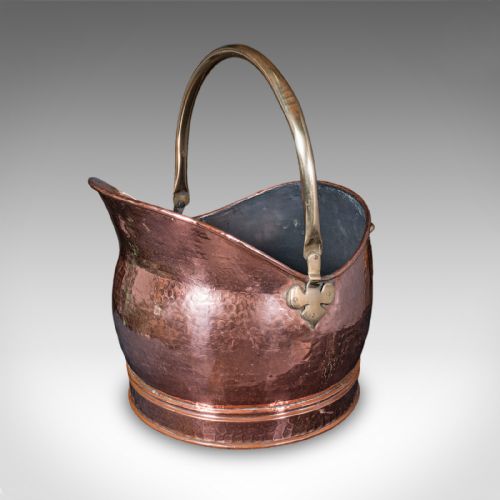

Brass Log Bin
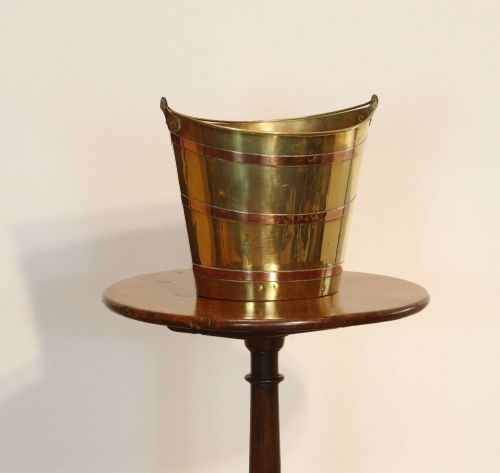
A brass log bin is a heavy hearth vessel built to hold winter fuel, offering a warm metallic gleam beside the fireplace.

Brass Log Bin
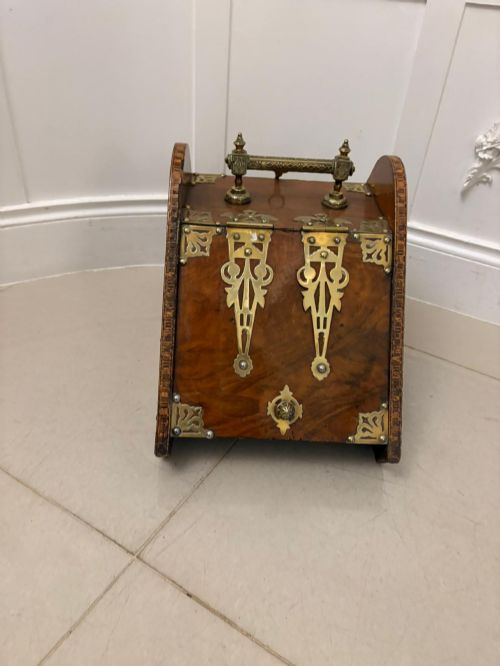
A brass log bin serves the hearth by holding wood and coal while adding weight and metallic warmth to the room. When searching for a brass log bin, you encounter heavy Victorian vessels alongside lighter Arts and Crafts forms.
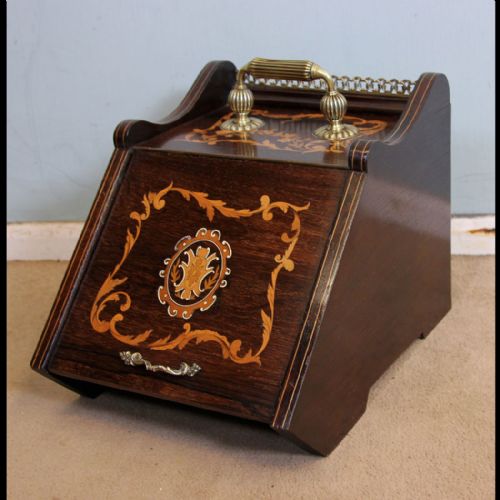
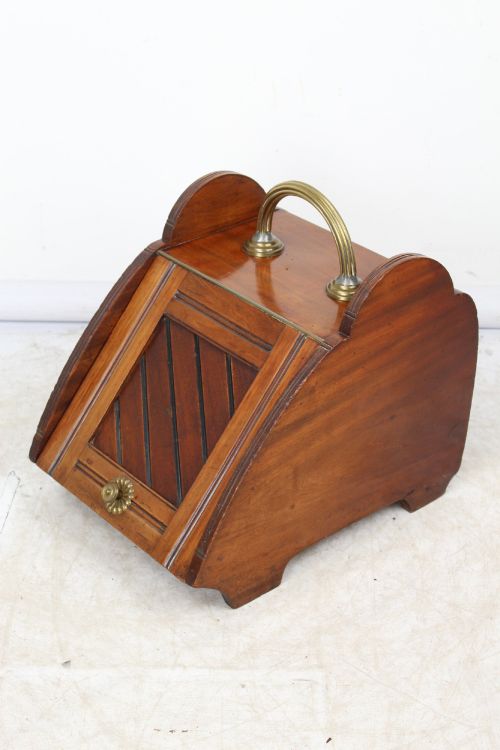
The objects on this page span several decades, moving from ornate Victorian and Georgian-style repoussé designs to simpler twentieth-century utility pieces. Alongside dedicated log bins, you will find coal buckets, scuttles, and repurposed cheese kettles fulfilling the same fireside role.
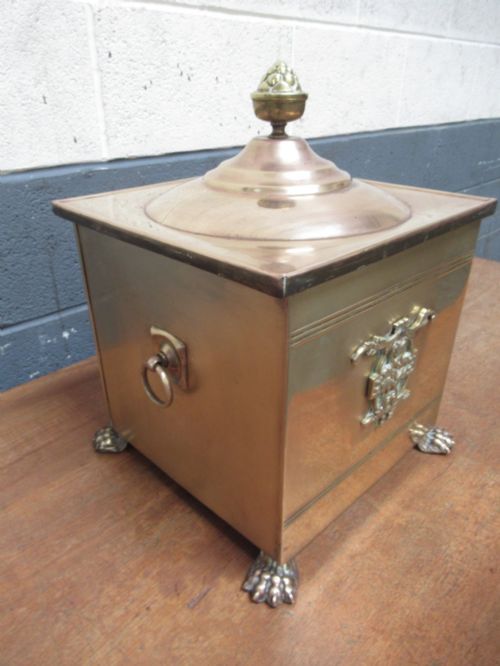
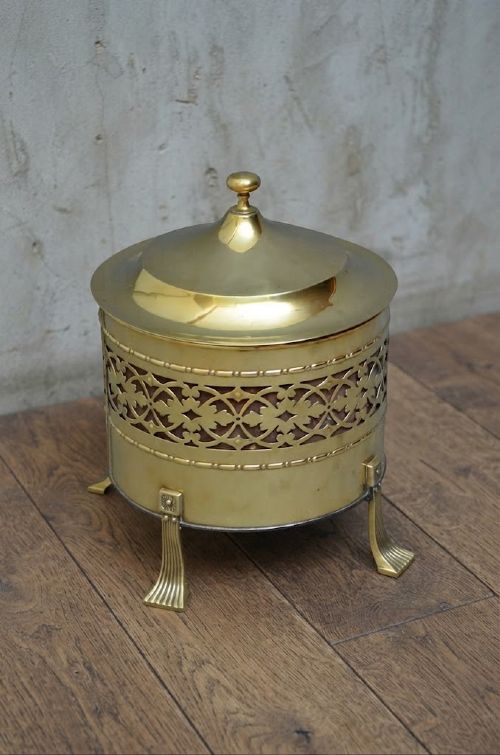
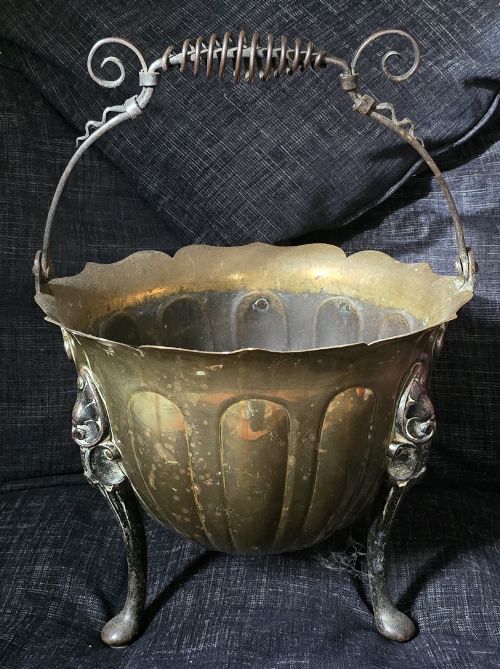
These vessels take various shapes, from tall cylindrical stick holders to wide oval tubs resting on feet or castors. Many examples combine brass bodies with copper accents, iron handles, or wooden bases.
Materials and Construction
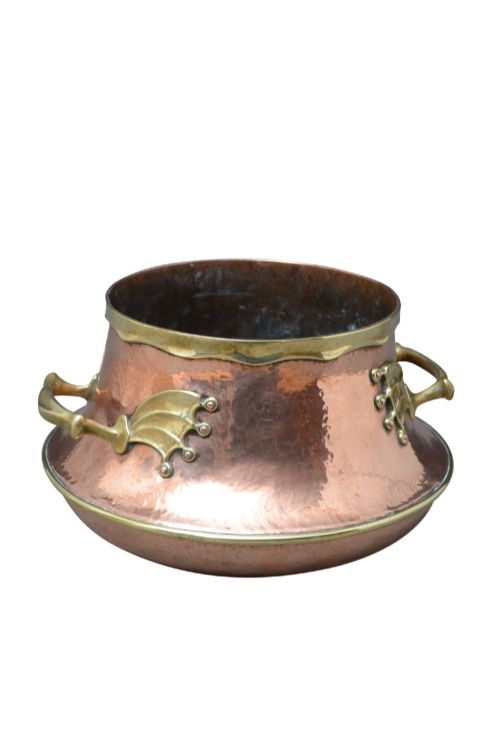
Makers formed these bins using sheet brass and copper, frequently hammering the metal by hand to create beaten, riveted, or embossed surfaces. Workshops often combined brass with contrasting materials such as copper banding, cast iron fittings, and stained pine or wooden liners.
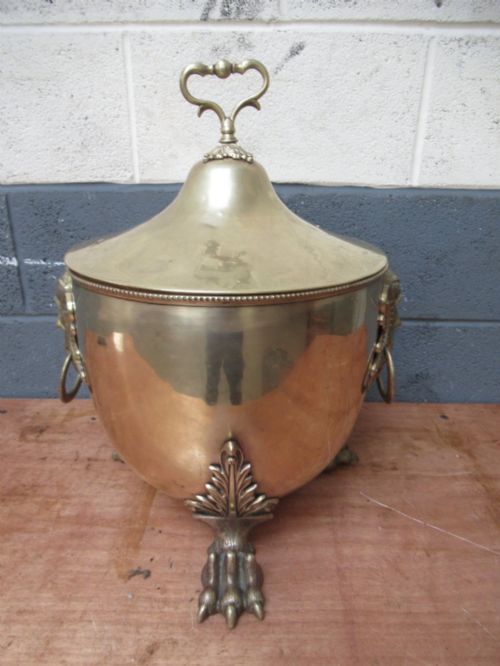
Handles and paw feet were cast separately in brass or iron and securely attached with heavy rivets or bolts to bear the weight of heavy logs. Many pieces utilised lids to conceal fuel, pairing polished brass shells with sturdy internal metal or wood structures.
Brass Log Bin Retail Price Guide 2026
Typical asking prices for brass log bin among the pieces listed under this phrase on Sellingantiques today, from the lower quarter to the upper quarter. They describe what is for sale here now, not the wider market.
Several heavy vessels recorded here started life as massive cheese kettles in Wensleydale before retiring beside the fireplace as log bins.
Assessing Quality and Distinction
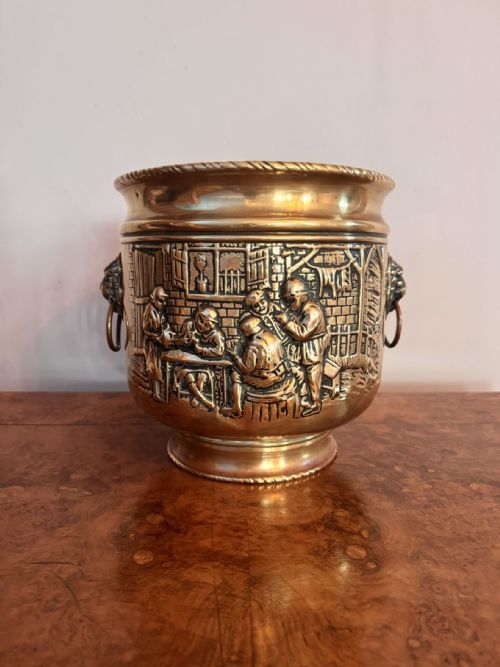
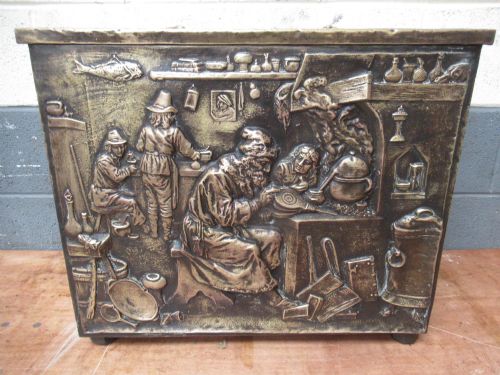
The distinction between ordinary utility vessels and superior pieces lies in the thickness of the metal sheet and the depth of the hand-beaten or embossed decoration. Finer examples display crisp detail in motifs like tavern scenes, armorial bearings, or lion mask handles rather than shallow, machine-pressed stamping.
Structural integrity also separates the range, marked by solid cast handles, robust riveting, and original internal liners that survive decades of heavy timber storage. Maker attribution, such as work by William Soutter and Sons, elevates certain pieces well above anonymous factory production.
William Soutter and Sons
The Brass Log Bin Glossary
- Repoussé
- A metalworking technique where the artisan hammers the design from the reverse side to raise relief patterns on the front. This method creates tactile surface decoration on many Victorian and Arts and Crafts vessels.
- Coal scuttle
- A fireside container traditionally used for carrying coal to the grate, often featuring a hinged shovel scoop and a pivoting handle. These forms frequently double as log bins.
- Lion mask
- A decorative casting shaped like a lion's face, frequently used to hold drop-ring handles on the sides of heavy bins. They add classical weight and symmetry to the design.
- Arts and Crafts
- A design movement valuing hand craftsmanship and simple, honest materials over mass production. Pieces from this tradition often feature visible riveted joints and hand-beaten surfaces.
- Armorial
- Bearing a coat of arms or heraldic crest engraved or embossed onto the metal surface. Such decoration denotes bespoke or high-status commission pieces.
Brass Log Bin: Frequently Asked Questions
What is a brass log bin?
A brass log bin is a sturdy metal container designed to hold firewood or coal beside a domestic fireplace. It keeps fuel tidy while introducing a reflective metallic texture to the hearth.
These vessels vary from simple cylindrical buckets to large, ornate tubs featuring embossed scenes or lion mask handles. Many historical pieces were originally made as coal scuttles or cheese kettles before finding a second life holding logs.
Are these bins waterproof?
Most antique brass bins feature riveted seams and may include internal metal or wooden liners, but they are not reliably watertight. Condensation from damp logs can seep through joints or damage underlying floors.
Using a modern plastic insert or keeping logs dry before placing them inside protects both the historic vessel and your interior surfaces. Check whether your specific piece retains its original liner.
How do I date a brass log bin?
Dating relies on examining manufacturing techniques, stylistic clues, and materials such as the presence of hand-riveting, copper banding, or cast iron fittings. Victorian examples often show heavy embossing and lion masks, while Arts and Crafts pieces favor plain beaten surfaces.
Maker marks stamped on the base, where present, provide definitive clues to the workshop and era of production.