




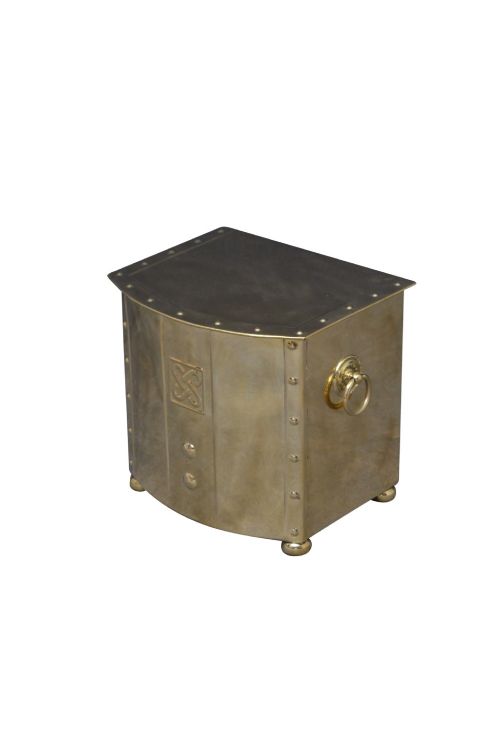


Embossed Brass Planter
An embossed brass planter brings texture and warmth to a room, holding foliage or logs with traditional craft.
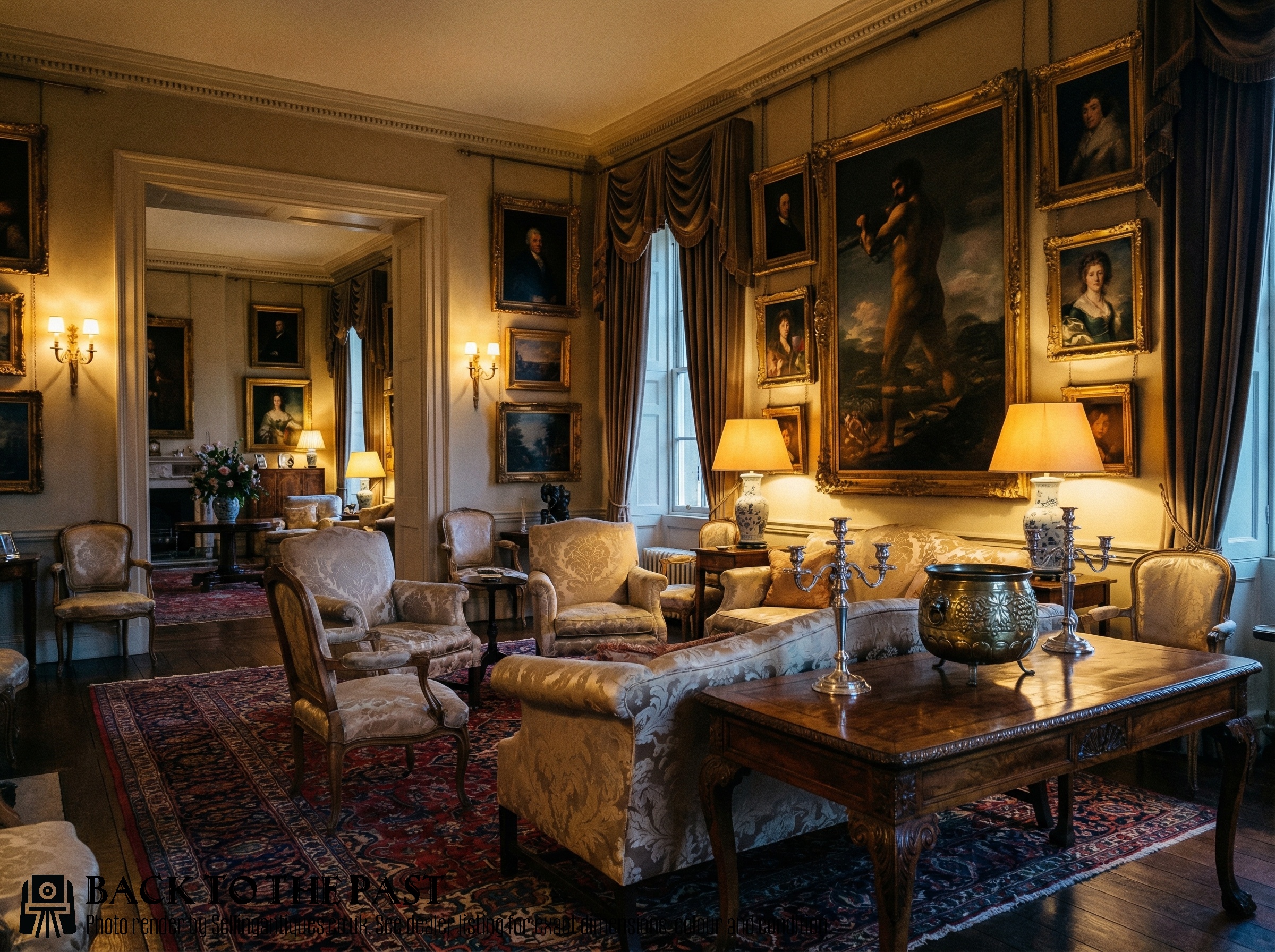
Embossed Brass Planter
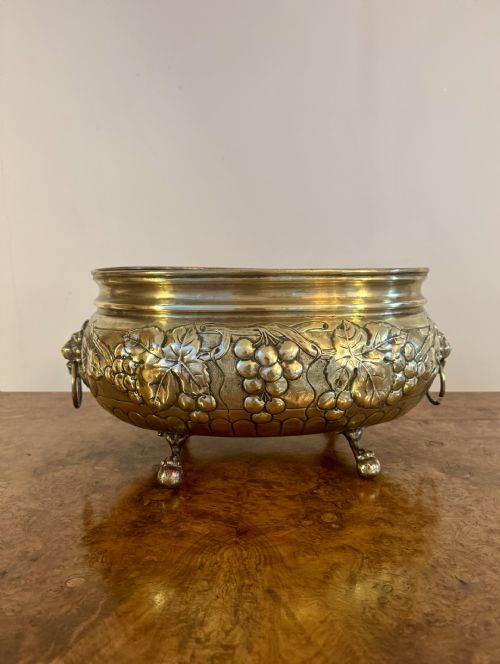
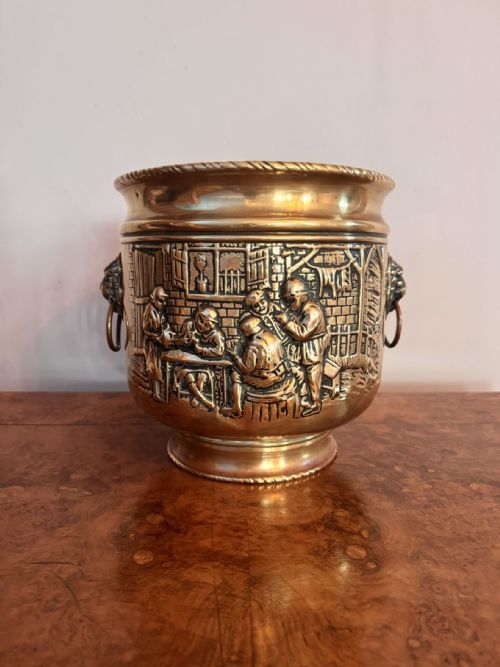
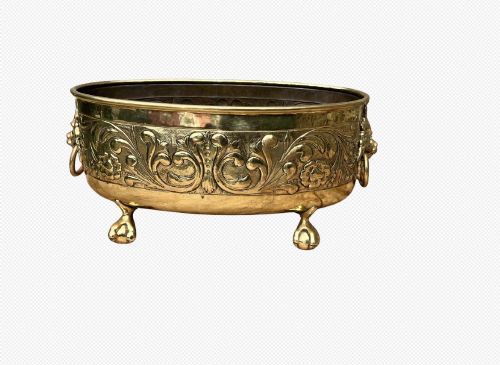
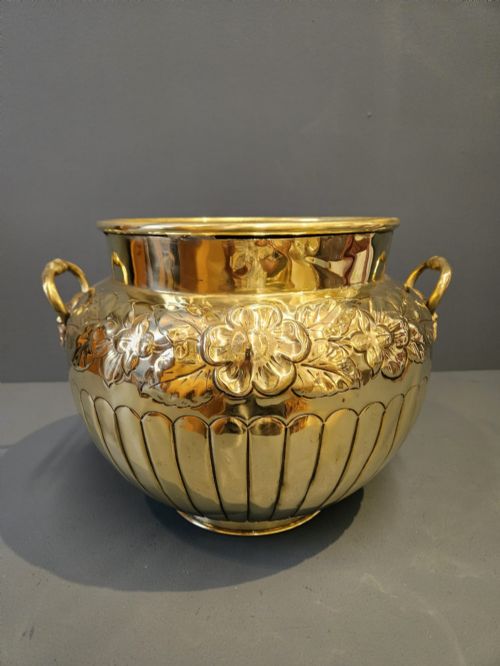
The embossed brass planter appears across several historic periods, most commonly taking the form of a Victorian or nineteenth century jardiniere. These vessels serve to hold potted plants, floral arrangements, or fireside fuel like coal and logs.
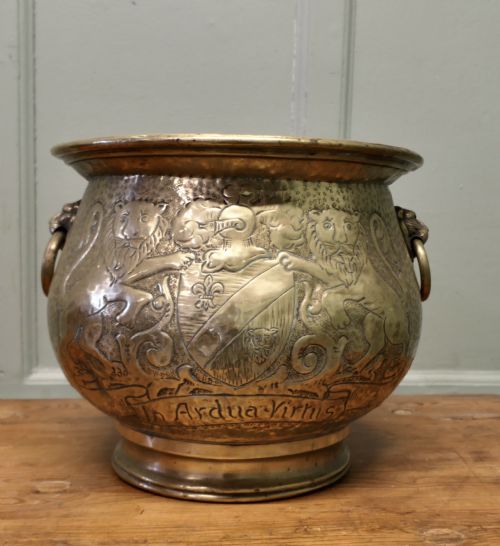
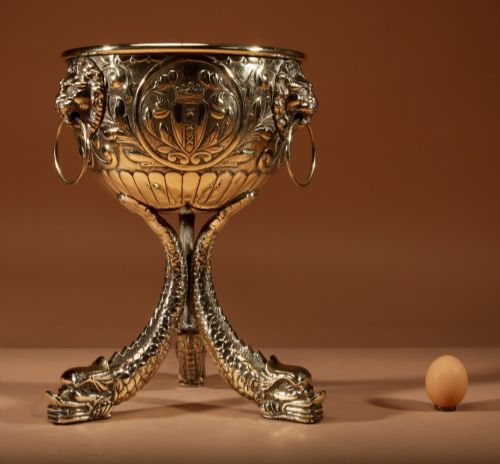
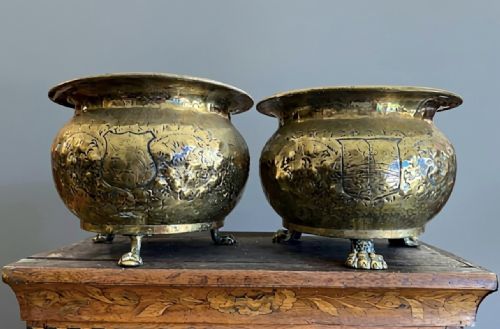
Makers shaped these items into circular bowls, cachepots, and two-handled troughs, often drawing on Dutch, French, or Gothic styles. Many examples rest on stands or feature applied crests, shields, and copper bands for extra decoration.
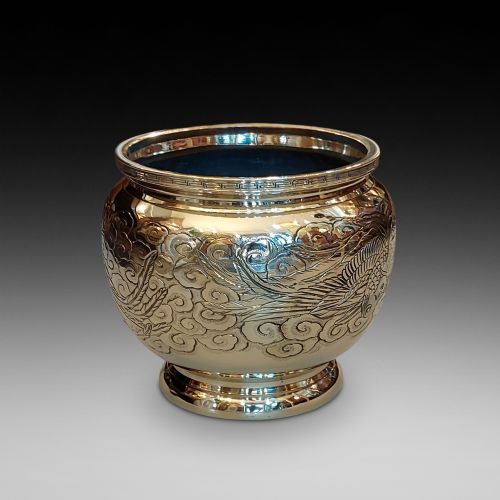
The selection here ranges from eighteenth century Dutch vessels to twentieth century Art Nouveau pieces and Dinanderie items. Buyers frequently encounter nineteenth century British and continental designs intended for domestic display.
Materials and Manufacture
Metalworkers formed these vessels primarily from sheet brass and copper, sometimes incorporating iron, zinc linings, or silver plating. Artisans utilised hammering and repousse techniques to raise ornamental patterns from the reverse side of the metal.
Dinanderie techniques, named after the Belgian town of Dinant, involved beaten and cast brass work to create deeply embossed floral and heraldic motifs. Workshops added riveted bands, cast handles, and metal feet to complete the construction.
Embossed Brass Planter Retail Price Guide 2026
Typical asking prices for embossed brass planter among the pieces listed under this phrase on Sellingantiques today, from the lower quarter to the upper quarter. They describe what is for sale here now, not the wider market.
Some nineteenth century coal buckets still retain faint traces of hearth soot tucked deep inside their embossed floral grooves.
Assessing Quality
The crispness of the hand-hammered relief work separates standard containers from superior examples. Finer pieces display sharp detailing in crests, floral garlands, and shields without excessive thinning of the brass sheet.
Original structural integrity and surviving liners dictate the desirability of a piece. Vessels retaining their matching stands, interior zinc linings, or unpolished patination command greater interest among collectors.
J Sankey and Sons·Petrus Ramus
The Embossed Brass Planter Glossary
- Jardiniere
- An ornamental pot or stand for holding plants or flowers. These items often sit on tabletops or directly on the floor.
- Dinanderie
- Medieval and later items made of beaten brass or bronze. The term honours the Belgian centre renowned for metalwork.
- Repousse
- A method of shaping metal by hammering it from the reverse side to create a raised design. Artisans refine the front details with chisels.
- Cachepot
- An ornamental container used to conceal an ordinary flowerpot. These vessels protect furniture from moisture.
- Crest
- A distinctive heraldic device or family badge. Makers embossed these symbols onto the front panels of civic and domestic vessels.
Embossed Brass Planter: Frequently Asked Questions
How were embossed brass planters used historically?
Households utilised these vessels primarily as jardinieres to hold potted indoor plants or cut flowers in living rooms and conservatories. Larger versions served near the hearth as coal buckets or log bins for fireside fuel.
Their decorative metal surfaces added warmth and reflected firelight, making them both practical containers and statement pieces of interior furnishing.
How do I clean an antique brass planter?
Gentle dusting with a soft cloth preserves the historic surface and accumulated patination of older metalwork. Avoid harsh chemical polishes that strip away the aged character.
If cleaning is necessary, use a mild soapy solution and dry the metal thoroughly to prevent corrosion, especially around riveted joints and embossed recesses.
Can these planters hold water directly?
Many antique vessels rely on interior zinc liners or metal inserts to contain moisture safely. Unlined brass planters require a separate inner pot to prevent water damage to the historic base.
Checking the interior condition ensures the metal remains sound and capable of supporting damp soil without leaking onto furniture.
How can I tell Victorian pieces from older examples?
Victorian items often display heavy floral embossing, Gothic Revival motifs, or applied crests in the mid to late nineteenth century style. Eighteenth century continental vessels typically feature simpler hand-beaten surfaces and distinct Dutch forms.
Examining the construction methods, tool marks, and fastener types helps differentiate nineteenth century production from earlier continental work.