



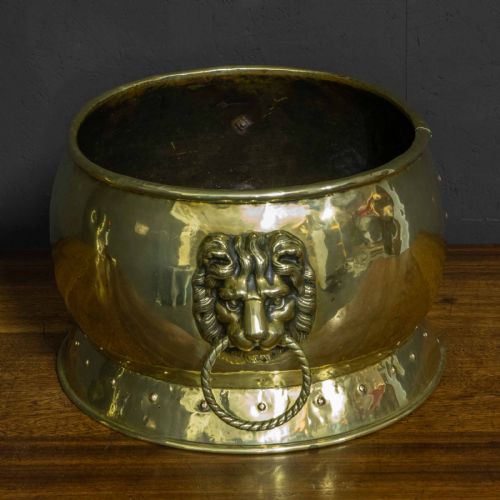
Lion Head Brass Bucket
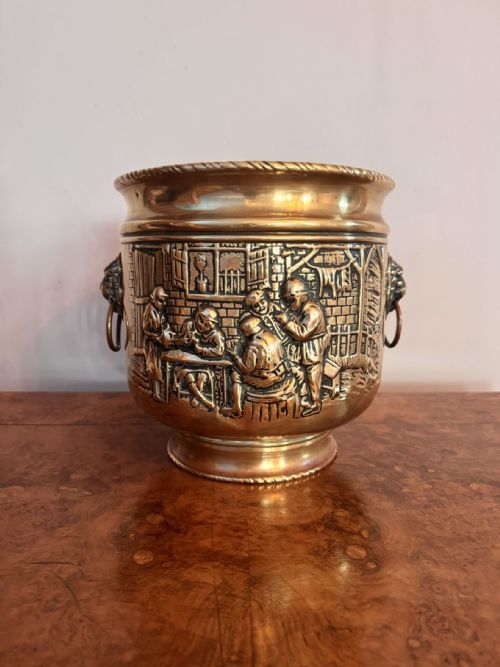
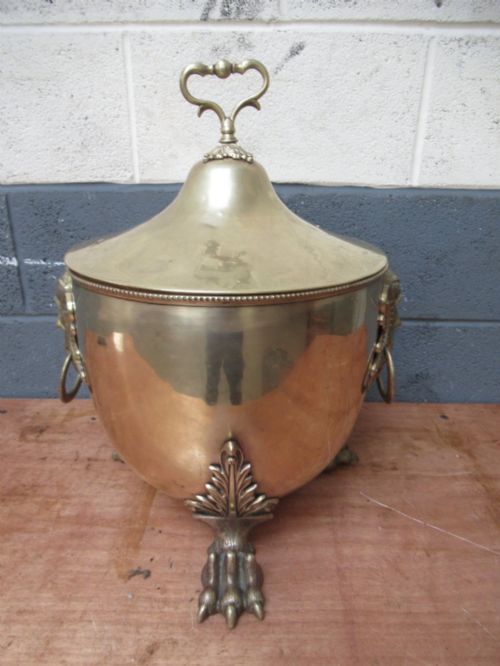
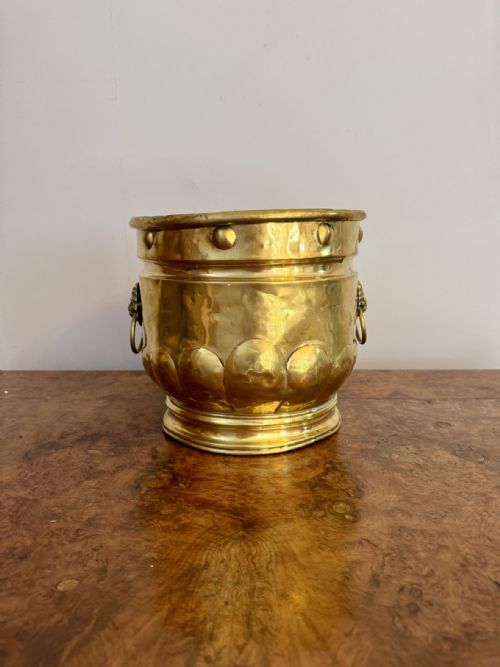
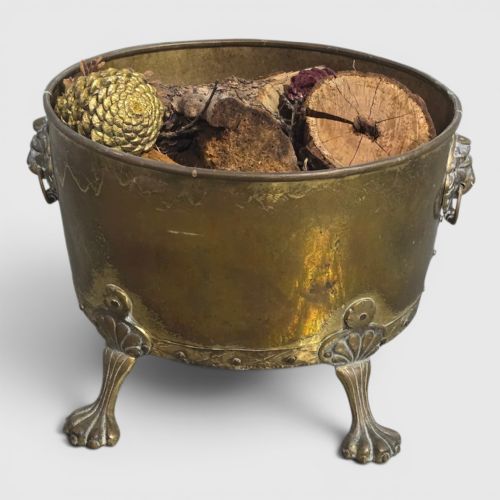
A lion head brass bucket brings heavy metalwork and hearth utility together, offering an imposing focal point for traditional firesides.
Lion Head Brass Bucket
A lion head brass bucket serves primarily as a fireside fuel container or decorative planter, appearing across Victorian, Regency, and Georgian Revival periods. These vessels function as practical log bins, coal scuttles, and jardiniere planters for the home.
The most common examples on this page date from the nineteenth century, finished with prominent cast metal ring handles held in the jaws of a lion mask. Collectors encounter varying forms, including Dutch Baroque styles and brass-bound mahogany or copper-banded bodies.
Makers utilised heavy gauge metals to withstand the daily hauling of peat, coal, and heavy logs beside the fireplace. Their robust construction ensured these containers survived decades of domestic hearth service.
Materials and construction
Articles are forged primarily from sheet brass and warm copper, occasionally accented with ebony details or bound in mahogany timber staves. Metalworking techniques involve hand-beating, embossing, and riveting plates together to form watertight or durable cylindrical bodies.
The characteristic lion mask handles are cast separately in brass and secured firmly to the vessel sides, often supporting heavy drop rings. Surface treatments range from high-polish finishes to textured embossing displaying floral or heraldic motifs.
Lion Head Brass Bucket Retail Price Guide 2026
Typical asking prices for lion head brass bucket among the pieces listed under this phrase on Sellingantiques today, from the lower quarter to the upper quarter. They describe what is for sale here now, not the wider market.
Factors that distinguish quality
The thickness of the brass or copper sheet dictates the structural integrity and weight of the vessel. Thicker metal resists denting and maintains its circular geometry better under the weight of coal or heavy logs.
The Lion Head Brass Bucket Glossary
- Jardiniere
- An ornamental pot or stand designed to hold growing plants or floral arrangements. These pieces frequently double as floor-standing cachepots in domestic interiors.
- Cellarette
- A lockable container used originally to store bottles of wine or spirits near the dining table. Later examples often share forms with decorative log bins.
- Dinanderie
- The medieval and later European art of working in brass or copper objects. This term encompasses hammered vessels, cauldrons, and domestic metalware.
- Scuttle
- A metal bucket with a sloping mouth or handle designed for carrying coal to a fireplace. They sit beside the hearth as functional fuel stores.
- Embossing
- A technique where a design is raised above the surface of the metal using punches and hammers from behind. This creates textured relief patterns across the body.
Lion Head Brass Bucket: Frequently Asked Questions
What were lion head brass buckets used for?
These vessels served primarily around the hearth to store coal, peat, or logs for the fireplace. They also functioned as planters and wine coolers in grand nineteenth-century rooms.
Their heavy construction allowed servants to haul fuel daily without damaging the metal body or losing the drop handles.
How do I date a brass bucket?
Dating relies on examining the construction methods, such as hand-beaten seams, cast mount details, and the underlying alloy composition. Victorian pieces often show machine rolling alongside hand-finished embossing.
Comparing the specific lion mask styling against known Regency and Victorian design revivals helps narrow down the decade of manufacture.
Can these buckets hold water?
Many metal vessels remain watertight, making them suitable for use as plant jardinieres or wine coolers with ice. However, older riveted joints can develop minor weeping over time.
Checking the interior seams ensures the container safely holds moisture before placing live plants inside on wooden floors.
How do I clean an antique brass bucket?
Maintenance typically involves dusting and occasional gentle wiping with a soft cloth to preserve the aged surface patina. Avoid harsh abrasive cleaners that strip away historical character and bright highlights.
Leaving the darker oxidation intact often highlights the relief work on embossed panels much better than an overly polished finish.