


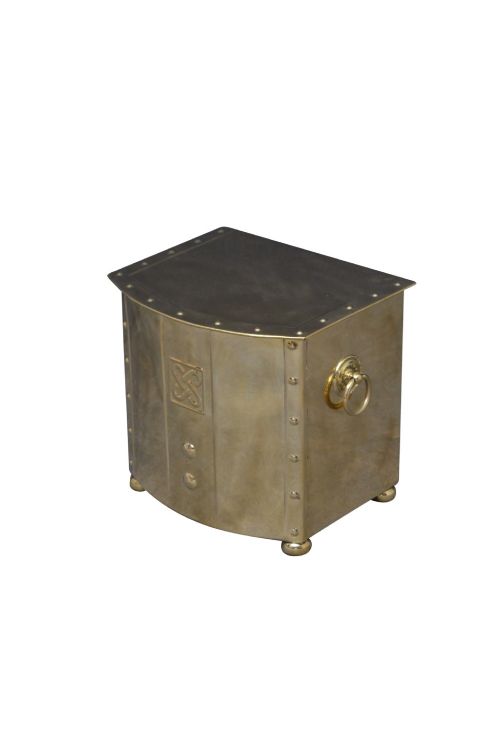


Embossed Brass Scuttle
An embossed brass scuttle brings warmth and texture to a hearth, combining practical fuel storage with decorative metalwork.
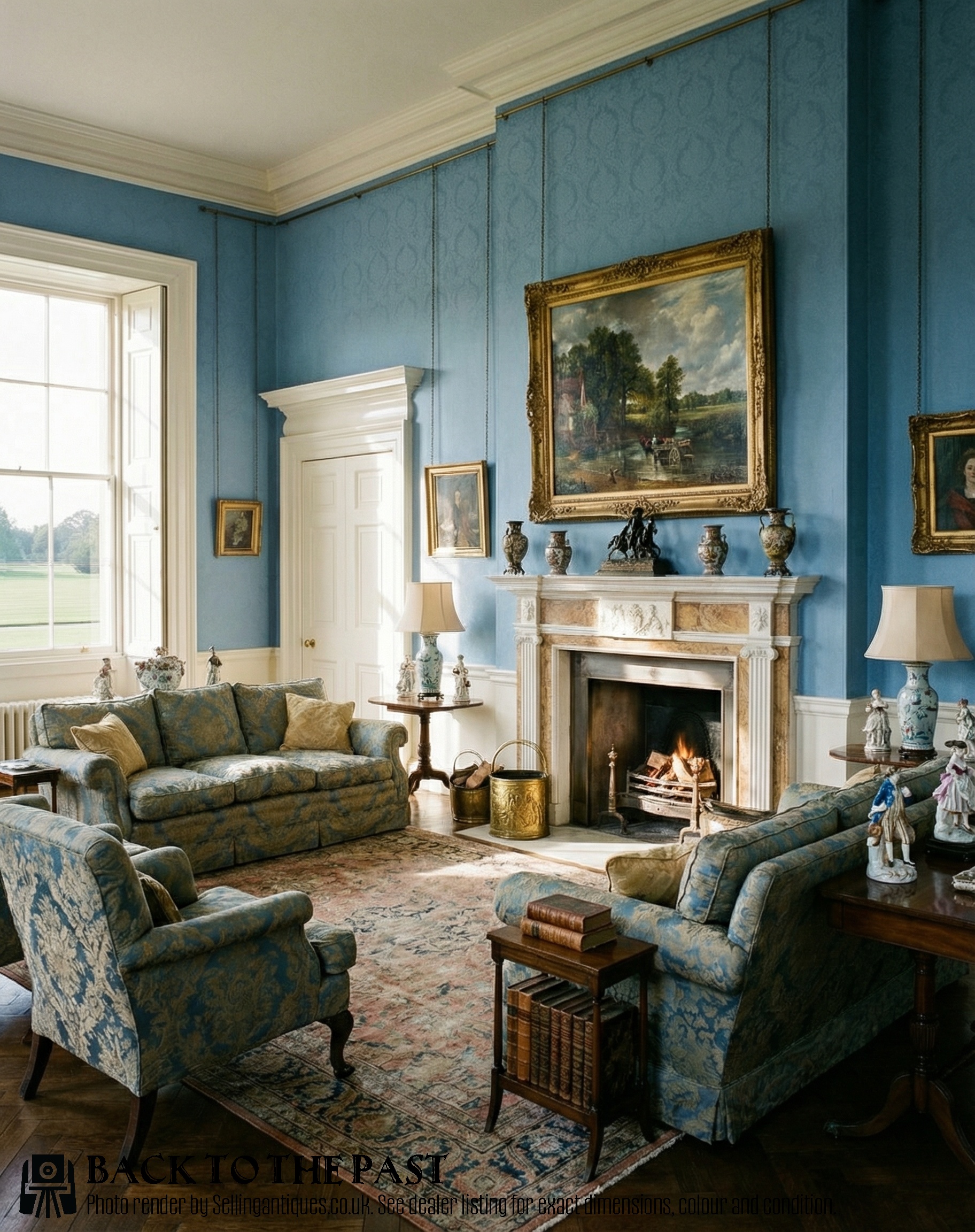
Embossed Brass Scuttle
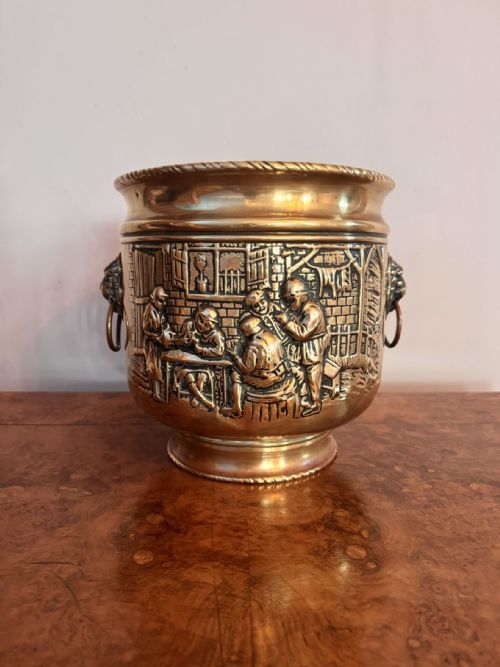
An embossed brass scuttle serves as a functional container for coal, logs, or peat beside the hearth, shaped as buckets, bins, or helmet scuttles. These pieces appear primarily from the Victorian period and the nineteenth century, alongside Arts and Crafts and Art Nouveau iterations.
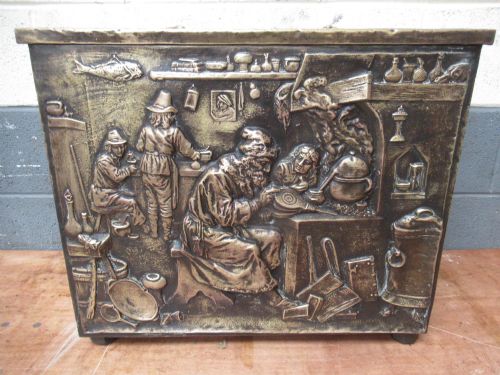
Makers and workshops utilised sheet brass, often combining it with copper bands, iron linings, or wooden elements such as ebonised wood and oak. Forms range from simple cylindrical buckets to double-lidded boxes and purdoniums.
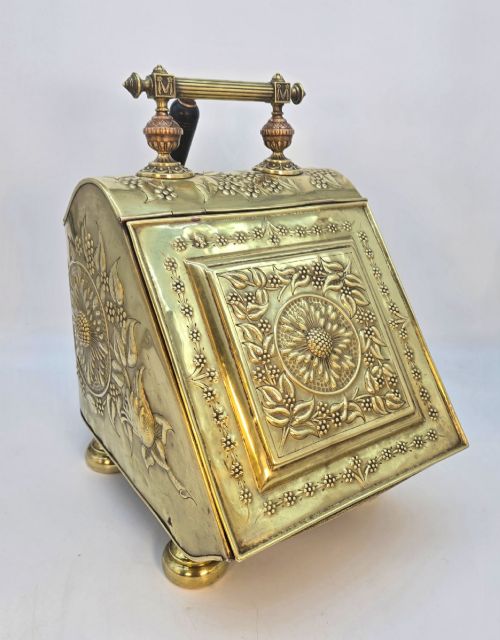
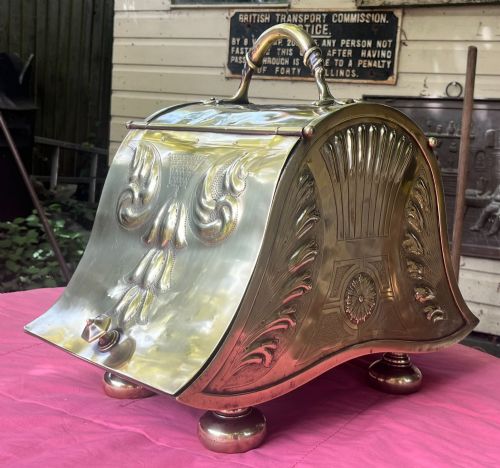
The surface decoration frequently displays hammered or embossed patterns, occasionally featuring figural scenes such as tavern motifs or stylized floral designs characteristic of the Arts and Crafts and Art Nouveau movements.

Materials and construction
Sheet brass forms the primary body of these vessels, shaped through panel construction, spinning, or hand-beating. Workshops applied embossing techniques to raise patterns from the reverse side or chase the metal surface by hand.
Makers integrated secondary materials including copper for banding or contrasting accents, alongside oak, ebonised wood, and iron for handles, liners, and structural reinforcement.
Embossed Brass Scuttle Retail Price Guide 2026
Typical asking prices for embossed brass scuttle among the pieces listed under this phrase on Sellingantiques today, from the lower quarter to the upper quarter. They describe what is for sale here now, not the wider market.
Listings feature brass alongside copper, oak, and ebonised wood across Victorian, Arts and Crafts, and Art Nouveau styles.
Quality variations
The depth and crispness of the embossed detail separate standard production pieces from finer examples. Hand-chased motifs and well-defined hammering show superior craftsmanship compared to shallow, mechanically pressed patterns.
Construction methods and the integration of mixed metals dictate durability and finish. The weight of the brass sheet and the secure fitting of copper bands, handles, and internal liners reflect the original maker's standards.
Benham & Froud·Petrus Ramus·Henry Loveridge
The Embossed Brass Scuttle Glossary
- Embossing
- The technique of raising a design in relief from the surface of sheet metal using punches and hammers. This process creates tactile surface decoration on the body of the scuttle.
- Purdonium
- A specialised coal box featuring a sloping front door and a scoop, designed to sit neatly by the fireplace. These pieces often include a matching interior shovel.
- Dinanderie
- A traditional term for articles made of beaten brass or bronze, encompassing medieval and later domestic vessels. This designation applies to heavier decorative bins and jardinières.
- Helmet scuttle
- A coal container shaped with a flared rim resembling a classical helmet, designed for pouring fuel cleanly. This form is common in nineteenth-century fireside accessories.
- Jardiniere
- An ornamental pot or receptacle intended to hold plants, though frequently adapted for use as a log or peat bin. These vessels appear in brass and copper across various periods.
Embossed Brass Scuttle: Frequently Asked Questions
How were these scuttles used originally?
In period homes, they stood beside the hearth to store solid fuel conveniently close to the fire. Servants used them to transport coal from the cellar to the living rooms.
Many designs included internal metal liners or handled buckets to catch debris and make emptying ash and fuel cleaner.
Can I use an antique scuttle for logs?
These vessels remain entirely suitable for holding logs or kindling in a modern living room. Their robust brass and copper construction withstands daily domestic use.
Adding a modern protective liner prevents moisture or bark debris from marking the interior base of the historic metalwork.
How do I date a brass scuttle?
Dating relies on stylistic indicators such as Arts and Crafts motifs, Art Nouveau curving lines, or Victorian proportions. Construction details, including the type of fixings and handle attachments, also help determine the period.
Makers' stamps, where present, provide direct evidence of the workshop and manufacturing date.