
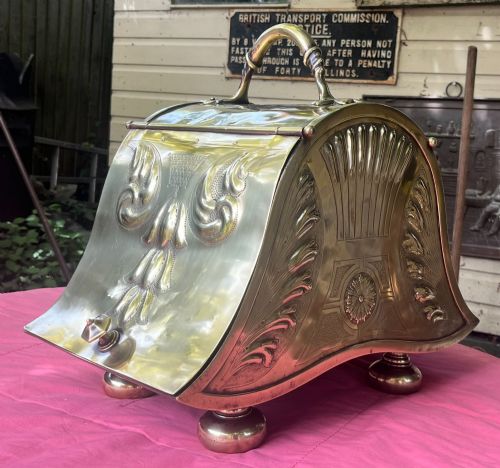


Repousse Brass Scuttle
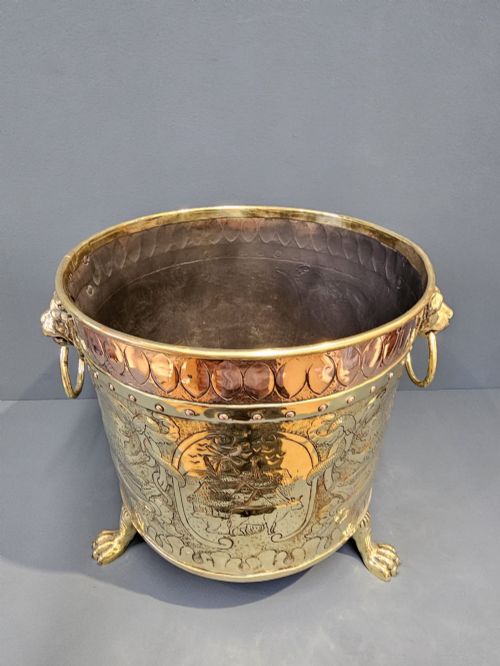
A repousse brass scuttle brings heavy metalwork to the hearth, serving as a functional fuel store decorated with hammered relief designs.

Repousse Brass Scuttle
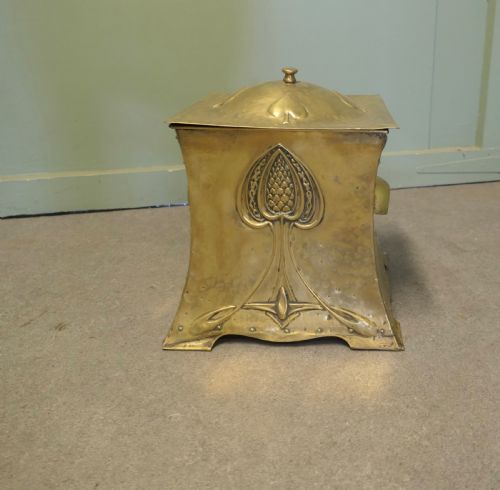
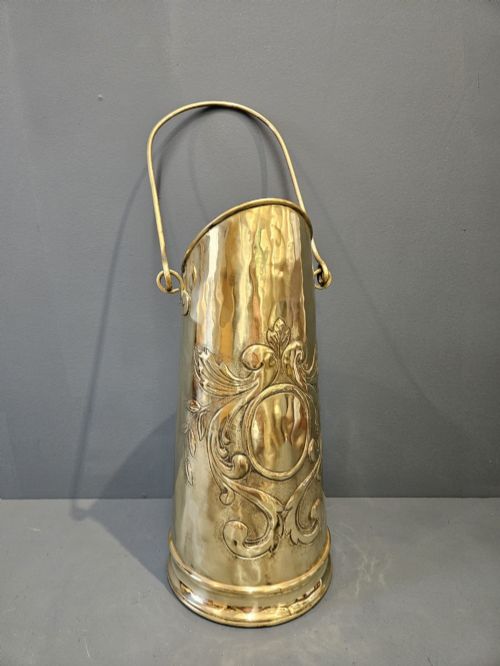
A repousse brass scuttle is a fireside container designed to hold coal, logs, or peat beside the fireplace, combining practical fuel storage with decorative metalcraft. When searching for this phrase, you will encounter various forms ranging from traditional bucket shapes and double-lidded boxes to coal helmets and purdoniums.
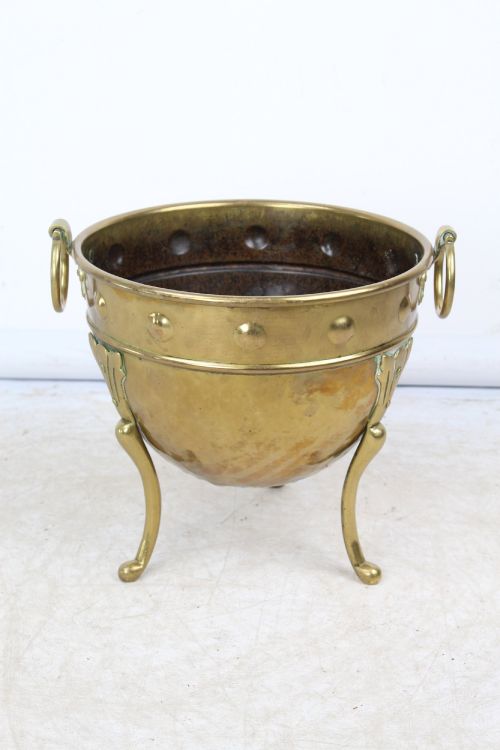
Beyond standard coal buckets, many listings include log bins, planters, and jardinieres that share the same hammered metal construction and fireside purpose. These vessels vary from plain polished metal to deeply embossed surfaces depicting tavern scenes or floral motifs.
How they were made
Makers formed these containers primarily from sheet brass and copper, sometimes mounting them on wood or ebonised wood bases with iron or brass handles. The characteristic raised patterns were hammered from the reverse side using punches and chisels in a technique known as repousse work.
Joints were typically riveted or dovetailed together, and individual components such as swing handles, lids, and ceramic or wooden grips were attached mechanically. Many examples feature contrasting bands of copper or polished wooden elements to strengthen the structure and accent the bright metal.
Repousse Brass Scuttle Retail Price Guide 2026
Typical asking prices for repousse brass scuttle among the pieces listed under this phrase on Sellingantiques today, from the lower quarter to the upper quarter. They describe what is for sale here now, not the wider market.
Some nineteenth-century coal boxes feature secret inner compartments designed specifically to keep the fireside tongs out of sight.
What varies in quality
Quality in these metal containers rests upon the crispness of the hammered relief and the thickness of the brass sheet used by the maker. Heavier gauge metal resists denting and holds its structural integrity under the daily weight of coal and logs.
Better examples display finer hand-detailing in the embossed scenes rather than shallow, machine-pressed uniformity. The choice of secondary materials, such as solid oak bodies or robust forged handles, also separates standard utility items from finer workshop pieces.
Henry Loveridge·Petrus Ramus·Benham & Froud
The Repousse Brass Scuttle Glossary
- Repousse
- A metalworking technique where the design is hammered into relief from the reverse side of the sheet. This creates tactile, three-dimensional surface decoration on the body of the scuttle.
- Purdonium
- A specialised box or cabinet designed to hold coal beside a fireplace, usually featuring a sloping front door and a dedicated shovel. It often incorporates an internal metal liner to contain dust and fuel debris.
- Dinanderie
- An old term for medieval and later brass or bronze wares produced in the Meuse valley, sometimes applied broadly to decorative brass vessels. It denotes articles formed by hammering and casting.
- Coal helmet
- A traditional fireside bucket with a flared, sloping rim resembling a medieval headpiece, designed to make pouring fuel onto the fire easier. They usually include a high swing handle for carrying.
Repousse Brass Scuttle: Frequently Asked Questions
How do I clean repousse brass?
Clean brass using a mild soapy solution and a soft cloth to remove dust and soot without flattening the raised details. Avoid harsh abrasive cleaners that strip away the aged patina accumulated over the decades.
Dry the metal thoroughly after washing to prevent water spots. If you choose to polish the surface, apply a gentle metal cream sparingly so it does not build up in the recessed crevices of the embossed pattern.
Can these containers still hold coal?
Most of these vessels were built to handle fuel and remain robust enough for daily use beside a modern fireplace. Many retain internal metal liners designed to catch dirt and protect the outer decorative shell.
Inspect the base and internal joints for wear or corrosion if you intend to store heavy logs or loose coal inside. Using a separate inner bucket helps preserve the original metal bottom from dampness and scratching.
How do I date a brass fireside piece?
Dating relies on examining the construction methods, such as the type of rivets, handle attachments, and the prevailing decorative style. Victorian and Edwardian examples often show characteristic machine-rolled sheet brass combined with hand-hammered relief work.
Stylistic cues like the geometric curves of Art Nouveau or the stylized floral motifs of the Arts and Crafts movement help narrow the decade of manufacture. Maker marks stamped on the base provide the most precise indication of origin.