



Antique Brass Coal Bucket
An antique brass coal bucket brings hearthside utility together with nineteenth-century metalwork, offering practical fuel storage shaped by Victorian and Arts and Crafts design.
Antique Brass Coal Bucket
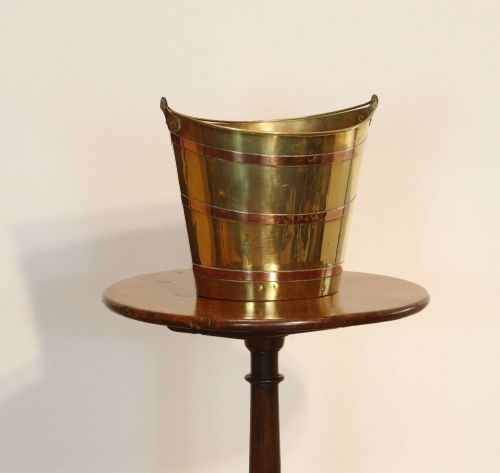
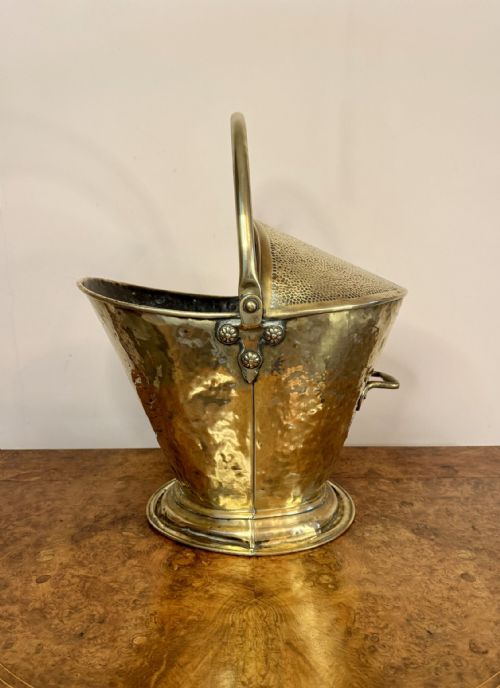
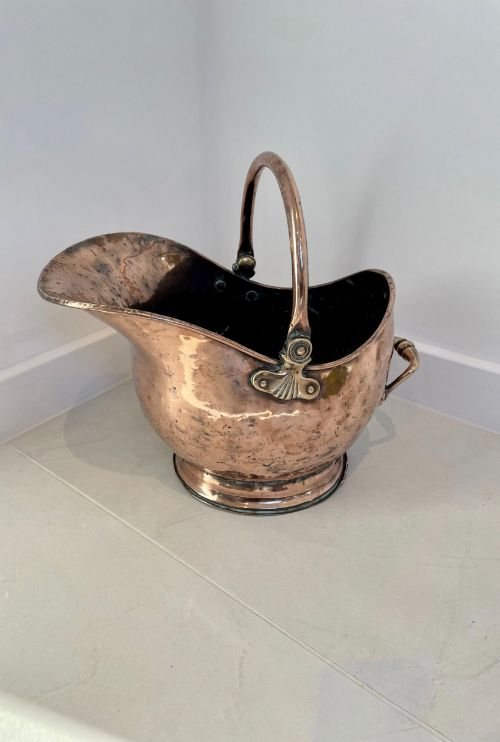
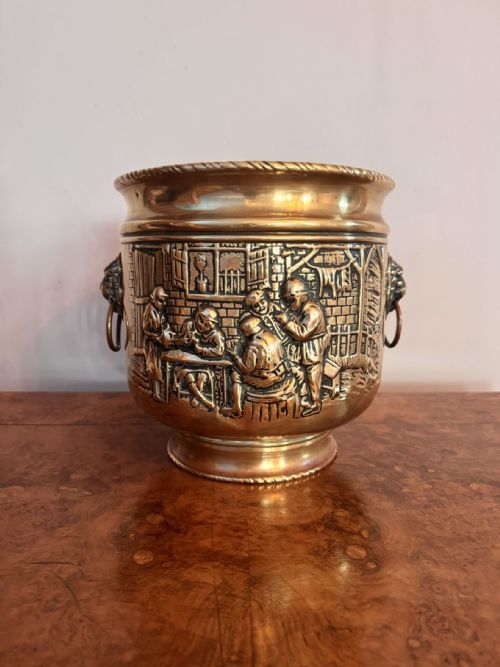
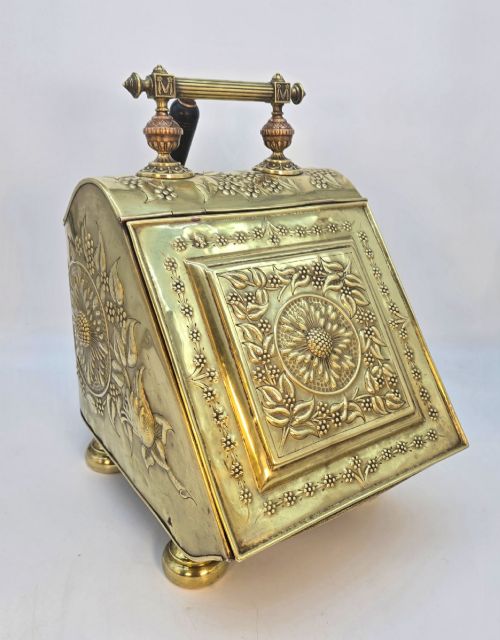
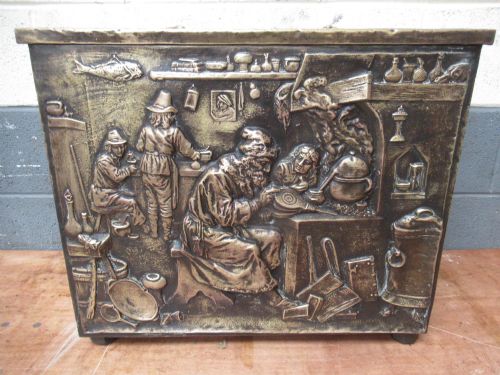
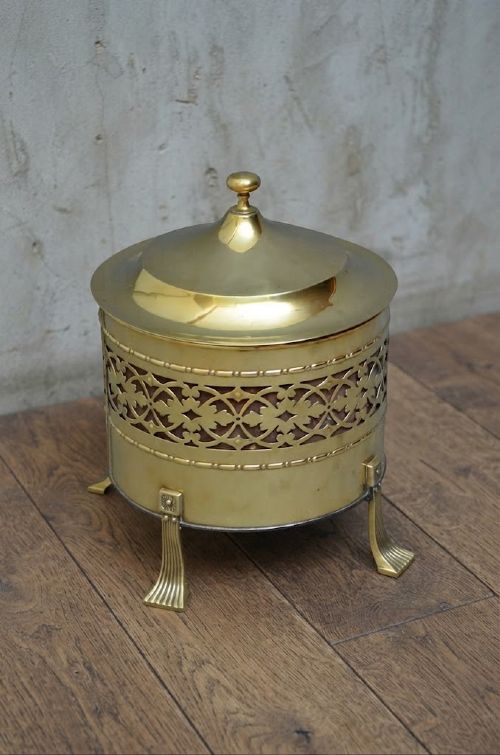
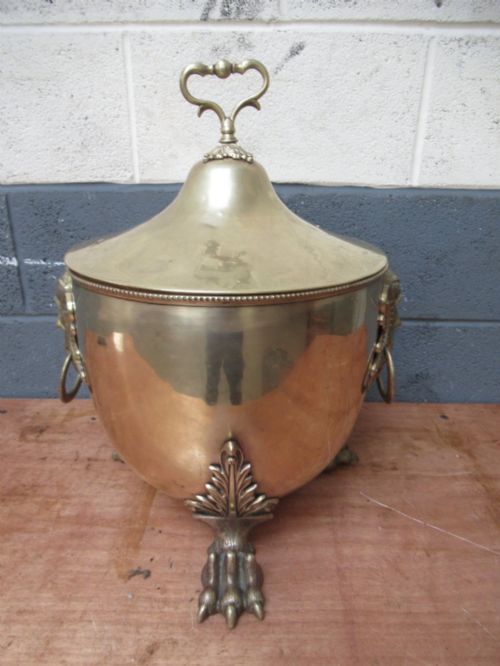
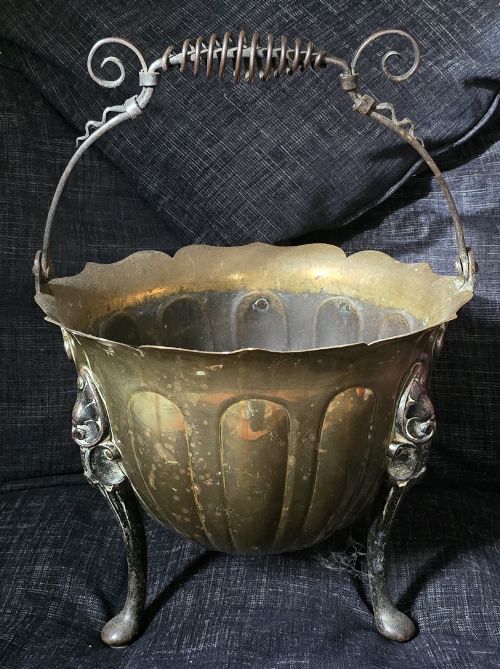
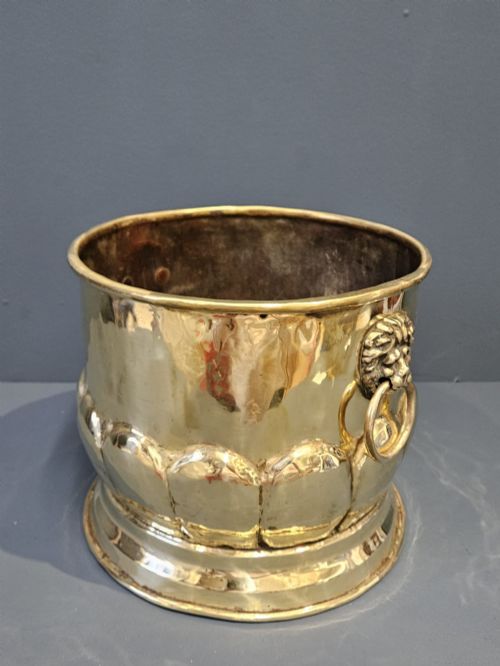
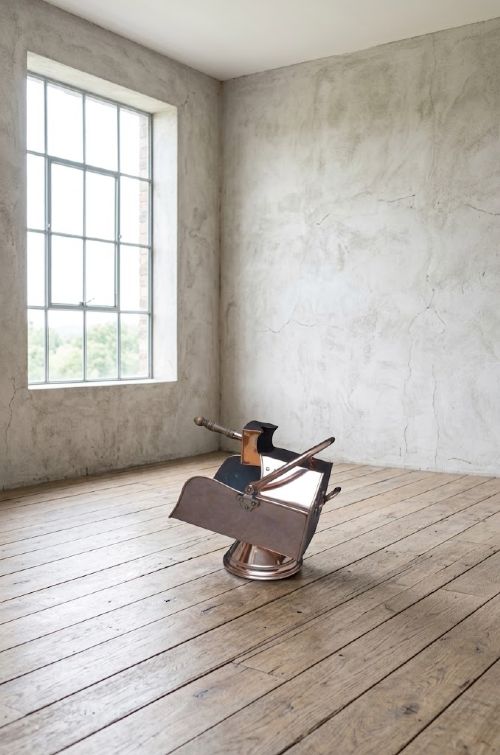
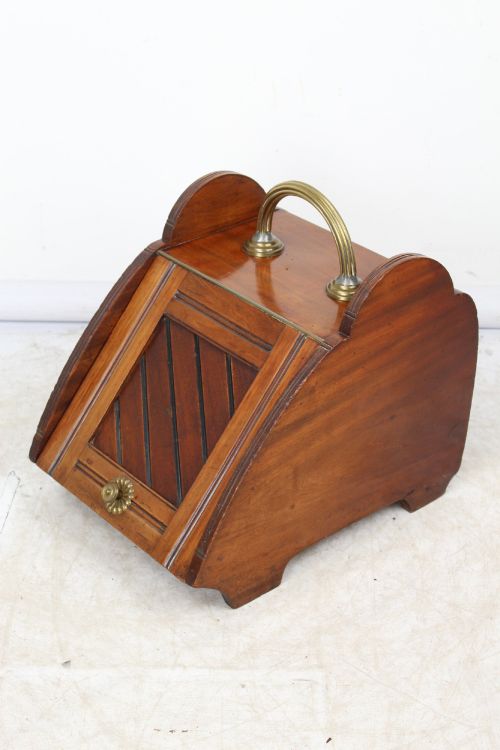
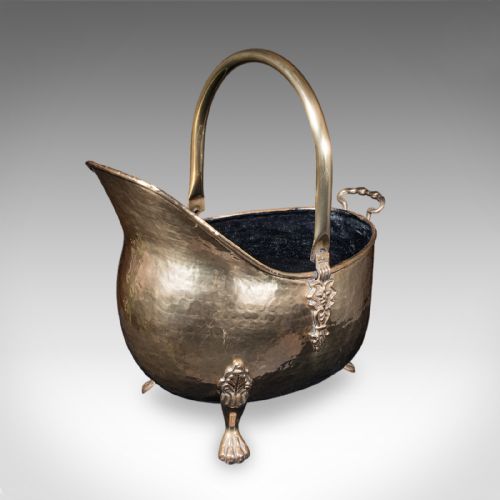
An antique brass coal bucket serves as a fireside receptacle designed to hold fuel near an open hearth. These vessels appear in forms such as helmet scuttles, barrel shapes, purdoniums, and open log bins.
The pieces on this page span the Victorian and Edwardian eras, alongside earlier Georgian examples and movements like Arts and Crafts and Art Nouveau. Most items date from the nineteenth century into the early twentieth century.
Makers and workshops utilised these containers primarily in domestic hearth settings across England and Europe. Buyers encounter variations ranging from simple utilitarian vessels to ornate, decorative storage bins.
Materials and construction methods
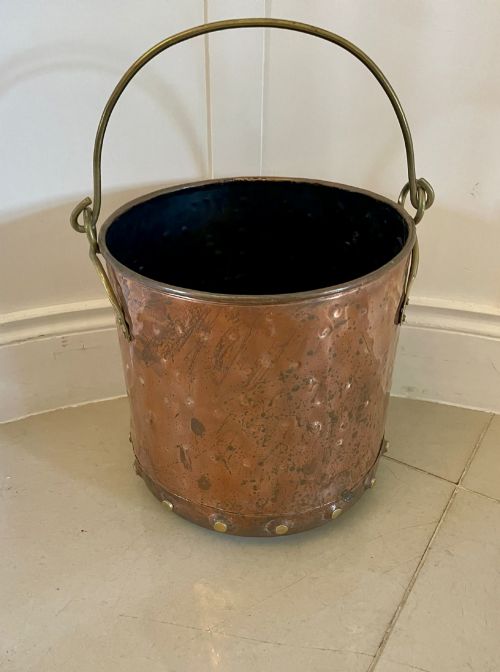
Makers worked primarily in sheet brass and cast brass, frequently combining these metals with copper, iron, and wood elements. Certain items incorporate ceramic handles or internal metal liners to protect the primary structure.
Construction techniques involve hand-hammered panels, riveted joints, and cast components. Polished finishes highlight the warm metallic tones of the brass and copper surfaces.
Antique Brass Coal Bucket Retail Price Guide 2026
Typical asking prices for brass coal bucket among the pieces listed under this phrase on Sellingantiques today, from the lower quarter to the upper quarter. They describe what is for sale here now, not the wider market.
Distinctions in craftsmanship and design
Superior examples display heavier gauge metal, robust riveting, and substantial claw feet that provide stability. Finer pieces often include original shovels, decorative embossing, and secure hinged lids.
Simpler vessels rely on basic sheet construction with minimal ornamentation. The presence of makers' marks or specialised stylistic details from periods like Arts and Crafts elevates individual pieces.
Henry Loveridge
The Antique Brass Coal Bucket Glossary
- Coal scuttle
- A container designed with a sloping mouth and a carrying handle to facilitate pouring fuel onto a fire.
- Purdonium
- A box-style coal container, often featuring a fall-front door and an internal metal liner.
- Helmet scuttle
- A bucket shaped like a traditional headpiece, featuring a flared rim and an arched rear handle.
- Log bin
- A deep cylindrical or barrel-shaped vessel used specifically for storing firewood beside a fireplace.
- Riveted
- Joined with metal pins that secure overlapping plates, commonly seen on heavy-duty copper and brass vessels.
Antique Brass Coal Bucket: Frequently Asked Questions
How do I clean an antique brass coal bucket?
Maintain the surface with a soft cloth to remove dust without stripping the aged patina that accumulates over decades of use.
Avoid harsh chemical abrasives that can permanently damage the polished brass or exposed copper detailing.
Can I still use these buckets for real coal?
These vessels were built to hold solid fuel and logs near active domestic hearths during the nineteenth century.
Many modern owners continue to utilise them for firewood or coal, provided the internal structure and liners remain intact.
How do I identify a Victorian piece?
Victorian examples often display characteristic helmet or barrel forms, frequently accompanied by heavy brass construction and riveted joints.
Stylistic markers align with the broader design movements active between the mid nineteenth and early twentieth centuries.
What is the difference between a scuttle and a bin?
Scuttles generally feature angled spouts and pivoting handles designed for carrying and pouring smaller pieces of fuel directly onto flames.
Bins and purdoniums take box or barrel shapes with flat lids or drop-front panels intended for bulk storage of logs or coal.