



Brass Log Holder
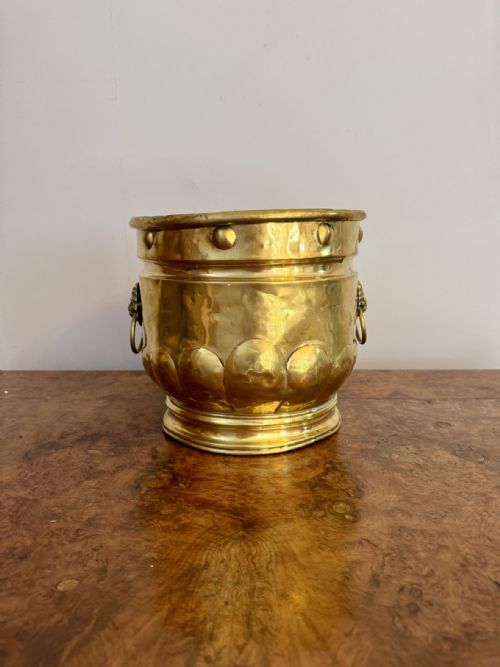
A brass log holder brings warmth and metal texture to a hearth, holding fuel within reach while catching the eye.

Brass Log Holder
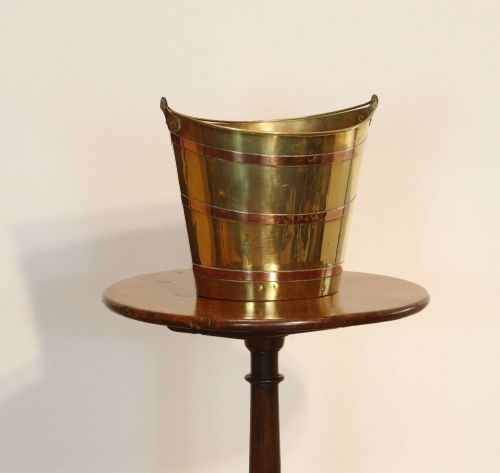
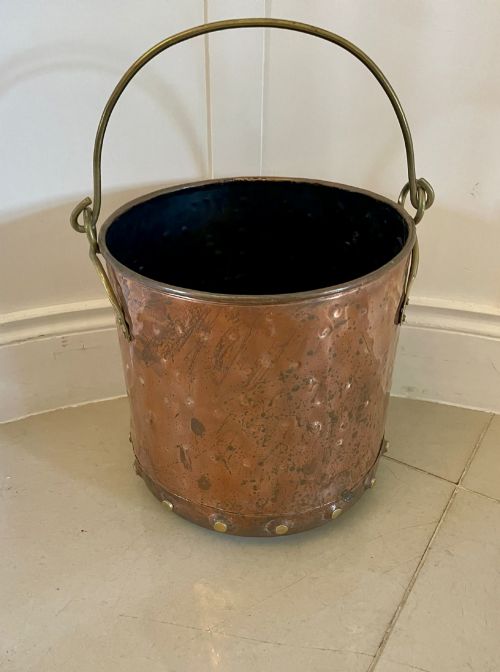
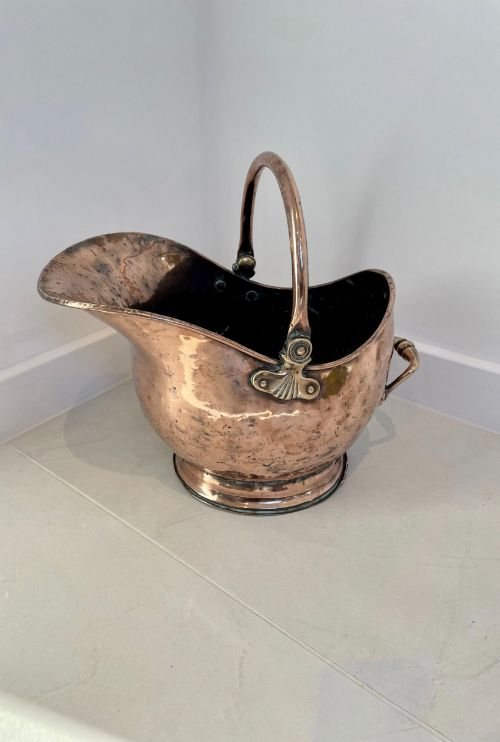
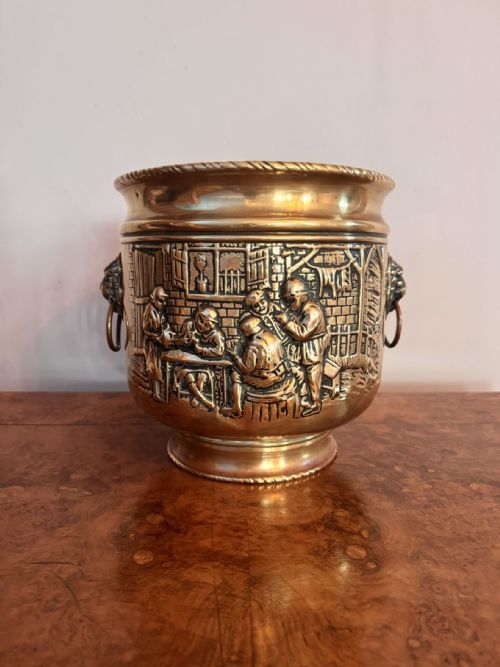
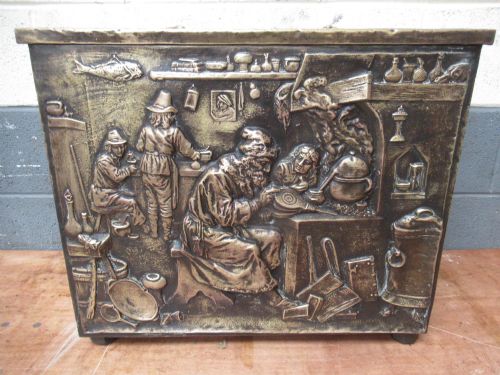
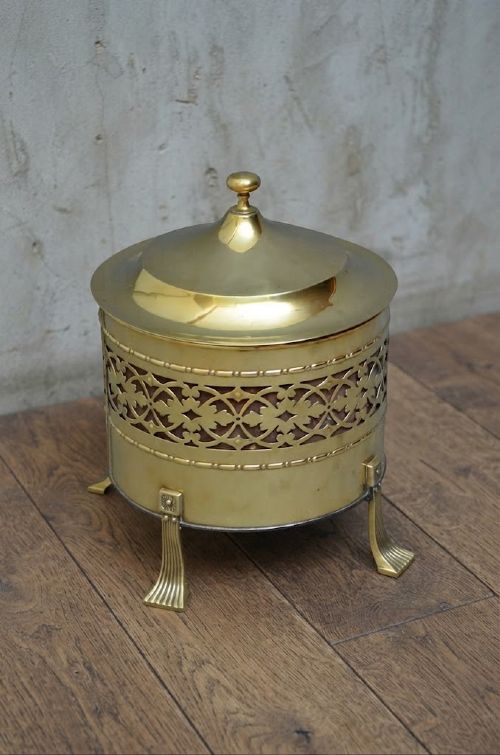
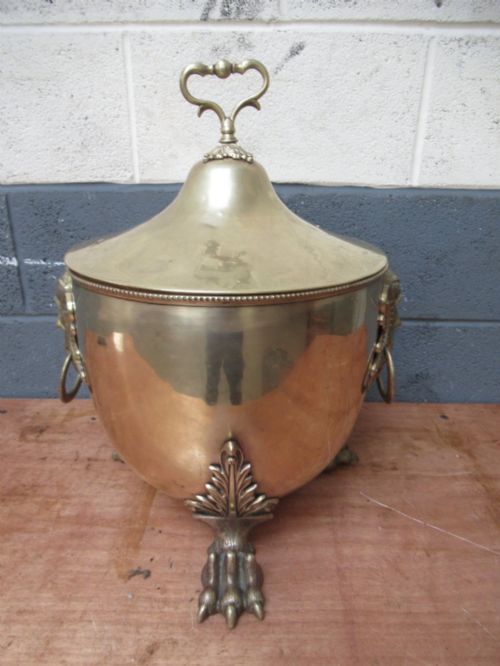
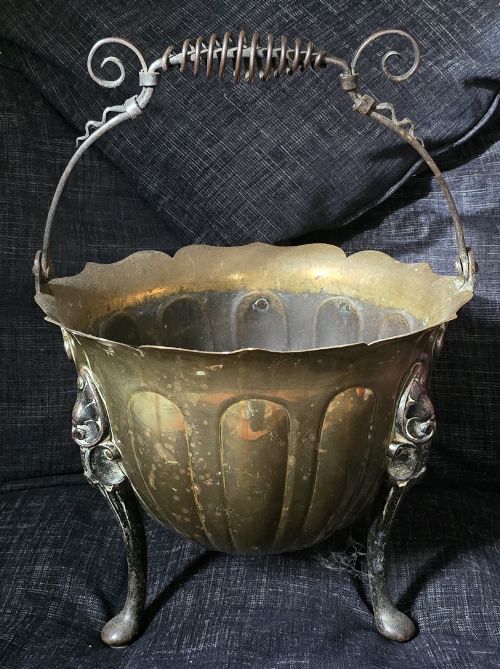
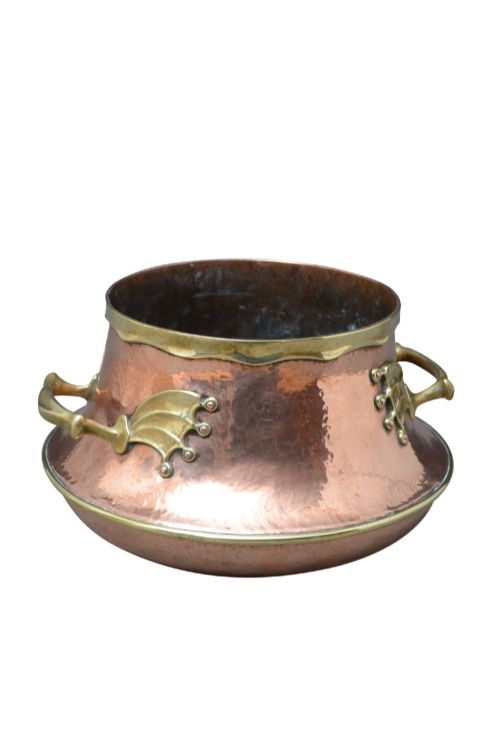
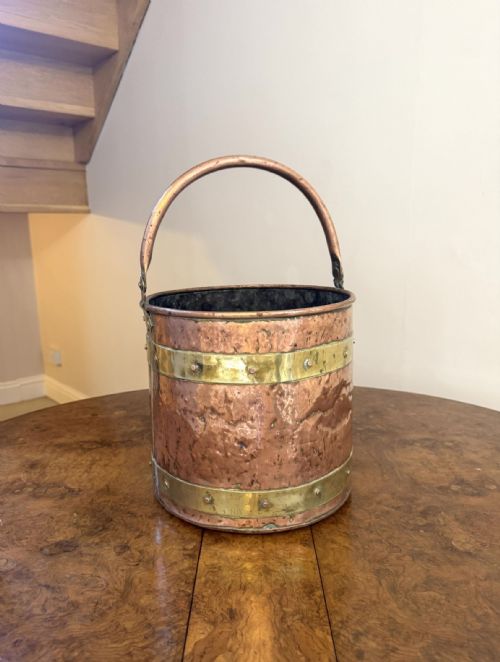
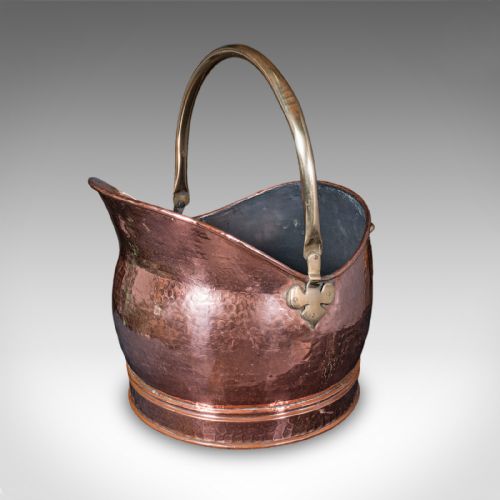
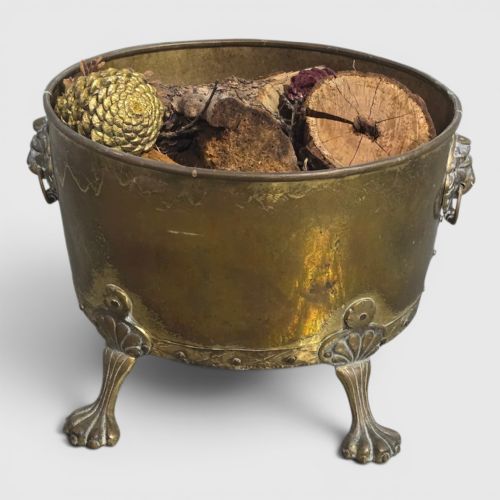
A brass log holder encompasses several forms near the hearth, appearing as cylindrical bins, coal buckets, scuttles, and planters repurposed for fuel. Victorian and Edwardian examples dominate the selection, alongside earlier Georgian and Regency pieces.
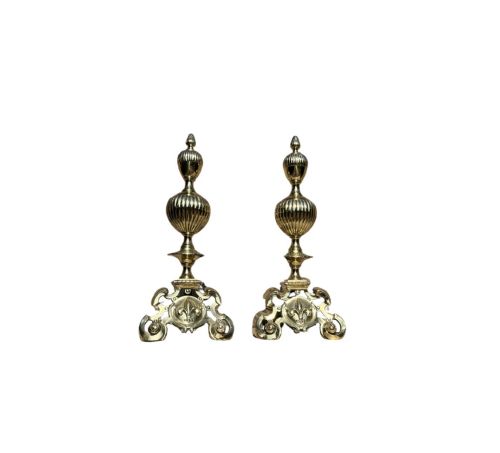
Objects range from plain metal cylinders to heavily embossed vessels and campaign pieces, sometimes sharing space with fire dogs and grates. Makers produced these items to sit beside coal fires and wood-burning hearths in period homes.
Materials and Construction
Metalworkers combined sheet brass and copper, often adding iron bands, zinc liners, and wooden elements such as oak bodies or mahogany spindle details. Rivets secure many of the heavier vessels, while others rely on hand-finished seams and applied crests.
Decoration involved embossing, hammering, and fretwork designs, alongside contrasting copper bands wrapping around brass bodies to provide structural rigidity and visual contrast.
Brass Log Holder Retail Price Guide 2026
Typical asking prices for brass log holder among the pieces listed under this phrase on Sellingantiques today, from the lower quarter to the upper quarter. They describe what is for sale here now, not the wider market.
Listings include oak, iron, and zinc alongside brass and copper, spanning periods from the eighteenth century to the Edwardian era.
Craftsmanship and Weight
Quality rests in the thickness of the metal sheet, the crispness of any embossed decoration, and the integrity of the riveted joints. Thicker brass and copper hold their shape under the heavy daily use of storing fuel.
Attention to detail separates standard production items from finer workshop pieces, seen in the neatness of hand-finishing, the quality of applied copper bands, and the presence of makers' marks.
Henry Loveridge·Petrus Ramus·William Soutter & Sons
The Brass Log Holder Glossary
- Jardiniere
- A decorative pot or vessel, frequently made of brass or copper, often utilised as a log holder or coal bin in period settings.
- Coal Scuttle
- A vessel designed for carrying coal to the fire, usually featuring a hinged handle and a sloping chute or helmet shape for easy pouring.
- Dinanderie
- A term for various objects made of brass or copper, spanning medieval traditions through to later decorative domestic vessels.
- Fire Dogs
- Andirons used to support logs in an open fireplace, frequently paired with hearth accessories.
Brass Log Holder: Frequently Asked Questions
How do I clean a brass log holder?
Use a soft cloth and warm soapy water to remove dust and soot from the surface of the metal.
Avoid harsh chemical abrasives that strip the aged patina which accumulates on older brass and copper over the decades.
Can these hold actual logs?
Many pieces were made specifically to store fuel by the hearth, constructed with metal bodies and riveted seams to handle heavy wood and coal.
Lighter planters or decorative jardinieres require care to avoid denting the inner walls when loading heavy logs.
What periods do these come from?
The selection spans from the eighteenth century through to the Edwardian era, with a strong concentration of Victorian pieces.
Styles range from Georgian restraint and Regency formality to the decorative embossed work of the Arts and Crafts movement.
Are liners usually included?
Certain coal buckets and bins feature interior containers made from zinc, wood, or metal to catch debris and moisture from the fuel.
Original liners add completeness to the piece, though many vessels survive without their internal components.