



Hammered Brass Bucket
These hammered brass buckets bring warmth and utility to hearths, doubling as log bins and planters.

Hammered Brass Bucket
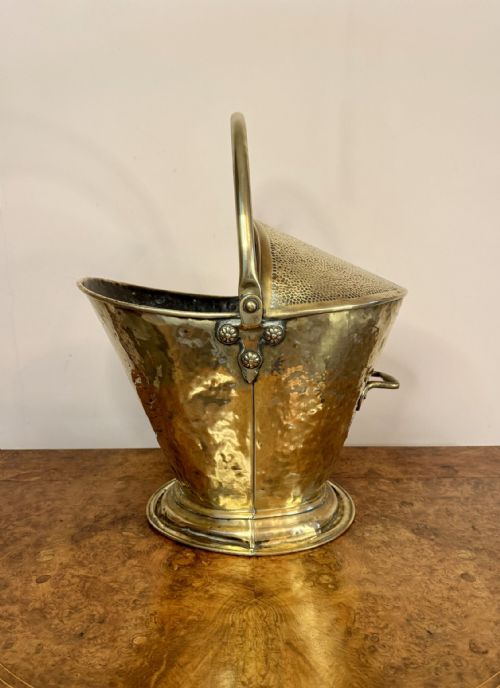
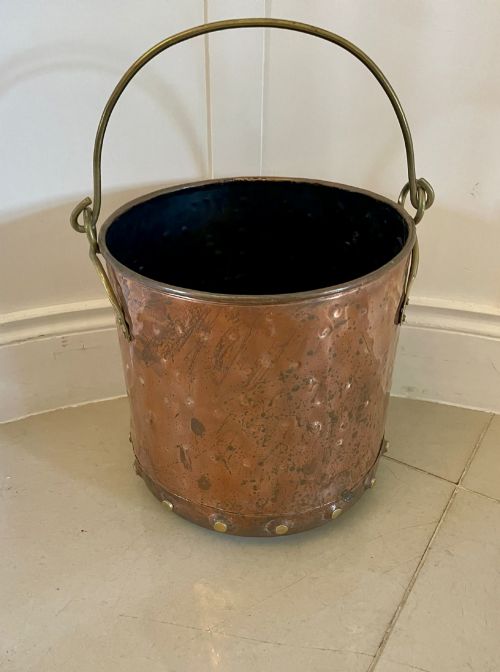
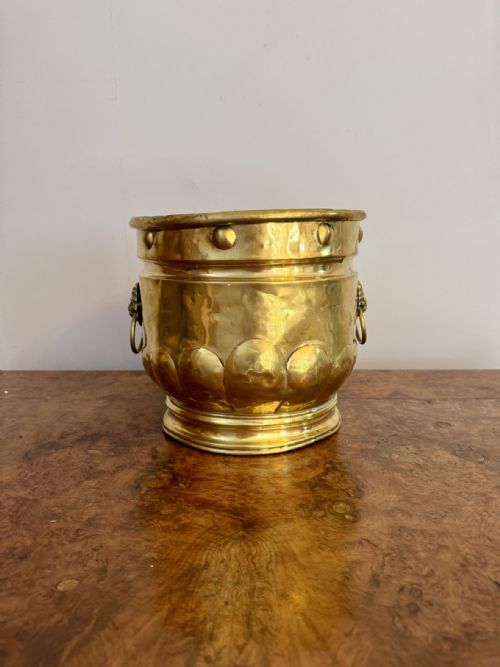
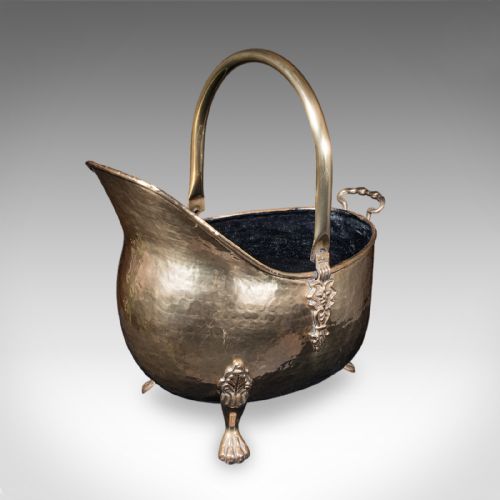
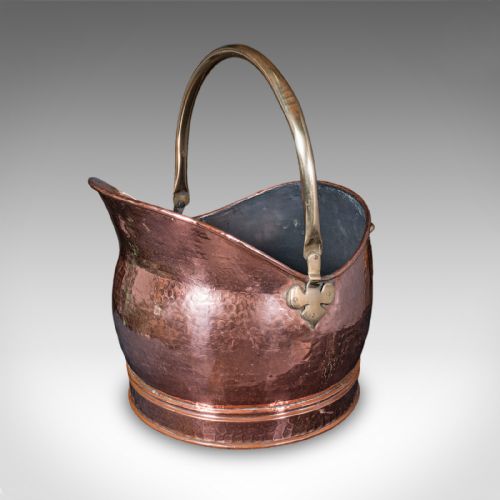
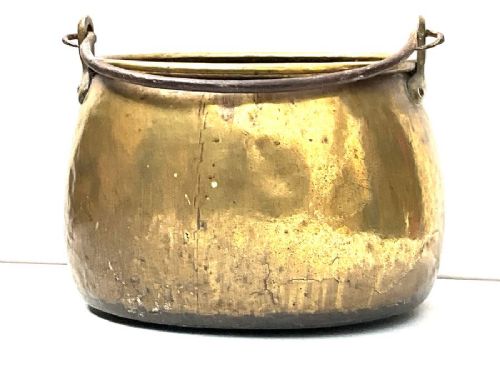
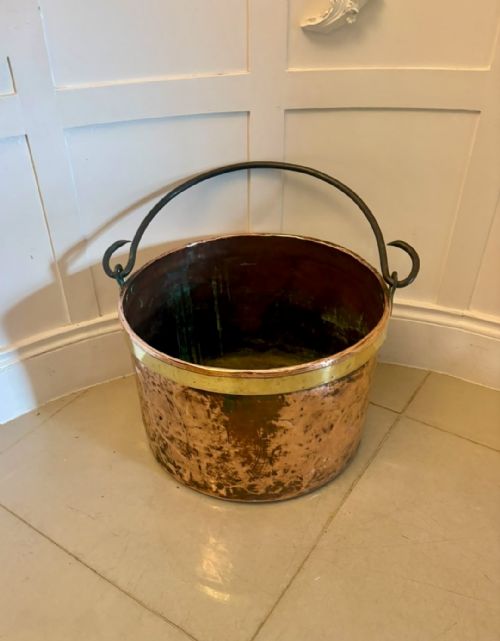
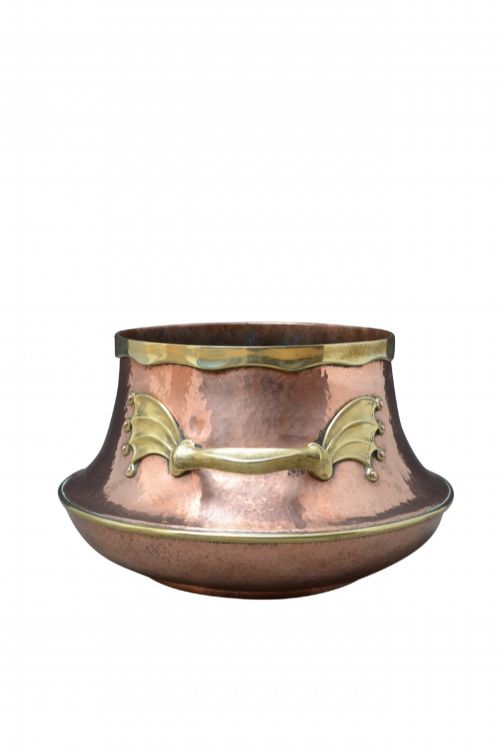
A hammered brass bucket serves primarily as a fireside accessory for coal, logs, or kindling, though many double as planters and jardinieres. When you search for a hammered brass bucket, you encounter heavy Victorian and Arts and Crafts vessels designed to sit beside the fireplace. These pieces range from upright cauldrons and helmet scuttles to cylindrical log bins.
The selections span the nineteenth and early twentieth centuries, with Victorian examples dominating the listings. Alongside pure brass builds, you find mixed-metal constructions pairing brass body panels with copper rims, iron handles, or wooden accents. Form follows function closely, resulting in robust containers built to handle solid fuels.
Materials and construction
Makers shaped these containers from sheet brass and copper, frequently employing hand-beating or hammering techniques to texture the exterior metal surfaces. Rivets secure handles, rims, and body seams together, providing structural strength alongside visible industrial detail. Wrought iron and standard iron appear in swing handles, feet, and structural banding.
Wood and galvanised metal turn up in internal linings or handles, offering insulation and durability against wet fuel or soil. Surface finishes vary from bright polished metal to patinated copper and brass combinations that show centuries of handling.
Hammered Brass Bucket Retail Price Guide 2026
Typical asking prices for hammered brass bucket among the pieces listed under this phrase on Sellingantiques today, from the lower quarter to the upper quarter. They describe what is for sale here now, not the wider market.
Some coal buckets come with their original brass shovels tucked neatly into side brackets.
Judging quality in metalwork
Weight and gauge thickness separate robust utilitarian vessels from thinner decorative reproductions. Substantial metal walls resist denting and hold their shape under the heavy load of coal or logs.
The crispness of the hand-hammered texturing and the neatness of the riveted joints indicate the maker's skill. Original matching components, such as associated brass shovels or swing handles, elevate a piece above altered examples.
Henry Loveridge
The Hammered Brass Bucket Glossary
- Jardiniere
- An ornamental pot or stand for holding plants or flowers. These items often double as log bins.
- Helmet scuttle
- A coal container featuring a flared rim resembling a helmet, designed for pouring fuel cleanly. They usually include a fixed rear handle and a movable top handle.
- Dinanderie
- Objects made of beaten brass or other copper alloys, named after the Belgian town of Dinant. This term describes medieval and later decorative metalwork.
- Cauldron
- A large round metal pot with a wide opening, frequently used here for storing logs by the hearth. They often sit on three small feet.
- Handbeaten
- A surface finish created by striking sheet metal manually with a hammer. This process leaves distinct indentations that catch the light.
Hammered Brass Bucket: Frequently Asked Questions
What is a hammered brass bucket used for?
These vessels were originally made to hold coal, logs, or kindling beside a fireplace. They keep solid fuel tidy and close to hand.
Today, many owners use them as large indoor planters or umbrella stands. Their waterproof metal construction suits living plants and cut flowers well.
How do I clean a brass bucket?
Wash the surface gently with warm soapy water and a soft cloth to remove dust and soot. Avoid harsh chemical cleaners that strip away historic patination.
Many collectors prefer leaving the dark oxidation intact rather than polishing the metal to a bright shine. A light coat of microcrystalline wax protects the finish from further tarnishing.
Are these buckets waterproof?
Most riveted and hammered metal vessels hold water, but older seams can weep moisture over time. Inspect the base and joints before using them for fresh plants.
Using a modern plastic saucer inside prevents dampness from damaging wood floors or hearth tiles.
How do I date a brass bucket?
Examine the construction methods, such as the style of the rivets and the shape of the handles. Hand-beating marks, machine rolling lines, and toggle joints help narrow down the manufacturing era.
Victorian and Arts and Crafts examples often feature heavier gauges of brass and distinct stylistic motifs like stylized plant forms. Comparing the piece to dated historical examples confirms the period.