


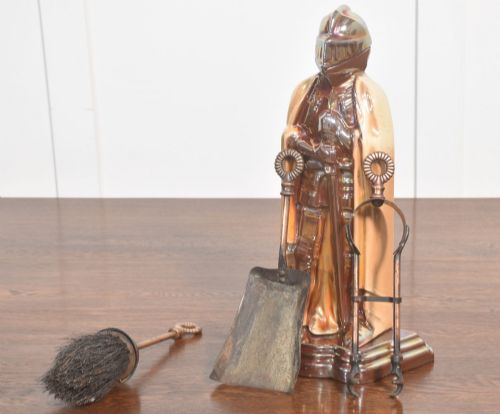



Victorian Companion Set
A victorian companion set brings practical purpose and burnished warmth to the hearth, offering matched hearth irons and stands in brass or steel.
Victorian Companion Set
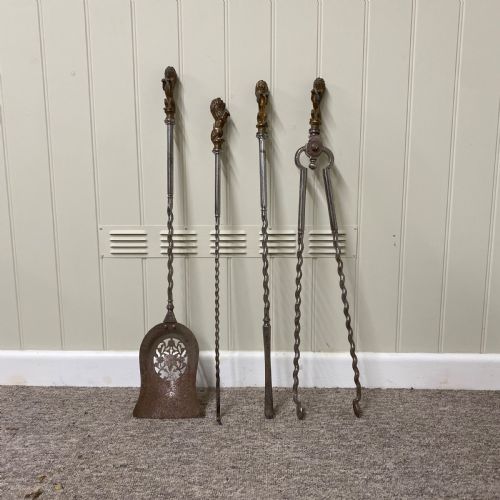
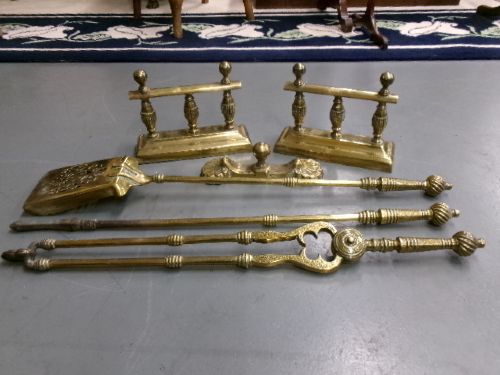
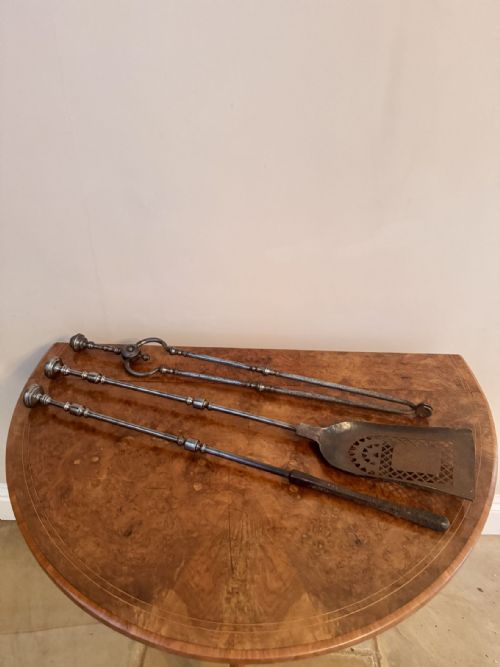
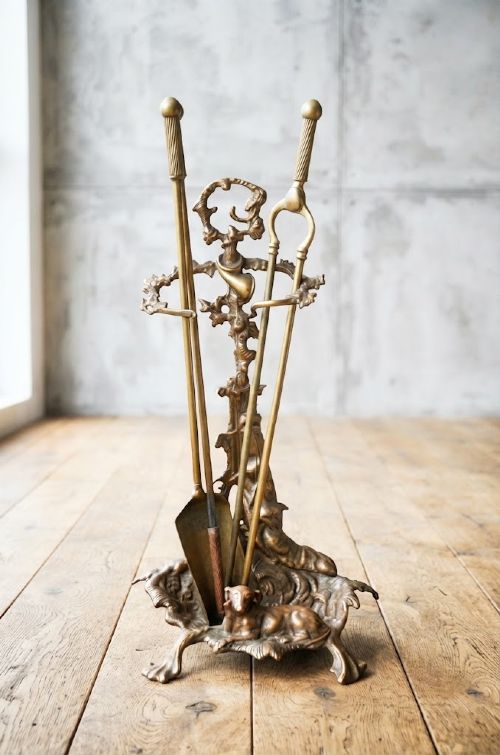
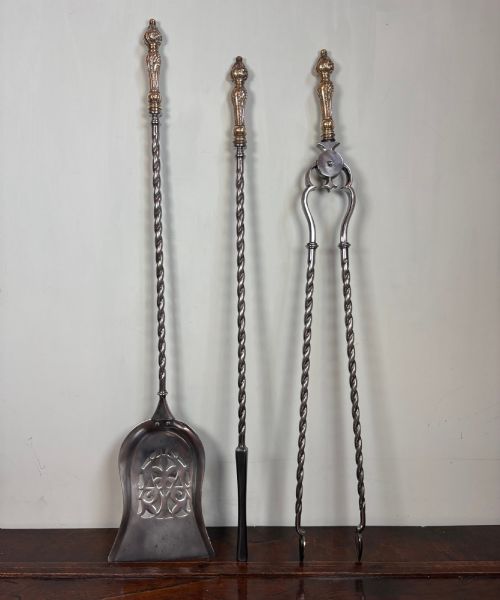
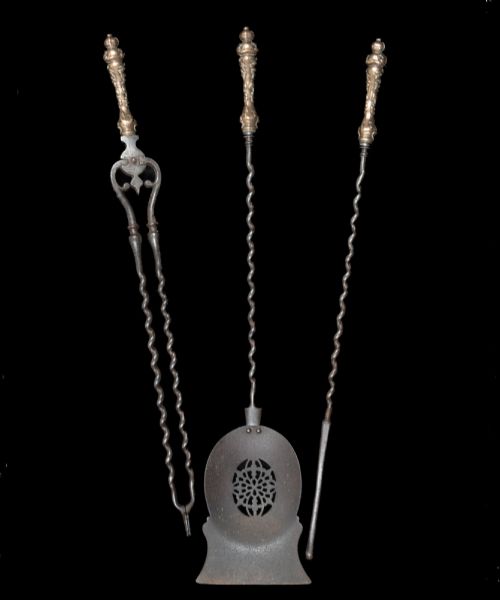
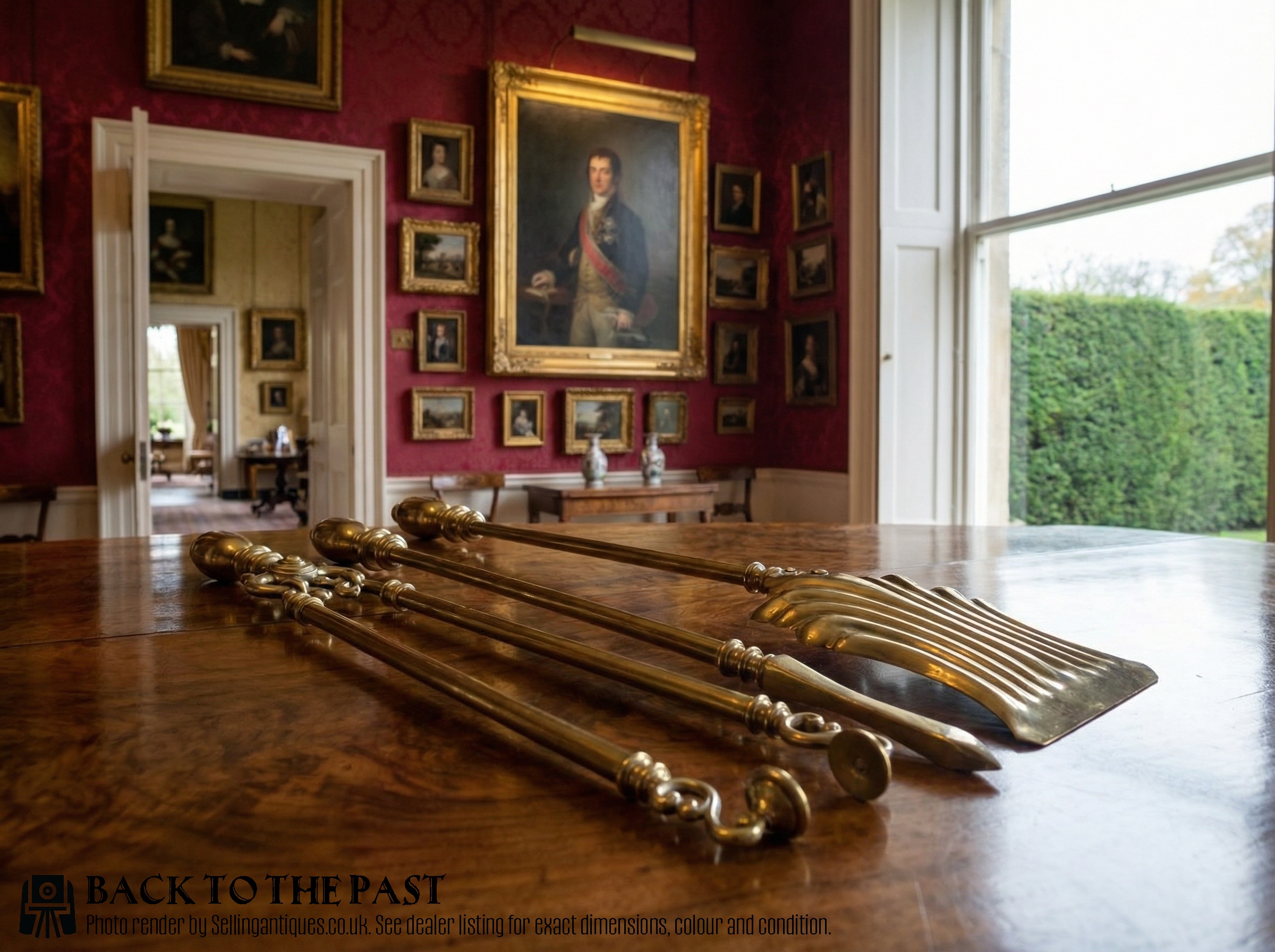
When searching for a victorian companion set, a buyer finds an array of fireside tools designed to tend an open coal fire efficiently. These assemblies typically combine pokers, tongs, shovels, and sometimes hearth brushes, housed together on a dedicated stand or paired with fire dogs.
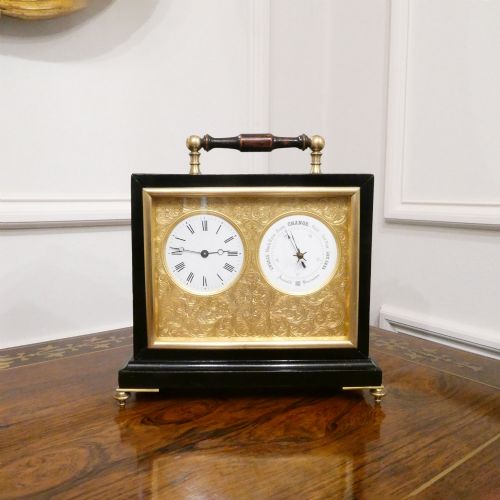
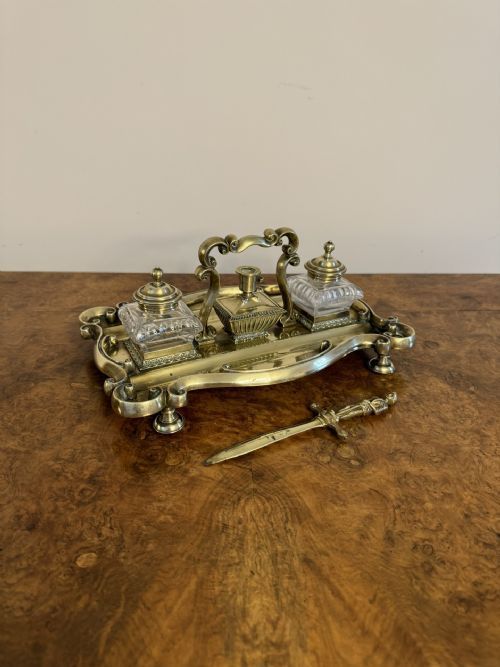
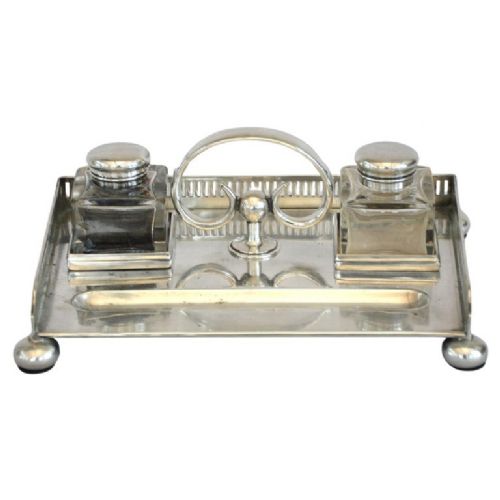
The versions most commonly met on this page date from the nineteenth century into the Edwardian era, spanning the Victorian period itself as well as later reproductions and survivals. Alongside traditional hearth collections, the listings occasionally include desk accessories and writing stands due to overlapping nineteenth-century brass and walnut construction.
Most hearth sets encountered here rely on solid brass or polished steel, frequently displaying period stylistic influences such as Gothic Revival, Arts and Crafts, or Rococo Revival. A buyer selects a set to anchor the fireplace, choosing between bright polished metals and darker wrought iron depending on the surrounding mantel.
Materials and construction methods
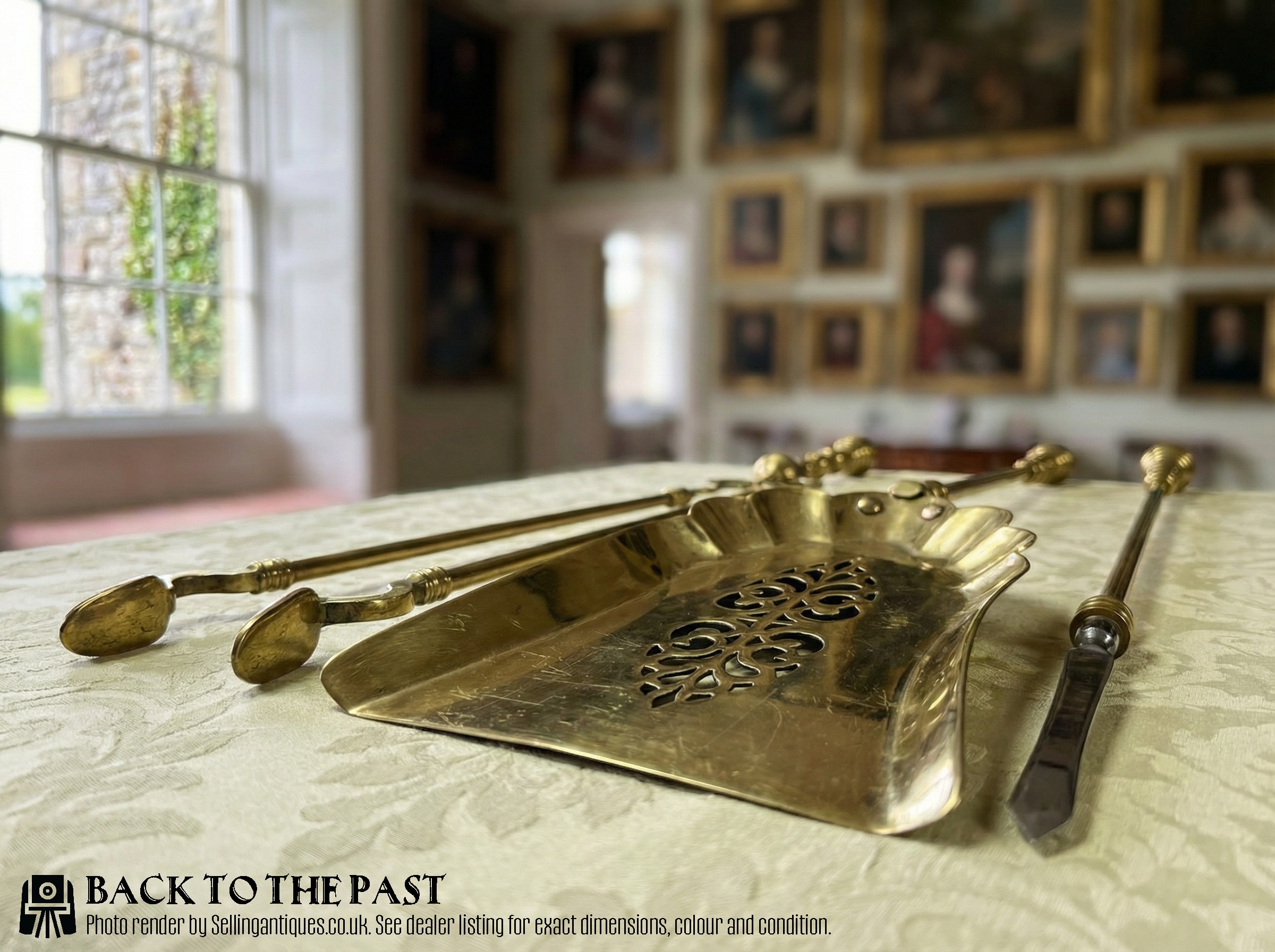
Makers constructed these hearth tools primarily from cast and forged brass, wrought iron, and polished steel, combining durability with decorative metalwork. Handles often featured turned elements, rope twists, or cast figural motifs, while companion stands integrated heavy weighted bases to support the hanging irons.
Desk accessories sharing similar material palettes demonstrate contemporary techniques like brass mounting, tortoiseshell inlay, and cut glass fitting. Metal components were cast, hand-finished, and polished, resulting in robust implements built for daily domestic service by the hearth.
Victorian Companion Set Retail Price Guide 2026
Typical asking prices for victorian companion set among the pieces listed under this phrase on Sellingantiques today, from the lower quarter to the upper quarter. They describe what is for sale here now, not the wider market.
Stylistic influences represented in the inventory include Gothic Revival, Arts and Crafts, Napoleon III, and Rococo Revival designs.
Markers of distinction and build
Quality in a hearth collection rests upon the weight of the metal and the integrity of the joins between handles and shafts. Heavier gauge brass and solid forged steel indicate superior manufacture, resisting the bend and warp common in lighter domestic fire irons.
Refinement shows in the crispness of cast details on handles, such as hunting scenes, art nouveau motifs, or rope twist patterns. Sets that retain their original companion stand or matching fire dogs display a higher degree of completeness than assembled groups of mismatched implements.
Walker And Hall
The Victorian Companion Set Glossary
- Companion set
- A matched group of fireplace tools, usually comprising a poker, tongs, and shovel, suspended from a shared stand or resting against a hearth.
- Fire dogs
- Heavy metal supports placed on either side of the hearth to hold logs above the floor of the fireplace, often matching the accompanying fire irons.
- Fire irons
- The individual poker, tongs, and shovel utilised for managing a coal or wood fire within an open grate.
- Tole ware
- Enamelled or lacquered metalware, occasionally utilised for decorative twin companion sets and small household containers.
Victorian Companion Set: Frequently Asked Questions
What tools belong in a set?
A standard hearth collection typically includes a poker for stirring embers, tongs for placing fuel, and a shovel for clearing ash.
Many configurations also incorporate a companion stand to hang the implements or include matching fire dogs for the hearth base.
How do I date these pieces?
Dating relies on stylistic clues, such as the flowing lines of Art Nouveau or the heavy ornamentation of Rococo Revival periods.
Material shifts, such as the prevalence of polished brass in mid-nineteenth-century examples versus later Edwardian plating, also help establish the era of manufacture.
Are these sets usable today?
Solid brass and steel implements remain entirely functional for tending traditional open fires and wood-burning stoves.
Buyers should examine the weight and metal thickness to ensure the tools can withstand regular daily use at the hearth.
Why include desk stands here?
Nineteenth-century desk accessories often shared identical workshops, materials, and decorative motifs with companion sets.
Both categories frequently utilised brass mountings, inlaid walnut, and cut glass components during the Victorian era.