



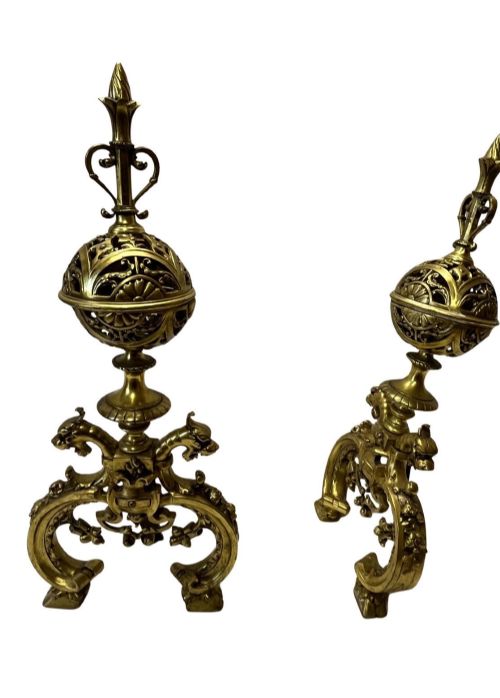
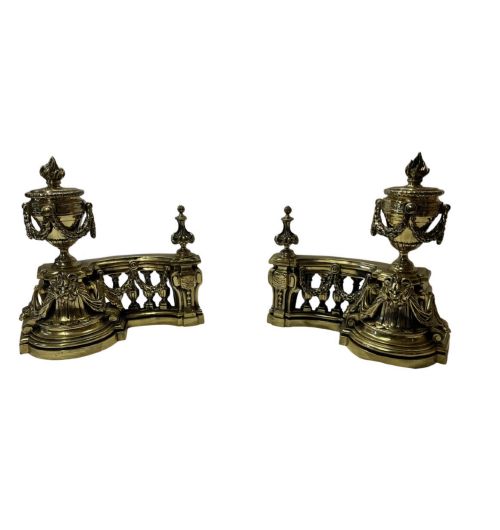


Gold Brass Andirons
Gold brass andirons anchor the hearth with bright metal and sculptural form, offering the classic support needed to hold logs above the hearth floor.
Gold Brass Andirons
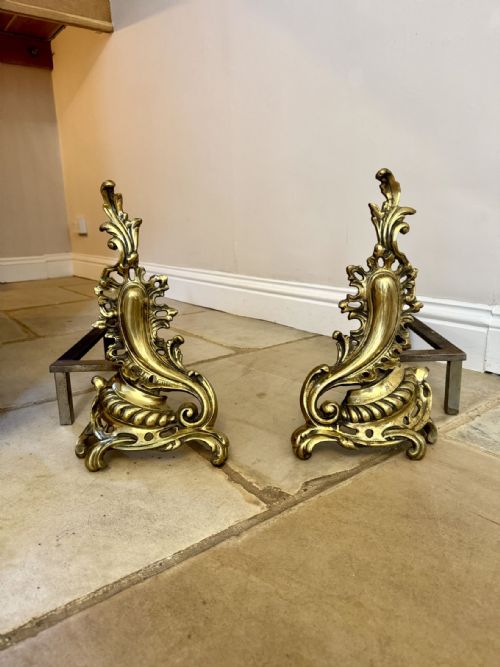
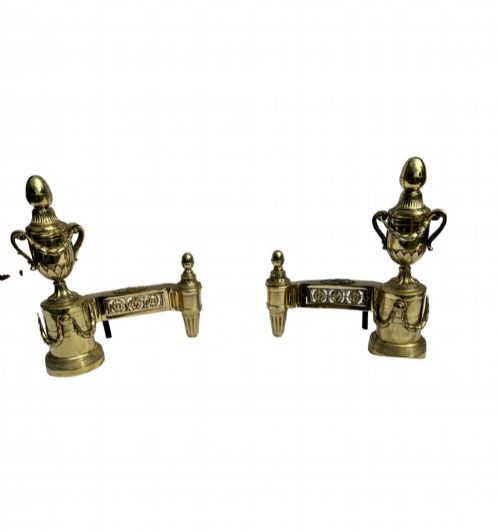
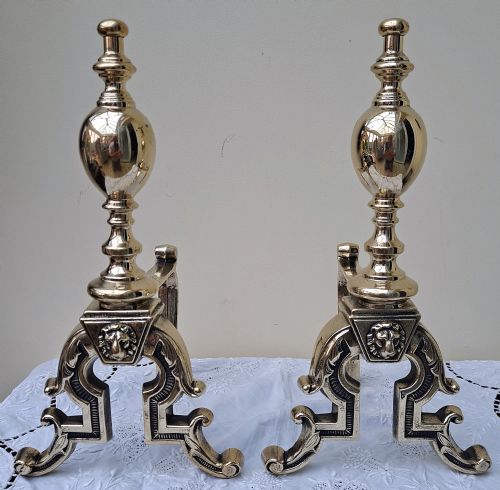
When you search for gold brass andirons, you encounter heavy hearth furniture designed to hold firewood aloft in an open fireplace. The selection spans the eighteenth, nineteenth, and early twentieth centuries, drawing on Regency, Victorian, and French tastes.
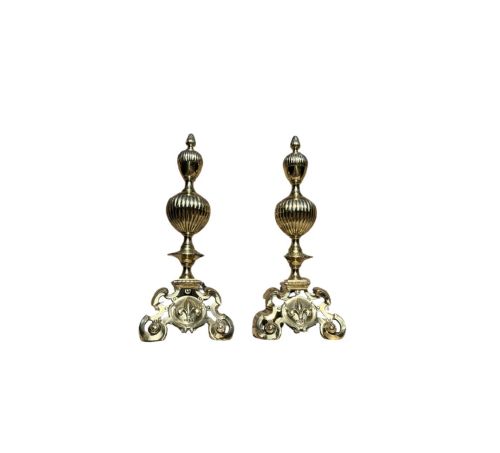
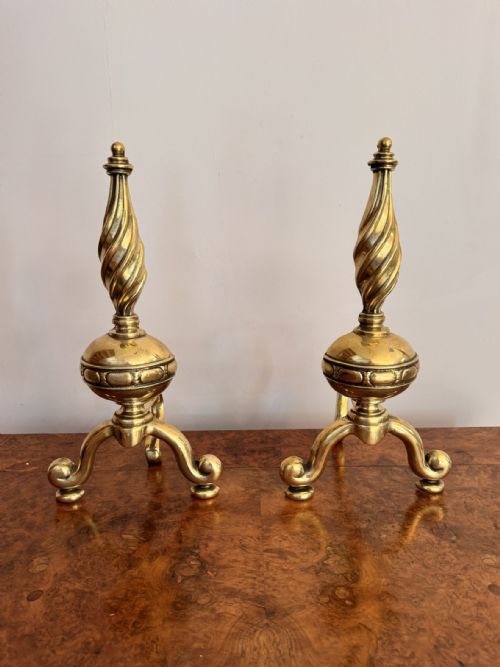
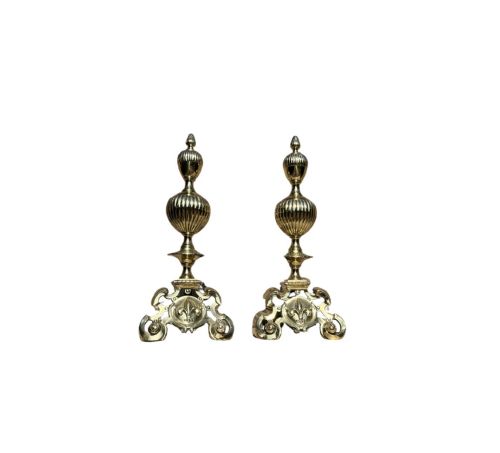
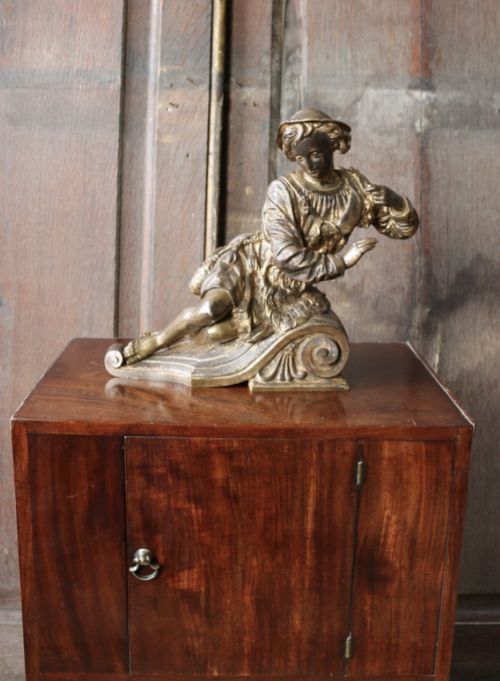
Most examples on this page take the form of fire dogs or chenets made of yellow metal with gilt, ormolu, or polished brass surfaces. They appear both as plain functional supports and as decorative sculptural figures placed at the front of the hearth.
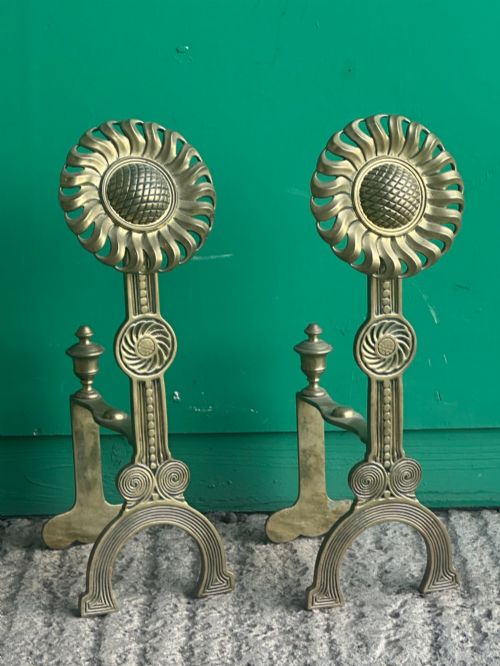
English and French workshops dominate the origin of these pieces, showing styles from restrained neoclassical lines to exuberant rococo scrolls and sunflower motifs. You find matched pairs intended to sit symmetrically on either side of the grate.
Materials and construction
Foundries shaped these items primarily through metal casting, pouring molten brass and bronze into intricate moulds to produce raised surface detail. Iron components frequently provide the internal bars and rear supports that endure the direct heat of the fire.
Surface enhancement involved fire gilding or the application of ormolu and lacquers to achieve the characteristic bright golden tone on the cast bronze and brass elements. Fine chasing and filing by hand finished the details after the metal cooled.
Gold Brass Andirons Retail Price Guide 2026
Typical asking prices for gold brass andirons among the pieces listed under this phrase on Sellingantiques today, from the lower quarter to the upper quarter. They describe what is for sale here now, not the wider market.
Some nineteenth-century makers cast cheerful sunflowers into heavy brass fire dogs, bringing instant botanical sunshine to the hearth.
Judging the standard of manufacture
Quality rests heavily on the crispness of the cast ornamentation and the depth of the hand finishing on the brass surface. Heavy, substantial castings with sharply defined scrolls and figures indicate superior workshop production.
The choice of materials also divides the range, with solid cast brass and ormolu-mounted bronze demonstrating greater ambition than simpler iron framed items with applied brass plates.
Thomas Jeckyll·William Tonks
The Gold Brass Andirons Glossary
- Andiron
- A metal support used in pairs to hold logs in an open fireplace. They typically feature an upright decorative front and a horizontal bar extending back into the hearth.
- Chenet
- The French term for an andiron, frequently applied to decorative hearth furniture designed in rococo, baroque, or neoclassical styles.
- Ormolu
- Finely ground high-carat gold applied to a bronze object through a mercury amalgam technique. It creates a rich golden finish on antique decorative metalwork.
- Cast brass
- An alloy of copper and zinc poured into a mould to create solid decorative objects. It forms the primary golden body of these hearth ornaments.
- Fire dog
- An alternative term for an andiron, often referencing designs with animal or figural finials. They support wood above the hearth floor to improve airflow.
Gold Brass Andirons: Frequently Asked Questions
What is the difference between andirons and fire dogs?
The terms are generally interchangeable for the same hearth furniture. Andiron is the common English name, while fire dog often references older styles with animal heads or figural fronts.
Both items serve the same practical purpose of elevating logs to allow air circulation beneath the fire.
How do you clean gold brass andirons?
Maintenance requires gentle dusting with a soft cloth to preserve the aged surface and any remaining gilding. Aggressive metal polishes strip historic patination and should be avoided on antique brass.
Careful removal of soot and ash prevents corrosive buildup on the iron components attached to the back of the pieces.
Can these andirons be used in a working fireplace?
Most antique pieces were built for active hearths using heavy cast brass and iron bars to withstand high temperatures. The front decorative elements handle radiant heat well, while the rear billets bear the weight of burning wood.
Confirmation of structural stability is sensible before exposing historical metalwork to a fierce coal or log fire.
How do I date a pair of brass andirons?
Dating relies on stylistic clues such as the symmetry of French rococo scrolls, the severity of Regency lines, or the botanical motifs of the Aesthetic Movement. Manufacturing marks and the method of casting provide additional clues.
Heavier, finely chased ormolu mounts often point toward earlier nineteenth-century French manufacture, whereas mass-produced brass fittings frequently suggest later Victorian periods.