




Vintage Brass Firedogs
Vintage brass firedogs bring substantial hearth presence to a room, combining practical support for logs with decorative Victorian character.
What vintage brass firedogs are
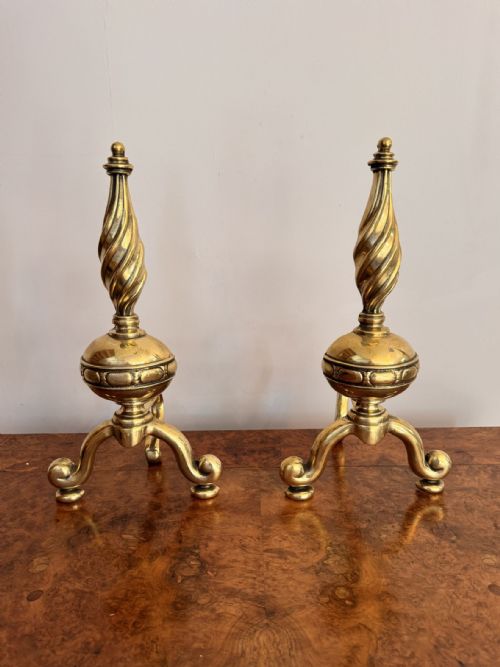
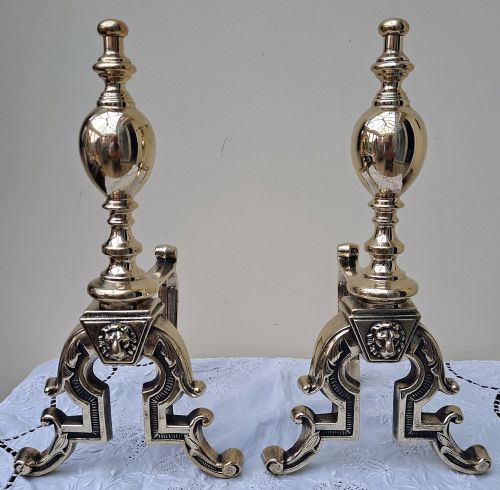
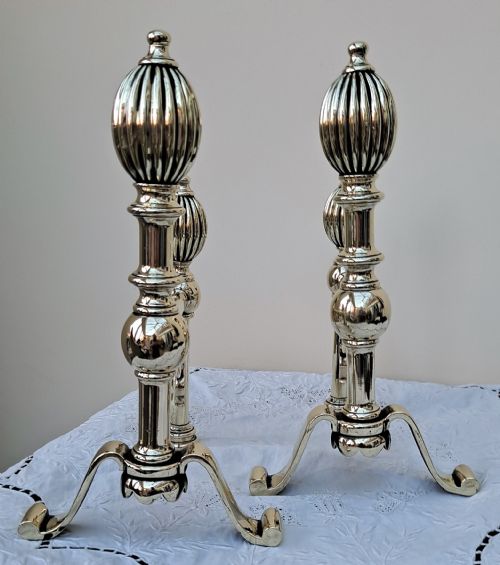
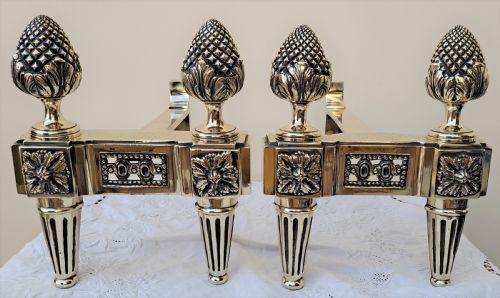
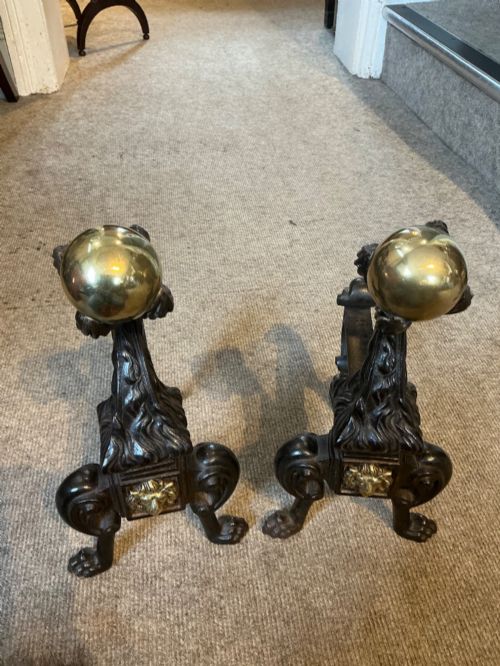
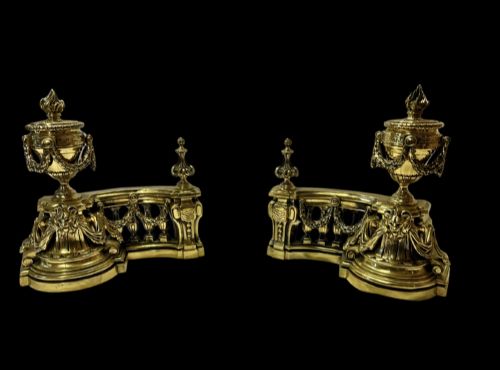
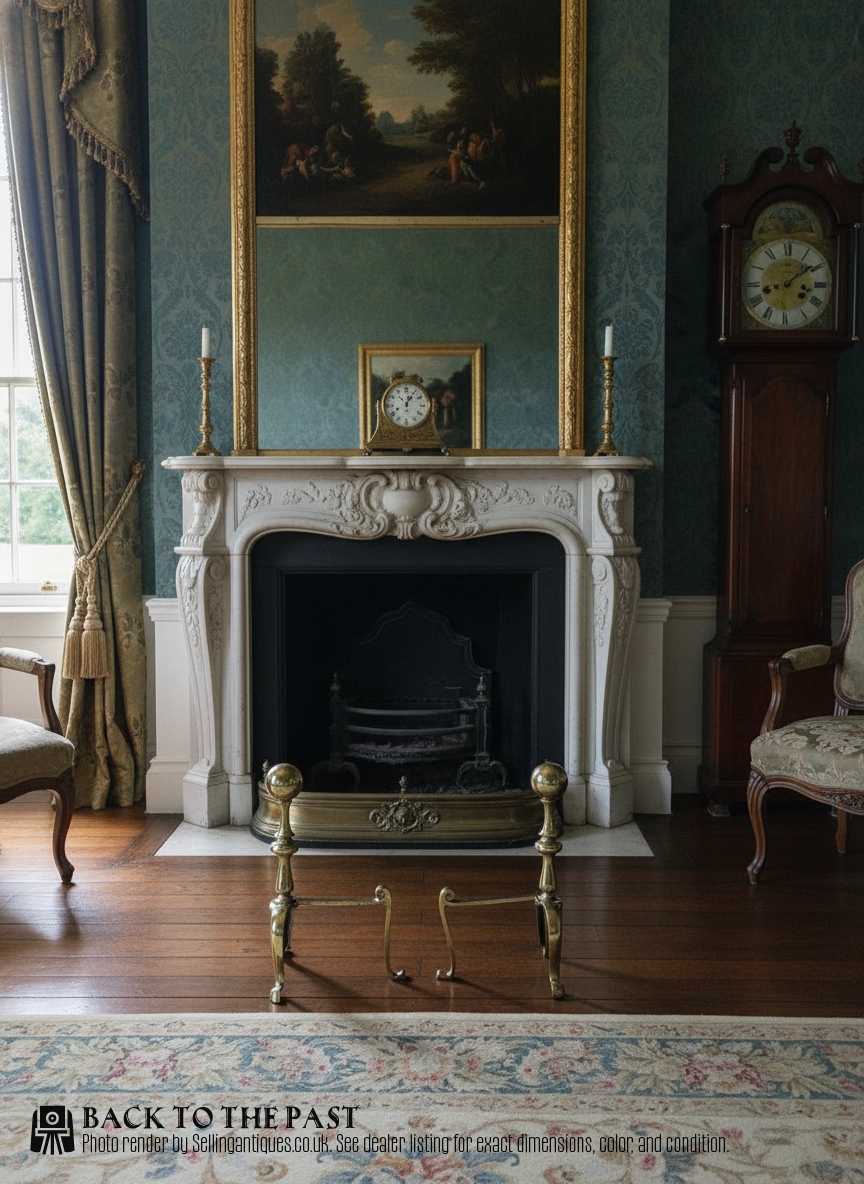
Vintage brass firedogs, also known as andirons or fire dogs, serve as structural supports for burning wood within an open fireplace. When you search for vintage brass firedogs, you encounter sturdy fireplace accessories primarily designed during the Victorian period, including pieces dated to eighteen sixty and the late nineteenth century. These items elevate fuel logs to improve airflow beneath the fire while adding a warm metallic gleam to the chimney breast.
The selections available here showcase distinct stylistic influences from the Victorian era alongside Georgian interpretations and Aesthetic Movement designs. Most examples appear as matched pairs, combining durable cast iron internal elements with bright brass fronts. Collectors and interior decorators utilise these functional objects to anchor traditional hearths and establish a distinct period aesthetic.
How they were made
The construction of these fireplace accessories relies on a combination of heavy iron and polished brass. Foundries cast the structural body and rear billets in iron to withstand intense hearth temperatures, while decorative fronts utilise shaped and turned brass.
Makers applied traditional metalworking techniques such as casting, forging and turning to shape the terminals and sturdy legs. Artisans finished the brass components with polished surfaces that catch the flickering light of an open fire.
Retail Price Guide 2026
Typical UK retail prices for vintage brass firedogs, calculated from the Sellingantiques database of over a million retail prices indexed since 2003. This retail price guide relies exclusively on Sellingantiques data; no external sources or auction records are used, so the figures do not describe the wider market.
Pairs of firedogs often bear subtle foundry marks on their iron backs, tiny signatures left by Victorian metalworkers who stood before roaring foundry furnaces.
What varies in quality
Quality in these pieces is determined by the crispness of the casting and the gauge of the metal used in manufacture. Superior examples display sharply defined decorative motifs and substantial weight in both the brass fronts and the iron billets.
Lesser items often show softer detail in the brass ornamentation and lighter construction that lacks the stability required for supporting heavy logs. The sophistication of the period design, whether geometric Aesthetic Movement lines or ornate Victorian casting, further separates standard production from exceptional workshop output.
The Vintage Brass Firedogs Glossary
- Andiron
- An alternative term for a firedog, used to support logs in an open fireplace.
- Billet
- The horizontal iron bar extending backward from the firedog to hold the burning wood.
- Aesthetic Movement
- A late nineteenth-century design style focusing on visual beauty over strict historical revival.
- Victorian
- The period spanning the reign of Queen Victoria, representing the primary era of the pieces seen here.
Frequently Asked Questions
How do I clean brass firedogs?
Maintenance involves gentle dusting with a soft cloth to remove soot and surface debris accumulated near the hearth.
Avoid harsh chemical abrasives that strip the aged patina, using mild cleaning agents only when necessary to preserve the historic metal surface.
Are these firedogs suitable for daily fires?
The heavy iron and brass construction of nineteenth-century examples makes them durable enough for regular use in a working fireplace.
Many buyers also place them in decorative or non-working hearths simply to complete a traditional interior scheme.
How do I identify Victorian firedogs?
Victorian pieces often feature characteristic cast brass ornamentation, substantial weight, and proportions typical of nineteenth-century domestic hearths.
Stylistic cues such as Aesthetic Movement geometry or mid-Victorian detailing help distinguish these items from later reproductions.