


French Rococo Chenets
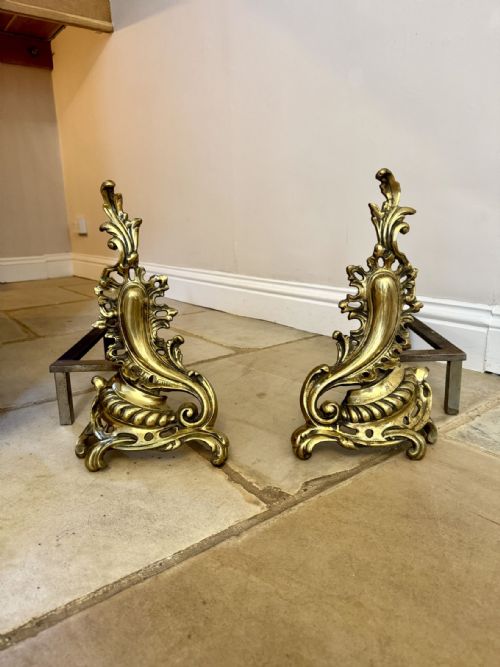
French rococo chenets are ornamental firedogs that anchor a hearth with sweeping asymmetrical curves and rich gilding.
Identifying French Rococo Chenets
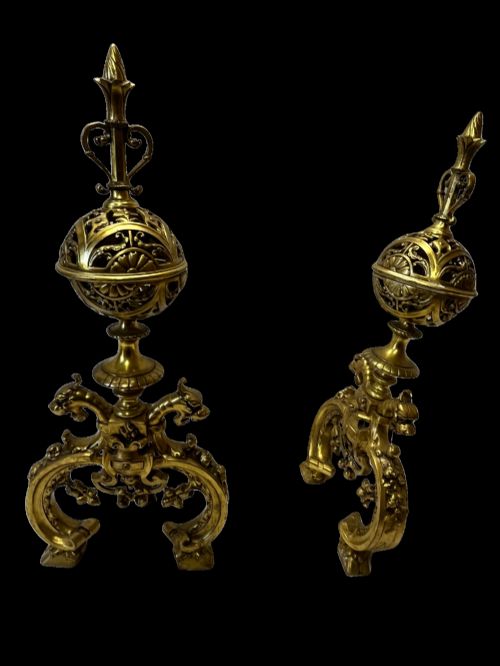
These french rococo chenets are fireplace accessories designed to support logs within an open hearth while adding decorative presence to a room. Buyers searching this phrase will find pairs of fire dogs or andirons fashioned in the distinct eighteenth-century continental taste. The selection includes examples styled as fire tool rests and paired combinations featuring decorative brass or bronzework.
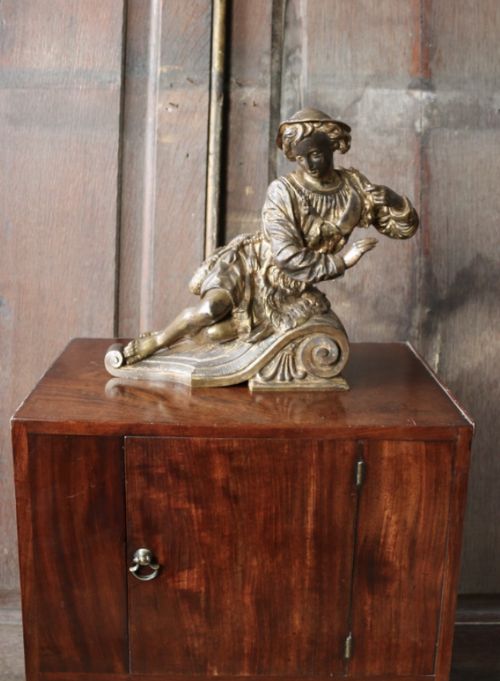
Most pieces seen here originate from the nineteenth century, including specific dates such as eighteen eighty, eighteen ninety, and nineteen hundred, alongside examples attributed more broadly to the nineteenth century or the Georgian era. Forms range from heavy cast mounts to extended fender sets incorporating matching figural details such as putti. They serve both a practical role at the hearth and a purely ornamental function in period interiors.
Materials and Construction
Makers utilised a variety of metallic mediums, predominantly brass, gilt brass, gilded brass, bronze, and gilt bronze often referred to as ormolu. Iron and wrought iron also appear in the construction, providing sturdy internal structure or contrasting support for the decorative metalwork. These materials were cast, chased, and gilded to achieve the bright reflective surfaces characteristic of the style.
The fabrication relies heavily on traditional foundry techniques, where molten bronze or brass was poured into moulds before being hand-finished with chisels and files. Gilding processes applied layers of gold or golden alloy to the bronze bases, creating the rich ormolu finishes seen on finer examples. Iron elements were forged to shape, ensuring the andirons could withstand the heat and weight of fireplace logs.
Retail Price Guide 2026
Typical UK retail prices for french rococo chenets, calculated from the Sellingantiques database of over a million retail prices indexed since 2003. This retail price guide relies exclusively on Sellingantiques data; no external sources or auction records are used, so the figures do not describe the wider market.
Materials represented across the inventory include ormolu, gilt bronze, wrought iron, and standard brass.
Assessing Quality and Execution
The distinction between standard hearth hardware and exceptional pieces rests upon the crispness of the casting and the depth of the hand-chasing. Finer pairs exhibit deeply undercut scrollwork and sharply defined asymmetrical motifs that reflect the true spirit of the design. Lesser examples show softer edges and shallower detail resulting from worn moulds or minimal hand-finishing.
Surface finish further separates the tiers of production, particularly in the application and preservation of the gilding. Superior ormolu surfaces display a warm, variegated lustre where matte and polished areas contrast deliberately. Poorer execution often reveals flat, uniform plating or modern chemical treatments that obscure the underlying metal texture.
The French Rococo Chenets Glossary
- Chenet
- An alternative term for a firedog or andiron, placed in pairs on the hearth to hold logs. These metal supports often feature decorative fronts that remain visible when the fireplace is not in use.
- Ormolu
- Gilt bronze, created by applying a finely ground gold-mercury amalgam to a bronze base and heating it to drive off the mercury. This technique produces a rich, durable golden surface.
- Andiron
- A horizontal iron bar supported on legs, with a vertical decorative pillar or sculpture at the front, used to raise logs off the hearth floor to improve airflow.
- Rococo
- An ornate decorative style originating in France during the eighteenth century, characterised by asymmetry, scrollwork, C-scrolls, and naturalistic motifs derived from shells and foliage.
- Fender
- A low metal guard placed around the hearth to contain sparks and ash, sometimes sold alongside matching chenets as a complete suite of fireplace furniture.
Frequently Asked Questions
What is the purpose of french rococo chenets?
These metal supports were designed to hold logs above the floor of an open hearth, allowing air to circulate underneath for a better fire.
Beyond their practical use, their ornate scrolled fronts served as permanent decorative ornaments for the main reception rooms of a home.
Can these be used in a working fireplace?
Many of these pieces are sturdy enough to support logs in a real fire, provided the iron backs and bronze fronts are structurally sound.
However, intense heat can damage historical gilding over time, so many owners prefer to use them as decorative hearth ornaments.
How do I date a pair of chenets?
Dating relies on examining the casting methods, the composition of the underlying metals, and the style of the chasing.
While eighteenth-century originals exist, many high-quality revivals were produced during the nineteenth century using similar traditional foundry techniques.