




Bronze Fire Dogs
These bronze fire dogs anchor a hearth with substantial weight and classical form.
Bronze Fire Dogs
Bronze fire dogs provide functional support for logs within an open hearth while adding decorative presence to a chimney breast. When you search for bronze fire dogs, you encounter pairs designed to sit at the front of a fireplace grate to hold fuel or display sculptural detail.
The selections recorded here span the nineteenth century, including specific dates from eighteen hundred through to eighteen ninety alongside Regency and seventeenth-century examples. Forms range from simple iron supports to elaborate architectural and figural pairings.
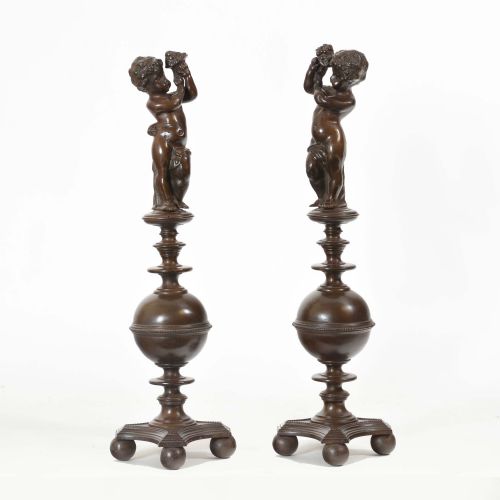
French designs dominate the offerings, heavily influenced by Rococo, Louis XIV, and Louis XV revivals. Buyers also find Italian Renaissance style pieces alongside Arts and Crafts manner items.
Materials and construction
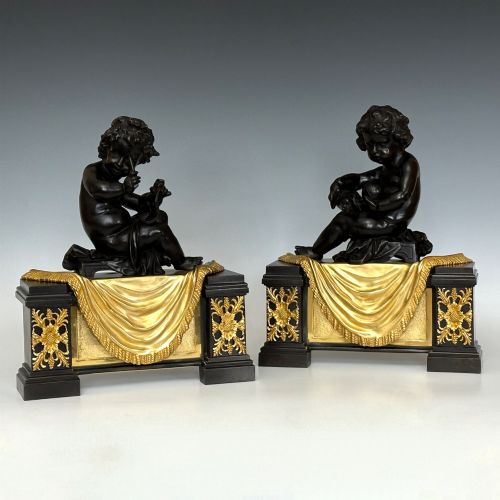
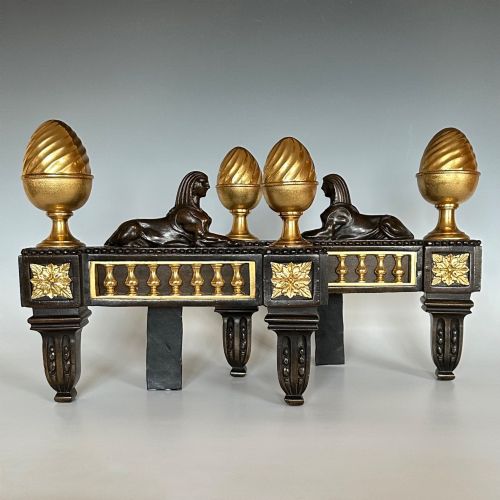
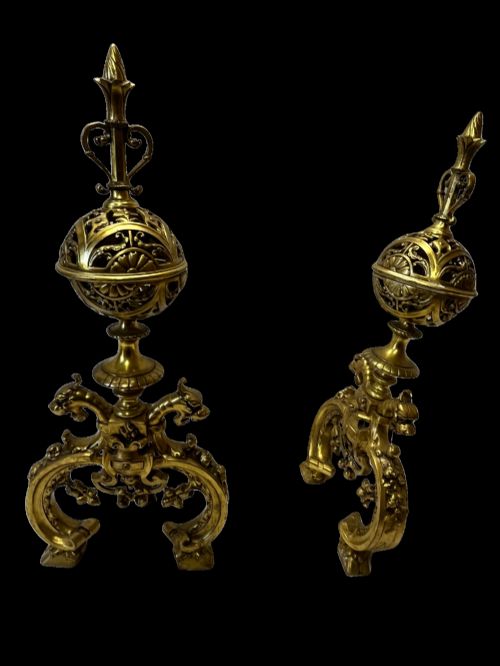
Foundry work combines cast bronze, ormolu, and gilt brass to create durable hearth furniture with decorative surface highlights. Patinated bronze surfaces contrast with bright gilded accents in many nineteenth-century French pieces.
Iron and steel provide structural strength for heavy-duty load-bearing components like wrought iron shafts and fire tool rests. Makers utilised these mixed metals to balance functional fire resistance with ornate decorative mounts.
Bronze Fire Dogs Retail Price Guide 2026
Typical asking prices for bronze fire dogs among the pieces listed under this phrase on Sellingantiques today, from the lower quarter to the upper quarter. They describe what is for sale here now, not the wider market.
The documented styles span French Rococo, Louis XIV and XV revivals, Renaissance revival, and Arts and Crafts manner.
Assessing quality and finish
The refinement of the casting and the depth of the chasing separate standard production pieces from finer studio work. Crisp detailing in cherubs, scrolling foliage, and figural mounts indicates superior craftsmanship.
The preservation of original gilding and patination affects the integrity of a pair. Integrated mechanisms, such as adjustable widths found on certain French chenets, add complexity and utility to the design.
The Bronze Fire Dogs Glossary
- Chenet
- An alternative term for a fire dog or andiron, commonly used in French decorative contexts. These metal supports sit at the hearth front.
- Ormolu
- Gilded bronze produced by applying a mercury and gold amalgam to a bronze base. This technique creates a rich, enduring golden surface finish.
- Patinated bronze
- Bronze that has been treated chemically to alter its surface colour. This process deepens tones and protects the underlying metal.
- Andiron
- A horizontal metal support raised on legs, designed to hold logs in an open fireplace. Pairs work together to keep fuel elevated for better airflow.
Bronze Fire Dogs: Frequently Asked Questions
How do I place bronze fire dogs?
Position the pair symmetrically at the front of the hearth floor, facing outward into the room. They sit directly on the hearthstone, either freestanding or connected to a matching fender.
Ensure adequate clearance from the burning fuel to protect the metal finish and any gilt or patinated surfaces from direct soot accumulation.
Can these fire dogs hold logs?
Many solid bronze and iron pairs are built structurally robust enough to support actual firewood during a fire. Lighter decorative ormolu chenets serve primarily an aesthetic role at the front of the grate.
Check the rear bar construction and material thickness before placing heavy fuel directly onto the andirons.
What styles are most common?
Nineteenth-century French Rococo and Louis XV revival styles appear frequently, featuring elaborate scrolling and cherub motifs. Italian Renaissance and Arts and Crafts manner pieces also feature among the heavier iron and bronze designs.
These varied regional revivals reflect nineteenth-century interior tastes for earlier historical periods.
How do I clean bronze fire dogs?
Dust the surfaces regularly with a soft, dry cloth to prevent soot and ash buildup. Avoid harsh chemical polishes that can strip delicate gilt bronze or patinated finishes.
Professional conservation is recommended if deeper cleaning or structural stabilization of the metal becomes necessary.