


Gilt Bronze Andirons
These gilt bronze andirons bring warmth and French architectural elegance to a hearth through heavy cast metal and rich gilding.
Gilt Bronze Andirons
Gilt bronze andirons, also known as chenets or fire dogs, support logs within an open fireplace while adding sculptural decoration to the room. Buyers searching for gilt bronze andirons find heavy metal hearth accessories designed to sit forward in the fireplace opening.
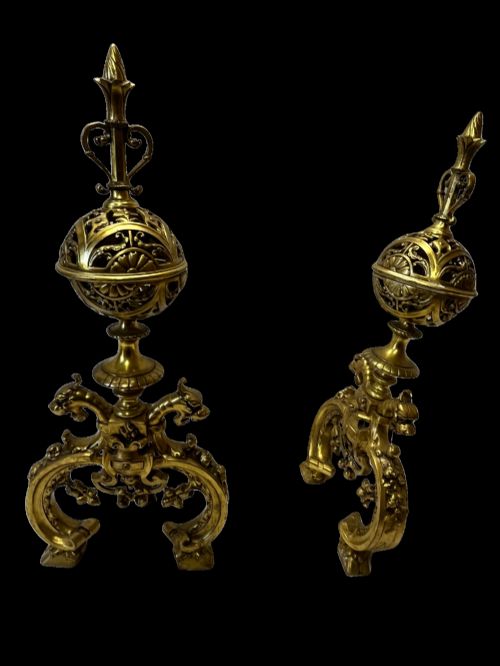
The examples gathered here span the eighteenth and nineteenth centuries, including Regency models, Louis XIV revivals, and French Rococo styles. Most pieces originate from France and combine bronze or cast brass with ormolu mounts and parcel gilding.
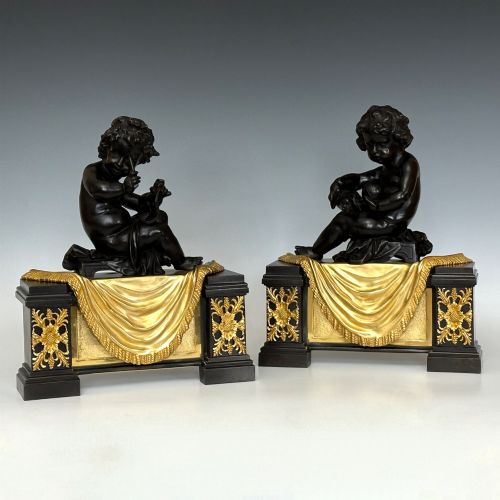
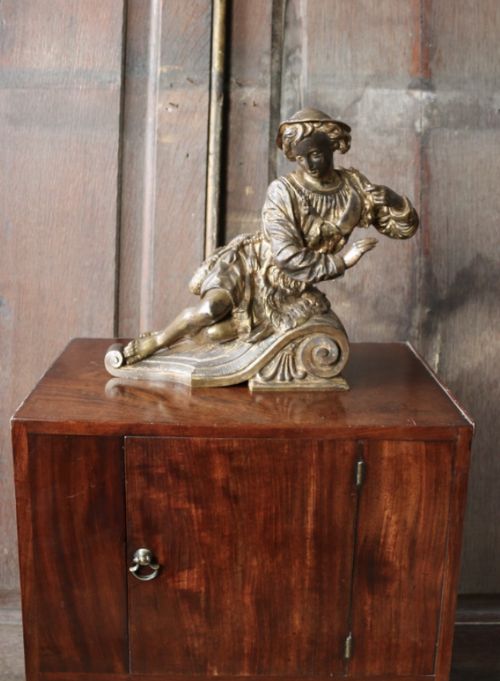
Forms vary from figural statuettes and cherubs to caryatids and Retour d'Egypte designs. These pieces function both as practical fireplace furniture and as decorative bronze sculptures.
How they were made
Maker's workshops cast bronze, brass, and iron components to form the structural body and the decorative elements of each chenet. Molten metal poured into moulds created the figural statuettes, cherubs, and scrolling foliage seen on the pieces.
Gilding techniques such as ormolu application coated the bronze surfaces in gold amalgam, producing a deep, lasting metallic lustre. Artisans then chased the cast details by hand to sharpen the lines of the foliage and figures before final assembly.
Gilt Bronze Andirons Retail Price Guide 2026
Typical asking prices for gilt bronze andirons among the pieces listed under this phrase on Sellingantiques today, from the lower quarter to the upper quarter. They describe what is for sale here now, not the wider market.
Listings feature items cast from bronze, iron, and brass, spanning the eighteenth century through to the late nineteenth century.
What varies in quality
Substantial weight in the cast bronze and robust iron internal bars indicate better construction designed to withstand fireplace heat. The integration between the bronze figures and the ormolu mounts also dictates the refinement of the finished pair.
The Gilt Bronze Andirons Glossary
- Chenet
- An alternative French term for an andiron used to support firewood in an open hearth. These metal supports often feature decorative front mounts.
- Ormolu
- Finely ground gold applied in a mercury amalgam to a bronze base, producing a rich golden surface finish. This technique defines much nineteenth century French metalwork.
- Caryatid
- A sculpted female figure serving as an architectural support or decorative pillar on the front of the andiron. Such classical figures appear frequently on Regency and nineteenth century examples.
- Parcel Gilt
- A decorative treatment where only specific portions of the bronze or brass surface receive gold leaf or gilding. This creates contrast between the bright gold sections and the darker patinated bronze.
- Retour d'Egypte
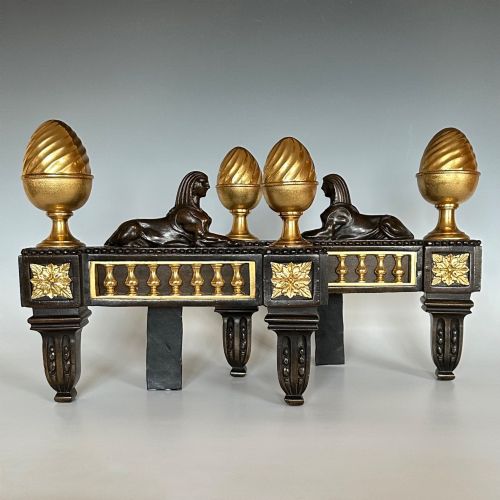
- A neoclassical design style inspired by Napoleon's campaign in Egypt, incorporating distinct pharaonic motifs. Pieces in this manner display archaeological elements adapted for domestic hearth furniture.
Gilt Bronze Andirons: Frequently Asked Questions
How do I use andirons in a fireplace?
Andirons stand inside the hearth to hold logs slightly above the floor, allowing air to circulate underneath for a better fire. The decorative fronts remain visible outside the fireplace opening while the iron bars support the fuel.
Pairs are placed symmetrically on either side of the grate or hearth floor. They work equally well in working fireplaces and empty decorative hearths.
What is the difference between andirons and chenets?
Andirons and chenets are functionally the same object used for supporting wood in an open fireplace. Chenet is simply the French term often applied to continental European designs.
English makers typically favoured the term andiron, whereas French pieces are frequently catalogued as chenets. Both terms appear interchangeably in historical and marketplace descriptions.
How do I date a pair of andirons?
Dating relies on stylistic clues such as the presence of Rococo scrolls, Empire motifs, or Louis XIV revival details. Nineteenth century pieces often display heavier cast construction compared to earlier eighteenth century examples.
Examining the fastening nuts, bolt types, and casting seams helps determine the period of manufacture. French workshop practices evolved across the Regency and Victorian eras, leaving distinct stylistic markers.